
Adrasteia: Adrasteia is an ancient Greek goddess originally revered as a Phrygian mountain deity and later as a Cretan nymph, famed for nurturing the infant Zeus.
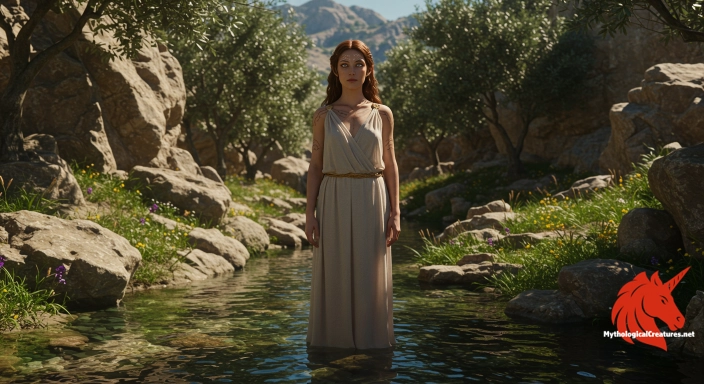
Adrasteia
Adrasteia - Adrasteia is significant for protecting the infant Zeus and later embodying the inescapable nature of divine justice as Nemesis.
the legend in five swipes.
the legend in five swipes.
Adrasteia: How the Story Began
Adrasteia emerges as a striking figure in ancient Greek religion, embodying both the care of a nurturer and the gravity of divine destiny. Born out of Phrygian traditions as a mountain goddess, her mythic roots are intertwined with the rugged and mysterious landscapes of Anatolia. Over time, her character was embraced in Cretan lore as a gentle nymph, highlighting her adaptability in various cultural contexts. She is celebrated as the daughter of Melisseus and was commissioned by the goddess Rhea to protect the infant Zeus from the predations of Cronus. This role underscores her significance as a guardian who bridges the gap between mortal concerns and the realm of the gods. Her early attestations are found in fragmented texts and ephemeral artistic depictions that suggest an evolving narrative. Adrasteia’s myth encapsulates the dual forces of nurture and fate, making her a timeless symbol in classical mythology. The convergence of her identity with themes of inescapable destiny and maternal protection sets the stage for her later association with divine retribution. Her ability to embody complex attributes from different mythic spheres has made her a subject of enduring fascination.
Adrasteia: How the Tale Was Told and Retold
Ancient literary fragments and classical artworks provide glimpses into the varied portrayals of Adrasteia, though no single text offers a complete account of her origins. Several early Greek sources subtly reference her role in the myth of Zeus’s upbringing, reflecting the diverse oral traditions prevalent in early religious practice. Variants of her story appear in scattered references within poetic sources and local cultic records, underscoring her significance in both Phrygian and Cretan traditions. Some accounts emphasise her role as a solitary mountain spirit, while others celebrate her as a nurturing caretaker for the divine infant Zeus. The evolution of her narrative is observed in the gradual merging of her identity with that of Nemesis, the goddess who embodies cosmic retribution. Additional vases and fragmented inscriptions hint at her worship in sanctuaries where her dual role as protector and arbiter of fate was revered. The subtle interplay between her nurturing attributes and her later association with retributive justice is noted in differing texts, each contributing unique details to her legacy. Through these varied sources, Adrasteia stands as a multifaceted deity whose story was adapted to meet the evolving religious sensibilities of ancient Greece.
Adrasteia: Size, Shape and Strange Features
Artistic depictions of Adrasteia, though rare, reveal a goddess of beguiling presence and nuanced features. She is often portrayed as possessing a youthful, radiant beauty that exudes both strength and tenderness—a visual metaphor for her dual roles. Classical art sometimes adorns her with a diadem or wreath, suggesting a regal bearing that belies her nurturing qualities. Her garments are traditionally rendered as flowing and ethereal, echoing the natural landscapes of the Phrygian mountains from which she originated. Some representations hint at a solidity in her form, capturing the rugged austerity of mountain deities, while others display a softer, more lyrical quality resonant with the Cretan nymph tradition. Variations in iconography across regions may show her in the company of the infant Zeus, symbolising her protective commitment. The inherent ambiguity in her visual portrayal reflects her complex character—a blend of maternal benevolence and the inexorable force of fate. Even in limited physical descriptions, every detail is imbued with symbolism, marking her as both a beacon of shelter and an agent of destiny.
Adrasteia: Local Variations in the Story
The myth of Adrasteia exhibits significant regional variation, mirroring the diverse cultural landscape of the ancient Mediterranean. In Phrygia, her identity as a mountain goddess is closely linked to the untamed and formidable beauty of the Anatolian highlands. In contrast, Cretan interpretations portray her more as a delicate and nurturing nymph, specially tasked with the care of the celestial infant Zeus. Local rituals and iconography in Crete underline her maternal virtues and protective role, while Phrygian depictions tend to emphasise a more elemental connection to nature. In some locales, her attributes overlap with those of Cybele, reinforcing a shared focus on fertility and the natural order. This cross-pollination of mythic roles highlights the fluid boundaries between regional deities in antiquity. The melding of her character with that of Nemesis in later Greek thought further illustrates how local traditions can evolve and integrate multiple divine aspects. Each regional variation not only reflects local religious practices but also contributes to a richer collective understanding of the roles deities played in the ancient world.
Adrasteia: Parallels in Other Cultures
Adrasteia’s multifaceted narrative invites comparisons with a number of other deities across different mythological traditions. Her early role as a nurturer resonates with figures such as Rhea, who similarly bear the responsibility of protecting divine offspring. The later merging of her identity with Nemesis draws parallels to other chthonic and retributive powers in the Greek pantheon, highlighting a tendency to blend caring and punitive attributes. Similar themes are found in the mythologies of neighbouring cultures, where deities frequently occupy dual roles that encompass both the maintenance of cosmic order and the safeguarding of life. A close comparative analysis reveals a shared mythic motif: the protection of the vulnerable as a precursor to the enforcement of divine justice. Her likeness to Cybele in the context of nature worship and fertility further underlines these cross-cultural connections. This synthesis of nurturance and retribution is a reflection of ancient societies’ attempts to reconcile the benevolent with the inevitable forces of destiny. In a broader comparative context, Adrasteia exemplifies how mythological figures can transcend singular interpretations, evolving to embody universal human concerns across regions and epochs.
Adrasteia in Modern Culture
Over the centuries, Adrasteia’s portrayal has undergone notable transformations as shifts in cultural perception redefined her role within the pantheon. Initially celebrated for her role in safeguarding the infant Zeus, she came to be seen as emblematic of both maternal compassion and the looming presence of inexorable fate. Her subsequent identification with Nemesis underscores an intriguing evolution from a nurturing caregiver to a divine executor of cosmic justice. Throughout the Hellenistic period and into later antiquity, her image was re-interpreted to align with the changing values and philosophical ideals of the period. Renaissance artists and writers, rediscovering classical myths, often alluded to her complex character as embodying the duality of mercy and retribution. In modern mythological scholarship, she is appreciated as a symbol of the ambiguities inherent in divine power—a deity who simultaneously nurtures and enacts justice. Contemporary representations in literature and art continue to explore this dichotomy, revealing new dimensions of her myth. As an enduring icon, Adrasteia remains a testament to the evolving narratives of ancient deities, resonating with modern audiences who value the intricate interplay between fate, protection, and retribution.
Interesting Fact
A remarkable aspect of Adrasteia's myth is her seamless transformation from a local mountain goddess into an essential figure in Greek mythology, eventually merging with Nemesis to personify both nurturing care and the relentless force of retribution.
Mythological Treasures
Greek Myths: A field guide to the monsters of ancient Greece
Every monster here earned its place in legend, and each gets a full page of artwork and the story behind it.
Chinese Beasts: A field guide to the dragons and demon kings of Chinese myth
From river dragons to demon kings, with the legends that shaped five thousand years of storytelling.
Japanese Yokai: A field guide to the spirits and demons of Japanese folklore
Fifteen spirits, with the signs to watch for and what the old tales say to do if you meet one.
the legend in five swipes.
Mythology-aligned partners
Showcase your myth-friendly brand here
Run a store, studio, or platform that lives in the world of myth and folklore? A curated sponsor panel on these pages may fit.
Explore partnership optionsQuick Creature Info
Origin:
Features:
Associations:
Our Mythic Legendary Rating:

Also Sometimes Known As:
Habitat:
Supernatural Powers:
Physical Attributes:
Abilities:
Behavior:
Lore:
References
Discover Another Mythical Legend You May Not Have Heard Of?
Uncover the mysteries of ancient folklore and expand your knowledge of legendary beings from cultures around the world.
Dare to Meet the Old Man of the Sea....

The Mythological Creatures Book Series
Yokai, Greek, Norse, Egyptian & Chinese. Five illustrated field guides to the creatures the old stories either warned or told you about.




Curated by the Mythological Creatures Team
Series editor: Mythological Creatures Directory
Primary desk: Hellenic & Ancient Mediterranean Desk
(rev. November 2025)