
Aeacus: Aeacus was a legendary king of Aegina, renowned for his unyielding sense of justice in Greek mythology.
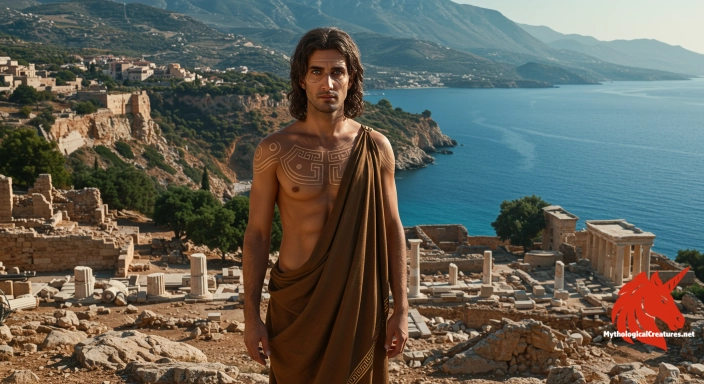
Aeacus
Aeacus - Aeacus is celebrated for his exemplary justice and his enduring role as one of the three judges of the dead, reflecting ancient Greek values of fairness and integrity.
Origins & First Encounters
Aeacus occupies a distinguished position in Greek mythology, merging the roles of mortal king and divine adjudicator in the afterlife. Born of Zeus and the nymph Aegina, his origins are steeped in both divine favour and idyllic natural beauty. He reigned as the king of Aegina with a reputation for unwavering fairness and moral rectitude. His life is interwoven with heroic lineage, being the father of celebrated figures such as Peleus and Telamon. His rule exemplified the classical virtues of wisdom, piety, and justice, qualities admired in both the mortal and divine realms. As his story evolved, Aeacus became synonymous with the ideal of balanced judgement, a standard that resonated deeply among ancient audiences. The transition of Aeacus from a revered monarch to a celestial judge in Hades underscores a transformation that speaks to the era’s belief in cosmic order. His myth also encapsulates the fusion of human ambition with divine intervention, reflecting the delicate interplay between the gods and mortals. Celebrations held in his honour, such as the Aeginetan festival of the Aeacea, highlight the cultural weight of his legacy. His enduring impact continues to symbolise the eternal quest for justice, exemplifying themes of legitimacy, duty, and divine compassion.
Source Texts & Tale Variants
The narrative of Aeacus is richly documented across a spectrum of mythological texts and local traditions. Ancient literary sources, though fragmentary, imbue his story with layers of complexity and suspicion, blending historical kingship with supernatural elements. His contributions, such as assisting Poseidon and Apollo in the construction of Troy’s walls, emerge in several variations that underscore the multifaceted nature of his legend. The literary corpus, including works reminiscent of Apollodorus and other mythographers, portrays him as a figure whose integrity transcends mortal life. Local inscriptions and dedications at his sanctuaries in Athens and Aegina further embellish his myth, linking him to sacred rituals and divine judgement. Some accounts maintain a strong focus on his role as a judge in the Underworld, where his decisions mirrored his renowned fairness and wisdom. Other sources highlight his familial connections, detailing how his progeny contributed to the heroic age of Greece. Diverse regional narratives reflect a flexible interpretation of his character, allowing for adaptations that suit different cultural and religious contexts. These varying accounts have allowed his myth to evolve, ensuring its relevance across successive generations. Consequently, Aeacus’s story is a composite of tradition and reinterpretation, offering a multifarious glimpse into ancient Greek values.
Form & Powers
While the original texts offer few overt details about Aeacus’s physical appearance, later artistic renditions provide a rich canvas on which his image was elaborated. In many depictions, he is portrayed as a noble and dignified figure whose bearing reflects both royal authority and divine ancestry. His countenance is often rendered with a firm, resolute gaze, suggesting a mind continually engaged in the pursuit of justice. Some vase paintings and sculptures illustrate him with a measured expression and a neatly arranged beard, symbolising both maturity and the gravitas of his later role in the Underworld. He is sometimes adorned with a simple yet elegant diadem, reinforcing his status as a legitimate ruler of Aegina. Artistic variations also capture a blend of strength and compassion, traits that visually manifest his dual identity as a mortal king and an impartial judge. Certain images hint at a physical robustness, emphasising muscular poise and a balanced physique that underpinned his leadership. The scarcity of contemporary textual descriptions has encouraged artists over the centuries to imbue him with an idealised, almost ageless quality. Each portrayal, whether in relief or painting, seeks to capture the austere dignity and inner moral resolve that defined his character. This artistic interpretation continues to influence modern visual accounts of Aeacus, rendering him both timeless and emblematic of steadfast justice.
Regional Faces
The myth of Aeacus reflects a rich tapestry of regional variations that illustrate how local cultures adapted his legend to fit their own social and religious contexts. In his native Aegina, he was celebrated not only as a king but as an emblem of divine beneficence, with local rites emphasising his celestial descent. His cult in Aegina was marked by the well-attended festival of the Aeacea, where his legacy was embodied in both ritual practice and regional pride. In Athens, sanctuaries dedicated to him highlighted his esteemed reputation as an arbiter of justice and a mediator between human endeavours and divine oversight. Each region crafted its own nuances in the Aeacus narrative, thereby integrating unique local symbols and traditions into his myth. These regional adaptations often drew on shared themes of fairness and piety, while also reflecting specific civic concerns and religious sensibilities. The differing artistic portrayals and ritual observances across locales serve to underline the flexibility of his myth. Local allegiances and political climates enriched the standard myth, merging the figure of Aeacus with the communal identity of varied Greek city-states. As a result, his story not only transcended geographical boundaries but also brought together diverse cultural elements into a single, resonant legend. This regional diversity has allowed Aeacus to be celebrated across the Greek world, each tradition lending its own colour to his enduring myth.
Cultural Parallels
When assessing the broader landscape of mythology, Aeacus stands as a central figure in the tradition of divine judges, his story running parallel to those of Minos and Rhadamanthus. His posthumous role as an underworld adjudicator reflects a recurring theme across various cultures, where mortal figures are elevated for their moral superiority. Similar to judicious rulers in other traditions—figures sometimes seen in regional folklore outside the Mediterranean—Aeacus embodies the ideal that true power is rooted in moral rectitude. His narrative intersects with themes common to other mythologies, where a hero’s earthly deeds lay the foundation for eternal accountability in the afterlife. The collaborative efforts with deities such as Poseidon and Apollo resonate with wider motifs of mortal divinisation in epic storytelling. In many traditions, a ruler’s close relationship with the gods is used to legitimise both their earthly reign and their subsequent role in cosmic judgement, a parallel clearly drawn in Aeacus's story. Such connections underscore a universal archetype of the wise ruler who bridges the realms of the human and the divine. Cross-cultural comparisons reveal that the motif of a morally implacable judge is not unique to Greek myth but is echoed in various mythopoeic narratives throughout history. This enduring archetype has allowed figures like Aeacus to become a lens through which societies examine justice, leadership, and the afterlife. Ultimately, his myth serves as a comparative framework for understanding how different cultures interpret the intersection of human virtue and divine authority.
Legacy & Modern Evolution
The evolution of Aeacus’s myth is a testament to the enduring power of ancient narratives, where shifting cultures have continually found new relevance in his story. Initially celebrated as a benevolent king of Aegina, his legacy expanded significantly as his role as a judge in Hades took centre stage. Over time, his tale became entwined with themes of eternal justice, resonating with those who revered the balance between human law and divine decree. Literary works and dramatic portrayals during classical times enriched his character, solidifying his status as an arbiter of souls in the afterlife. In later periods, Aeacus emerged as an inspirational figure in philosophical, artistic, and even political discourses that champion fairness and integrity. Modern reinterpretations, whether through contemporary art or scholarly discussion, explore his dual nature as both mortal and immortal, highlighting universal ideals that remain pertinent today. His myth has been a foundational element in discussions about the nature of justice, influencing everything from courtroom allegories to ethical debates. The festivals and sacred sites that once celebrated his memory persist in cultural memory, inspiring renewed interest in ancient rites and traditions. Today, Aeacus remains a potent symbol for balanced judgement and moral leadership, bridging the gap between the ancient and the modern. His multifaceted character continues to inspire reinterpretations, ensuring that his legacy endures as a beacon of ethical governance and cosmic order.
Interesting Fact
Despite his mortal origins, Aeacus's elevation to an immortal judge in the underworld highlights the ancient Greek belief that true justice can bestow eternal honour.
For indie creators
Give your myth project a permanent home
Indie authors, artists, small studios, and makers can secure an annual, non-intrusive sponsor slot that meets readers where they explore.
Obtain more informationQuick Creature Info
Origin:
Features:
Associations:
Our Mythic Legendary Rating:

Also Sometimes Known As:
Habitat:
Supernatural Powers:
Physical Attributes:
Abilities:
Behavior:
Lore:
References
Discover Another Mythical Legend You May Not Have Heard Of?
Uncover the mysteries of ancient folklore and expand your knowledge of legendary beings from cultures around the world.
Dare to Meet the Velchanos....
Curated by the Mythological Creatures Team
Series editor: Mythological Creatures Directory
Primary desk: Hellenic & Ancient Mediterranean Desk
(rev. November 2025)