
Altamaha-ha: The Altamaha-ha, also known as Altie, is a legendary cryptid from Southeastern Georgia folklore.
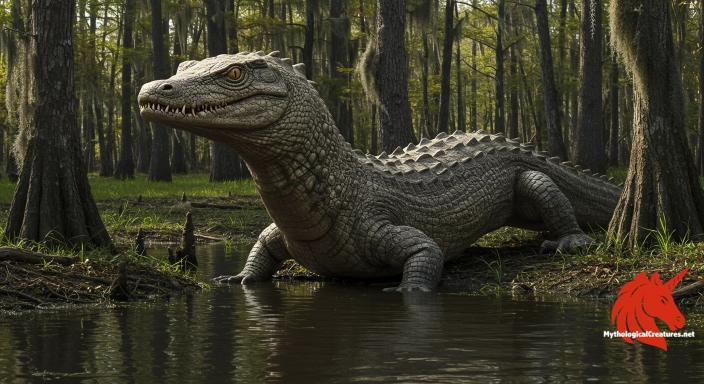
Altamaha-ha
Altamaha-ha - Represents a mysterious aspect of the Altamaha River region, contributing to local cultural identity and tourism.
Origins & First Encounters
The Altamaha-ha, often affectionately called the Altie, is a creature woven into the folklore of southeastern Georgia and embodies a mysterious presence in the region's landscape. Born from a tradition rich in Native American heritage, its legend is intimately connected to the winding Altamaha River and its surrounding wetlands. Generations of locals have recounted tales of sightings in streams and abandoned rice fields that hint at a being both elusive and enigmatic. The creature's reputation as a river monster has intrigued residents and visitors alike, making it a staple of regional mythos. Historical references hint at an origin that stretches back to the traditions of the Muscogee people, who imbued local waterways with spiritual significance. Over time, various retellings of the Altamaha-ha myth have added depth and nuance to its character. Its elusive nature and ambiguous form have made it a symbol of the wild and unpredictable elements of nature. The continuing interest in the creature is reflected in modern interpretations, which blend historical narrative with contemporary mystery. This intriguing blend of cultural heritage and natural mystique has ensured the Altamaha-ha endures as a compelling figure in local lore.
Source Texts & Tale Variants
The primary sources concerning the Altamaha-ha are rooted in local newspaper reports, such as those in The Brunswick News, where sightings and associated legends have been documented with care. Historic accounts suggest that the creature finds its beginnings in Muscogee tradition, lending an air of ancient spirituality to its narrative. Folklore collections and regional histories have intermittently mentioned the creature, building a mosaic of interpretations over the centuries. Some narratives emphasise eyewitness reports from small communities around Darien and McIntosh County, while others speak of mysterious activities in the nearby abandoned rice fields. Variants of the story have emerged over time, with differing details regarding its physical attributes and behaviours. In recent years, media outlets have covered the discovery of decomposing remains on a local beach, intensifying curiosity and debate. Even performance art has played a role, with artists like Zardulu contributing provocative reimaginings of the legend. While written sources form the backbone of our understanding, oral traditions have filled many gaps, offering layered and often contradictory insights into the creature's mythos.
Form & Powers
Descriptions of the Altamaha-ha are as varied as the stories surrounding it, with some depictions suggesting a large, serpentine body that glides effortlessly through murky waters. The creature is often imagined as having a formidable yet ambiguous anatomy, blending features reminiscent of an alligator gar with mythical, almost reptilian, nuances. Artists have speculated that it might possess an elongated body, a mix of scales and sinuous musculature, allowing it to navigate narrow waterways with ease. Historical sketches and modern sculptures, like the one crafted by paleoartist Rick Spears, portray it as a hybrid being, part aquatic reptile and part enigmatic guardian of the river. Some accounts hint at size variations, with the creature considerable in bulk when emerging from the depths and more streamlined during stealthy movements beneath the water's surface. Its eyes, as described in certain retellings, are said to carry a mysterious glimmer, betraying a depth of ancient wisdom. The creature's form is not static in the lore; it has evolved in people's imaginations over time to incorporate elements that are both terrifying and fascinating. Overall, the intricate details of the Altamaha-ha's appearance continue to evolve, creating a captivating visual mythology that blurs the boundaries between reality and legend.
Regional Faces
The Altamaha-ha’s legend is deeply rooted in the specific geography of southeastern Georgia, yet its depiction can shift noticeably from one locality to another. In Darien and surrounding areas of McIntosh County, the creature is often seen as a mysterious river dweller, shrouded in both natural beauty and enigmatic danger. Local adaptations have led to descriptions that align the Altamaha-ha with the peculiar environmental features of the Altamaha River basin, including the winding waterways and the abandoned rice fields. In nearby areas, folklore sometimes merges its identity with that of other local river phenomena, adding layers of complexity to its mythological profile. Regional storytellers have imbued the creature with characteristics that reflect local history, such as the blending of Native American spiritual symbolism with colonial-era superstitions. These variations highlight the adaptability of the myth as it is transmitted through different cultural lenses. The creature’s elusive nature, coupled with the ambiguity of its physical form, has allowed regional differences to flourish. This dynamic interplay between the landscape and the legend creates a vibrant tapestry of local lore that keeps the Altamaha-ha a living myth in the communities it touches.
Cultural Parallels
The myth of the Altamaha-ha resonates with echoes of similar aquatic creatures found in diverse cultural contexts, inviting a comparative analysis with other legendary water monsters. Much like the infamous Loch Ness Monster of Scotland or the mysterious sea serpents of various coastal myths, the Altamaha-ha occupies a space where local lore and speculative natural history converge. Comparisons have been drawn with creatures that are often described as guardian spirits of rivers, a recurring motif in many indigenous and local traditions worldwide. The interplay of fear and wonder surrounding these beings is a common thread, illustrating mankind’s long-standing fascination with the unknown aspects of nature. These parallels are underscored by recurring themes of elusive sightings and ambiguous physical descriptions, which fuel both scientific inquiry and imaginative re-telling. While the Loch Ness Monster is enveloped in the mystique of a deep, hidden lake, the Altamaha-ha is similarly obscured by the intricate network of southeastern waterways. Cross-cultural narratives often highlight the symbolic significance of water as a boundary between the known and the unknown, a theme that is poignantly captured in the Altamaha-ha’s lore. This interconnection of myth and nature underscores the universal appeal of creatures that challenge our understanding of the natural world.
Legacy & Modern Evolution
The evolution of the Altamaha-ha myth reflects the shifting cultural landscape of southeastern Georgia, where historical tradition meets modern reinterpretation. Over the decades, this creature has transitioned from a shadowy figure of local superstition to a celebrated icon within regional heritage. Contemporary depictions, such as the sculpture by Rick Spears at the Darien-McIntosh County Visitor Center, attest to a growing appreciation for myth as a form of cultural expression. Modern artistic renditions and multimedia portrayals have blurred the lines between cryptid and performance art, engaging a broader audience in the narrative. The incident involving the fabricated remains on Wolf Island National Wildlife Refuge further illustrates how the myth can be both manipulated and revitalized for public intrigue. Today, festivals, local exhibitions, and storytelling traditions ensure that the legacy of the Altamaha-ha remains vibrant and continually evolving. Its symbolic role as a guardian of the natural environment and a representation of the mysterious forces of nature endures amidst rapid modernisation. Thus, while its origins are steeped in ancient tradition, the Altamaha-ha continues to inspire contemporary artistic and cultural dialogues, bridging the gap between myth and modernity.
Interesting Fact
A notable aspect of the Altamaha-ha legend is that a performance artist once claimed responsibility for fabricating alleged remains, underscoring the interplay between art, hoax, and folklore in modern cultural narratives.
Advertising opportunity
Showcase your mythology project
We offer limited sponsor placements for books, courses, games, and creators aligned with our audience.
View partnership optionsQuick Creature Info
Origin:
Features:
Associations:
Our Mythic Legendary Rating:

Also Sometimes Known As:
Habitat:
Physical Attributes:
Behavior:
Lore:
References
Discover Another Mythical Legend You May Not Have Heard Of?
Uncover the mysteries of ancient folklore and expand your knowledge of legendary beings from cultures around the world.
Dare to Meet the Lugat....
Curated by the Mythological Creatures Team
Series editor: Mythological Creatures Directory
Primary desk: Americas & Indigenous Traditions Desk
(rev. November 2025)