
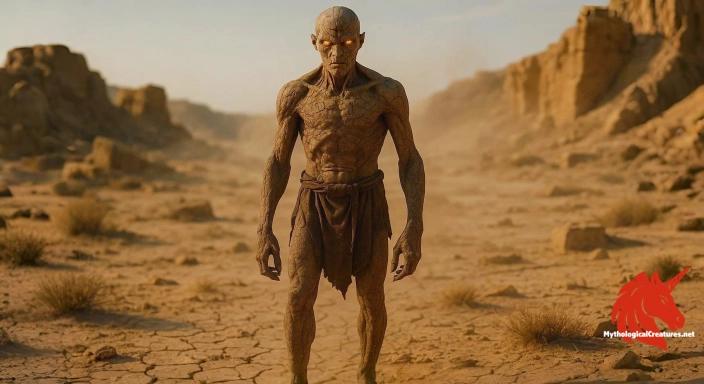
Amala: Amala is a mythological giant from the Native American Northwest Coast who upholds the Earth by balancing it on a spinning pole.
-fff5b88c-2843-42f8-86fd-d96ab258ba41_small.webp "Amala - Amala’s strength is central to maintaining the balance of the world, and his eventual demise marks the prophesied end of the cosmic order.")
Amala
Amala - Amala’s strength is central to maintaining the balance of the world, and his eventual demise marks the prophesied end of the cosmic order.
Origins & First Encounters
Amala is a monumental figure in the mythological traditions of the Pacific Northwest, where he is depicted as a giant who supports the Earth on a spinning pole. His legend is interwoven with the histories of the Tsimshian, Nass, Skidegate, Kaigani, Massett, and Tlingit peoples, whose vibrant oral traditions have preserved his story for generations. The narratives describe him as both a protector and a burdensome pillar, entrusted with the vital task of holding up the world. This myth, rooted in an intimate relationship with the natural world, highlights the indigenous understanding of balance between cosmic forces and earthly life. Amala’s role conveys an enduring message about the interdependence of nature and culture, as his own survival is tied to natural rituals and resources. His existence, as celebrated in traditional lore, underscores the importance of maintaining the cycles that govern life and the environment. The concept of a giant sustaining the cosmos reflects both the grandeur of creation and the precarious equilibrium within nature. In these ancient stories, Amala is not merely a static icon but a dynamic symbol of the ongoing responsibilities inherent in human interaction with the natural order.
Source Texts & Tale Variants
The myth of Amala has been preserved and reshaped through a wide array of oral narratives passed down by various indigenous groups of the Pacific Northwest. Early ethnographic studies and recorded folklore have captured fragments of his story, offering us insight into a world where myth and nature coalesce. Different tribes maintain versions of his tale, with some emphasising the ritualistic use of wild duck-oil to ease his celestial burden. These documented accounts vary in detail, yet all unite around the central theme of a giant whose strength is renewed through a sacred natural remedy. The narrative has been transmitted through community gatherings, ceremonial performances, and storytelling traditions, ensuring its survival and continued relevance. Over time, each retelling has added nuances that reflect local customs, spiritual practices, and the changing landscape of ecological understanding. In several accounts, the annual application of duck-oil becomes a dramatic emblem of renewal and cyclical rebirth, underscoring the interrelation between life cycles and cosmic order. Such diverse portrayals highlight the fluidity and adaptive nature of myth, demonstrating how ancient lore continues to evolve in response to shifting cultural and environmental conditions.
Form & Powers
Amala is envisioned as an enormous and formidable giant whose physical form captivates the imagination with its blend of raw power and mystique. His colossal frame is depicted as possessing a muscular build so vast that it necessitates a regular, ritualistic application of wild duck-oil to relieve the immense strain placed upon him. The imagery often presents him with a rugged, weathered exterior, where deep-set scars and crevices on his skin bear witness to the countless epochs of cosmic duty he has endured. His stature, towering over the natural landscape, reflects a harmonious yet precarious balance between strength and vulnerability. Visual portrayals suggest that his eyes glisten with the wisdom of the ages, hinting at an inner depth forged by centuries of responsibility. Every line and contour of his form suggests a being who is as deeply connected to the physical world as he is to the spiritual realm. Some artistic interpretations even incorporate elemental features, portraying Amala as an embodiment of earth and stone, imbued with a timeless energy. Collectively, these physical descriptions not only highlight his might but also symbolise the enduring link between nature’s forces and the mythic narratives of indigenous culture.
Regional Faces
The myth of Amala exhibits a rich variety of regional adaptations that mirror the distinctive identities of the indigenous groups who recount his story. Among the Tsimshian, his portrayal as the pillar supporting the world is imbued with a profound sense of cosmic duty and spiritual gravitas. In the traditions of the Nass and Massett, Amala’s connection to the natural environment is accentuated through the symbolic importance of wild ducks and the precious duck-oil, which plays a central role in his rejuvenation. The Tlingit and Skidegate versions integrate local natural features and seasonal cycles into the legend, highlighting the dynamic interplay between the land’s bounty and the giant’s mystical strength. Each regional narrative reflects its own environmental concerns and cultural priorities, thereby subtly altering the portrayal of Amala’s physical or ritualistic attributes. Variations in these stories serve to reinforce local values, whether through emphasising the protective roles of natural spirits or the vigilance required to sustain an equilibrium between human activity and nature. The divergent regional perspectives not only enrich the overall myth but also maintain a unified thematic connection that honours the interdependence of ecology and spirituality. Despite their differences, all regional versions resonate with the enduring belief in a world upheld by a mighty and benevolent force.
Cultural Parallels
When compared to other world mythologies, Amala occupies a unique space that reflects an intimate fusion of natural phenomena and cosmic duty. His essential role as the supporter of the Earth invites comparison with figures like Atlas from Greek mythology, though the nature of his burden and the means by which he is sustained are markedly different. Unlike the eternal suffering of Atlas, Amala experiences a periodic renewal of strength, a process upheld through the sacred ritual of applying wild duck-oil. This annual rejuvenation aligns his myth with other seasonal and regenerative traditions found in diverse cultures, where the renewal of life is central to the cosmic order. Similar to other Native American legends that intertwine spirituality with the natural world, his story is a testament to the deep ecological awareness embedded in indigenous narratives. The motif of a giant or titan who upholds the cosmos is widespread in myth, yet Amala’s narrative particularly underscores the finite nature of natural resources, extending its symbolism into concerns about sustainability. Such comparative analysis reveals that Amala serves as both a universal archetype and a culturally specific emblem that speaks to the balance between the forces of nature and the responsibilities of custodianship. His myth thereby forms a bridge between local indigenous beliefs and the broader, global tapestry of creation stories, uniting disparate traditions through shared themes of balance and renewal.
Legacy & Modern Evolution
The evolving legacy of Amala reflects the dynamic nature of indigenous myth in the face of modern challenges and changing environmental realities. Over centuries, his story has been sustained by communities who see in him not only a mythic giant but a symbol of ecological balance and cultural continuity. Modern reinterpretations have transformed traditional imagery into powerful commentaries on resource depletion and environmental stewardship, rendering his legend ever more relevant today. Contemporary indigenous art and literature frequently draw on Amala's narrative to underscore the critical link between natural cycles and human responsibility. His ritual of receiving duck-oil has been reimagined as a poignant metaphor for the need to preserve and renew our natural heritage. As indigenous communities continue to celebrate traditional festivals and share oral histories, Amala's enduring image serves to remind us of the precarious balance between progress and conservation. Academic and creative explorations of his myth have not only revitalised interest in ancient lore but also offered critical insights into modern environmental debates. In this remarkable convergence of tradition and modernity, Amala stands as a timeless emblem of nature's fragility and the enduring human quest to harmonise with the world around us.
Interesting Fact
An intriguing aspect of the Amala myth is how the fate of a world‐sustaining giant is inextricably linked to the availability of wild duck‐oil, symbolizing the delicate balance between nature and cosmic order.
Limited sponsor opportunity
One slot, carefully chosen partners
We only feature a small number of relevant sponsors at any time. If you create serious myth content, we would like to hear from you.
Partner with usQuick Creature Info
Origin:
Features:
Associations:
Our Mythic Legendary Rating:

Habitat:
Supernatural Powers:
Physical Attributes:
Abilities:
Behavior:
Weaknesses:
Lore:
References
Discover Another Mythical Legend You May Not Have Heard Of?
Uncover the mysteries of ancient folklore and expand your knowledge of legendary beings from cultures around the world.
Dare to Meet the Apaosha....
Curated by the Mythological Creatures Team
Series editor: Mythological Creatures Directory
Primary desk: Americas & Indigenous Traditions Desk
(rev. November 2025)