
Amikuk: The Amikuk is a fearsome shapeshifter from Yup'ik legend that inhabits the earth, sea, and ice.
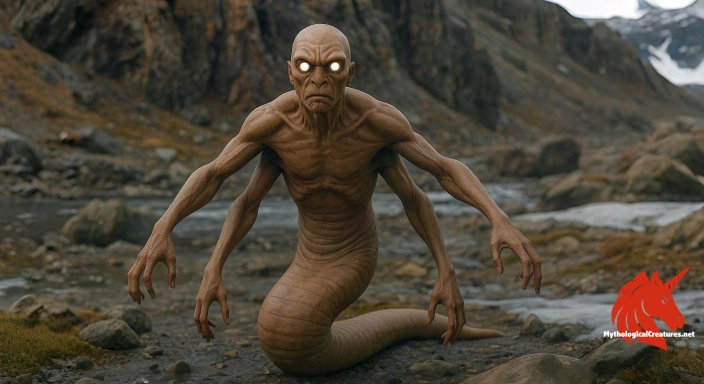
Amikuk
Amikuk - Serves as a cautionary figure embodying nature's unpredictable power and the dangers that lurk beneath the surface.
Origins & First Encounters
The Amikuk stands as one of the most enigmatic figures in Yup'ik legend, its origins steeped in the ancient oral traditions of the people of Alaska. Its earliest attestations are woven into the fabric of indigenous storytelling, where each retelling enhances its multifaceted nature. The creature is celebrated as a shapeshifter, capable of assuming diverse forms that reflect both the benevolent and perilous aspects of the natural world. Living within the earth and the sea, the Amikuk embodies a liminal existence that blurs the boundaries between the visible and the unseen. Traditional narratives present it as a potent force, one that actively influences the fortunes of hunters and travellers. Its dual existence highlights the profound respect held for the natural elements and the spirits that govern them. The legends often present the Amikuk as a mediator between the human world and the mysterious underground or aquatic realms. As such, it has become a symbolic reminder of the unpredictable power of nature and the importance of abiding by its unspoken rules. Its enduring role in Yup'ik culture speaks to a legacy of loyalty, caution, and reverence for the forces that shape life and land.
Source Texts & Tale Variants
The primary accounts of the Amikuk are rooted in the rich tradition of Yup'ik oral storytelling, transmitted from elders to younger generations through intimate communal settings. Narratives vary from one region to another, with subtle differences in details that reflect the local landscape and spiritual sensitivities. Some stories depict the creature as a sea inhabitant with a fearsome visage, while others recount its more terrestrial exploits. Variations include its portrayal as a creature that can both bring gifts and exact a terrible price on unwary travellers. In several accounts, the creature is known by the alternate name Qamungelriit when it assumes human form, adding another layer to its shapeshifting mystique. Early anthropological records, museum archives, and traditional masks—such as the one by Aarnaquq—offer tangible evidence of the creature’s longstanding impact on Yup’ik art and culture. Folklore compendiums occasionally gather these accounts, blending oral histories with artefactual records in an attempt to capture its elusive essence. These varied sources have collectively contributed to a multi-dimensional image of the Amikuk that continues to evolve over time. As a result, the creature remains as much a subject of cultural preservation as it is an object of local superstition and artistic expression.
Form & Powers
The physical manifestations of the Amikuk are as diverse as the environments it inhabits, with each form conveying unique characteristics. When encountered in the sea, it is described as hairless, endowed with four robust arms and a body covered in tough, leathery skin, an adaptation that renders it preferably suited to the harsh maritime conditions. This marine form is particularly noted for its ability to move with a swift, almost imperceptible grace that belies its fearsome reputation. On land, the creature’s abilities transform it further, as it appears to manipulate the very soil beneath its victims, turning solid ground into a deceptive quicksand-like trap. Its capability to infiltrate the human form, whether by simply passing through or by occupying a host, further intensifies its chilling presence. In human guise—known as Qamungelriit—the Amikuk retains subtle hints of its otherworldly origin through careful, enigmatic expressions and an uncanny poise. Witnesses have recounted that even when pursued or engaged in combat, its body defies the ordinary rules of nature, exemplified when an instance of being shot causes it to multiply into eight beings. The array of physical traits attributed to the Amikuk firmly positions it as a figure that embodies both physical might and uncanny supernatural properties, a duality that has fascinated and terrified those who dare to document its form. These eclectic and shifting anatomical details not only enhance its mythic status but also ensure that no single description can ever fully encapsulate the creature’s true essence.
Regional Faces
The portrayal of the Amikuk exhibits notable regional variations that mirror the diverse cultural landscapes of the Yup’ik people. In coastal areas, the creature is often depicted as a denizen of the sea, characterised by its four-armed, hairless form and aggressive predations on isolated hunters. In contrast, inland accounts emphasise its subterranean existence where it transforms the very ground into a treacherous trap for those who traverse it. Each community seems to ascribe a different emphasis to its abilities, sometimes portraying it as a relentless predator and at other times as a mysterious presence offering enigmatic gifts. These differences are reflective of the local environmental challenges and the varying spiritual interpretations of nature’s forces. The creature’s dual existence in water and earth provides a versatile template that communities adapt to contextualise their own experiences with nature’s unpredictability. Some regions even celebrate the Amikuk as a cautionary emblem, employing its image in rituals and art to remind individuals of the need for respect towards the natural world. Meanwhile, others have incorporated its narrative into local folklore as a myth that offers both warning and wisdom. As such, the Amikuk stands as a regional mirror of the broader human struggle to understand and coexist with an environment that is both nurturing and capriciously dangerous.
Cultural Parallels
The myth of the Amikuk finds echoes in various global traditions, resonating with themes common to shapeshifting and chthonic entities around the world. Similar to creatures in Celtic and Norse folklore, the Amikuk embodies a dual nature that is at once both alluring and ominous. Its ability to assume multiple forms is reminiscent of the trickster spirits seen in other indigenous cultures, which use metamorphosis as a means of both adaptation and mischief. In some respects, the creature parallels the Púca of Irish lore, another ambiguous being whose benevolent or malevolent nature depends on the circumstances of its encounter with mortals. Such cross-cultural comparisons underscore a universal human need to reconcile the unpredictable forces of nature with the moral and spiritual fabric of society. The creature also invites comparisons with the shamanic traditions of the circumpolar regions, where transformation and the traversal between worlds are central motifs. Like many mythic shapeshifters, the Amikuk represents the liminal space between life and death, order and chaos, challenging those who encounter it to interpret its ambiguous intentions. This comparative analysis reveals that while the specifics differ, the underlying archetype of the transformative, boundary-crossing being is a recurrent theme in world mythology. The Amikuk is thus part of a larger tapestry of legends that explore the precarious balance between human endeavour and the untamable spirit of nature.
Legacy & Modern Evolution
Over time, the depiction of the Amikuk has undergone significant transformation as it moved from purely oral tradition to modern reinterpretation in art and literature. Its enduring legacy is evident in both traditional practices and contemporary artistic expressions, where the creature is portrayed as a potent symbol of nature’s dual capacity to nurture and menace. Early accounts, rich in folklore and mystery, have gradually been complemented by anthropological studies and curated museum displays that aim to preserve the cultural memory of the Yup’ik people. Modern portrayals often accentuate its physical and metaphysical anomalies, serving as a reminder of the ancient connections between human communities and the natural environment. The permanent display of a traditional Yup’ik mask depicting the Amikuk at the Portland Art Museum highlights how this myth has transcended its regional origins to achieve international recognition. Its imagery and symbolic potency continue to inspire artists, writers, and filmmakers seeking to capture the interplay of tradition and transformation. Contemporary cultural dialogue about environmental and existential threats often invokes figures like the Amikuk to symbolise the unpredictable consequences of human interference with nature. In evolving from a fearsome spirit of the wilderness into a profound allegory of environmental resilience, the Amikuk remains a dynamic emblem of cultural heritage and the lasting power of myth.
Interesting Fact
A traditional Yup'ik mask representing the Amikuk, crafted by artist Aarnaquq (also known as Phillip John Charette), is on permanent display at the Portland Art Museum, underscoring its cultural significance.
For indie creators
Give your myth project a permanent home
Indie authors, artists, small studios, and makers can secure an annual, non-intrusive sponsor slot that meets readers where they explore.
Obtain more informationQuick Creature Info
Origin:
Features:
Associations:
Our Mythic Legendary Rating:

Also Sometimes Known As:
Habitat:
Supernatural Powers:
Physical Attributes:
Abilities:
Behavior:
Weaknesses:
Lore:
Related Creatures, Tales or Lore
- SSkin-walker
- SSelkie
- DDoppelgänger
References
Discover Another Mythical Legend You May Not Have Heard Of?
Uncover the mysteries of ancient folklore and expand your knowledge of legendary beings from cultures around the world.
Dare to Meet the Tataka....
Curated by the Mythological Creatures Team
Series editor: Mythological Creatures Directory
Primary desk: Americas & Indigenous Traditions Desk
(rev. November 2025)