
Amphiaraus: Amphiaraus was a revered seer and warrior in Greek mythology, renowned for his prophetic insights and leadership among the Seven Against Thebes.
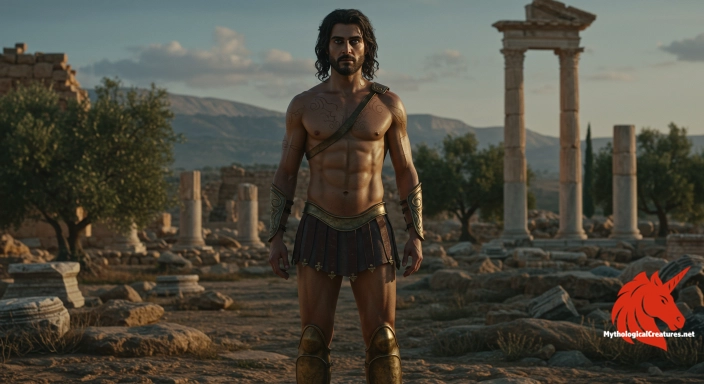
Amphiaraus
Amphiaraus - Amphiaraus is remembered for his deep prophetic abilities and his tragic fate, embodying the conflicts between divine foresight and mortal action in Greek lore.
Origins & First Encounters
Amphiaraus is a celebrated figure steeped in the rich tapestry of Greek mythology, known as a revered seer and a valiant leader among the legendary Seven against Thebes. He was born of the noble lineage of Oicles, himself a recognised prophet, which imbued Amphiaraus with an intrinsic connection to the divine arts of foresight and prophecy. His origin story reflects the intertwining of divine intervention and mortal struggle, setting the stage for a narrative of both internal conflict and heroic destiny. Emerging from the ancient Greek cultural context, he embodied the archetypal hero destined to play a crucial role in one of the most dramatic military conflicts of his era. The earliest attestations of his myth appear in epic poetry and dramatic traditions that celebrated the complexity of fate and the tragic cost of ambition. In these narratives, his prophetic visions served as a sobering reminder of the inevitable destiny awaiting those who challenge the whims of the gods. His eventual decision to join the ill-fated expedition, despite a foreboding premonition of doom, underscores the tension between personal ethics and an inexorable fate. Set against a backdrop of shifting political alliances and divine omens, his story mirrors the chivalric ideals prevalent in ancient Greek society. The resonance of his myth in the cultural consciousness highlights the delicate balance between free will and predetermined destiny. Ultimately, his tale endures as a potent symbol of the tragic hero, whose wisdom and valour remain forever shadowed by the inevitability of fate.
Source Texts & Tale Variants
Ancient texts referencing Amphiaraus include fragments from classical tragedians alongside historical compilations by later mythographers. His myth is interwoven with dramatic works by Aeschylus and Euripides that enriched his character with layers of prophecy and pathos. Early literary sources established him as a seer burdened with the knowledge of an inescapable fate, casting him in a light that blurred the lines between divine insight and human frailty. Some versions of his narrative focus on his internal strife as he grappled with the conflict between duty and the dread of preordained doom. The story of his reluctant participation—compelled into the march against Thebes by the influence of his wife, Eriphyle—adds a profound moral complexity to his character. Various poetic fragments and local oral traditions further embellish his tale, ensuring that each retelling adds new dimensions to his legacy. As his myth travelled through the corridors of time, later Roman authors reinterpreted his actions to emphasise themes of martyrdom and personal sacrifice. In some accounts, his visions are depicted as both a blessing and a curse, a duality that has intrigued audiences for centuries. Despite differences in detail across sources, all versions acknowledge his pivotal role in the tragic events surrounding Thebes. Together, these diverse narratives create a rich mosaic that underlines the enduring fascination with Amphiaraus’s prophetic burden.
Form & Powers
Amphiaraus is often envisioned with a blend of heroic and mystical qualities that define his physical appearance in classical art and literature. Although ancient texts offer few explicit details, artistic depictions typically present him as possessing a robust, athletic build suited to both battle and prophetic endeavours. His strong, well-defined shoulders and dignified stance capture the essence of a warrior endowed with divine insight. The contours of his face, marked by a resolute determination and a hint of sorrow, speak to the burden of knowing his destiny. Traditional portrayals often include a neatly trimmed beard and deep-set eyes, which suggest a profound inner vision combined with rugged heroism. Sculptures and vase paintings idealise his form, using graceful lines to reflect both his physical power and his revered lineage. His attire, usually a flowing tunic or himation, connotes not only the sartorial elegance of the period but also his elevated social and spiritual status. In some artistic renditions, subtle symbols such as a staff or emblematic headpiece are incorporated to signify his dual role as a seer and a warrior. The consistent emphasis on his commanding presence underscores the synthesis of mortal strength and divine mystery. In all, his physical iconography stands as a testament to the harmonious union of heroic might and tragic foreknowledge.
Regional Faces
The myth of Amphiaraus exhibits remarkable regional variation, as different communities adapted his narrative to reflect their unique cultural and spiritual landscapes. In Boeotia, where the interplay between divine fate and mortal endeavour was intensely revered, he was celebrated as the quintessential hero whose life was interwoven with local religious rites and prophetic traditions. Some localities even established sanctuaries and shrines believed to be touched by his divine insight, thereby integrating his myth with regional cult practices. In various parts of the Greek mainland, his character was reshaped to resonate with local values, emphasising either his martial prowess or his sorrowful acceptance of fate. Artistic representations across the Aegean islands and coastal regions often merged his identity with indigenous seer traditions, blending broader mythic themes with local storytelling. In other versions, particularly within the Peloponnesian tradition, his depiction highlights a more stoic and resolute leader facing an inescapable destiny. Communities adapted his narrative not only to commemorate his heroic sacrifice but also to confront their own existential and spiritual dilemmas. These geographical reinterpretations underscore the fluid nature of myth, where local and pan-Hellenic elements coalesce. As a result, Amphiaraus's legend not only reflects a singular heroic journey but also embodies the diverse religious and cultural fabric of ancient Greece.
Cultural Parallels
Amphiaraus’s tale resonates with cross-cultural mythological themes that transcend the boundaries of Greek tradition. Like the figure of Cassandra, his gift of prophecy is as much a burden as it is a divine endowment, highlighting the universal motif of the tragic seer. His internal struggle with the weight of foreknowledge finds echoes in Eastern traditions where oracular sages are often depicted as tormented figures burdened by insights into inevitable doom. In Norse mythology, heroes faced with predetermined fates share with Amphiaraus the somber acceptance of a destiny that cannot be altered, underscoring a common narrative of heroic sacrifice. Elements of his life story also parallel those of other legendary figures in global mythologies, where the conflict between fate and free will is a central theme. His character serves as a counterpoint to more straightforward warrior archetypes, instead embodying the complexity of human vulnerability in the face of divine will. This comparative framework enriches his myth, situating him within a broader tapestry of tragic figures whose lives illustrate the cost of knowledge. Scholars and storytellers alike draw on these parallels to explore the balance between predetermination and human agency. The intermingling of these themes across different cultures not only validates the timeless nature of his saga but also contributes to its enduring mystique. In sum, Amphiaraus emerges as a multifaceted symbol of the eternal human quest to reconcile inner wisdom with an unyielding fate.
Legacy & Modern Evolution
Throughout history, Amphiaraus has evolved from a classical mythic seer to a lasting symbol of tragic heroism and the inescapable burden of foreknowledge. In the classical period, his exploits were immortalised in both literature and visual arts, where his blend of martial valour and prophetic insight captured the imagination of his contemporaries. The Renaissance sparked a renewed interest in his narrative, with artists and writers reinterpreting his fate as a meditation on the conflict between destiny and human endeavour. During the Romantic era, his internal struggles and poignant sacrifices resonated deeply with a culture increasingly fascinated by themes of individual torment and existential inevitability. Modern scholarly research has further unpacked his myth, exploring its philosophical dimensions and its commentary on the human condition. His legacy has been reflected in various media, from stage productions to modern visual art, where reinterpretations emphasise the timeless clash between free will and divine ordination. Academic discourse frequently invokes his story as a case study in the paradoxical nature of prophetic power and human vulnerability. Although often overshadowed by other prominent figures in Greek mythology, his narrative continues to inspire discussions about fate, responsibility, and the moral complexities of leadership. Contemporary adaptations have drawn upon his tragic story to comment on modern dilemmas regarding destiny and the quest for personal autonomy. Ultimately, Amphiaraus endures as a multifaceted emblem of heroic sacrifice, a reminder that even the wisest among us are bound by the intricate threads of fate.
Interesting Fact
An interesting aspect of Amphiaraus's myth is his internal struggle between foreknowledge of death and duty, which ultimately led him to join a doomed expedition under compulsion.
Support the directory
Promote your myth project and fund more research
Sponsor placements help keep this directory growing and free to use while giving your work a focused, relevant audience.
Learn how sponsorship worksQuick Creature Info
Origin:
Features:
Our Mythic Legendary Rating:

Also Sometimes Known As:
Habitat:
Supernatural Powers:
Abilities:
Behavior:
Weaknesses:
Lore:
Related Creatures, Tales or Lore
- TTiresias
- CCassandra
- CCalchas
References
Discover Another Mythical Legend You May Not Have Heard Of?
Uncover the mysteries of ancient folklore and expand your knowledge of legendary beings from cultures around the world.
Dare to Meet the Badalisc....

Curated by the Mythological Creatures Team
Series editor: Mythological Creatures Directory
Primary desk: Hellenic & Ancient Mediterranean Desk
(rev. November 2025)