
Angada: Angada is a legendary vanara from the Hindu epic Ramayana, celebrated for his loyalty and martial prowess.
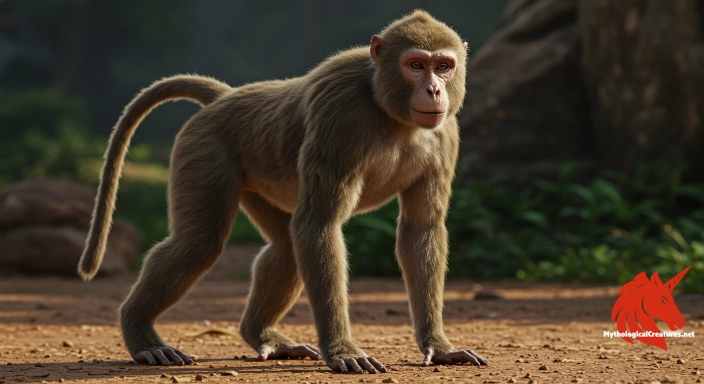
Angada
Angada - Angada is celebrated for his unwavering loyalty and bravery in the Ramayana, playing a crucial role in the fight against Ravana and eventually ascending as the monarch of Kishkindha.
the legend in five swipes.
the legend in five swipes.
When did people first speak of Angada?
Angada is celebrated as one of the central vanaras in Hindu mythology, emerging prominently during the epic quest to rescue Sita. Born to the mighty Vali and raised amidst the royal splendour of Kishkindha, his origins are steeped in both valor and nobility. His early appearance in the Ramayana underlines a character who embodies youthful bravery, cleverness, and the indomitable spirit of his people. Over time, his journey takes him from a spirited prince to a revered leader, symbolising the harmonious union of martial strength and sagacious rule. The narratives surrounding Angada illustrate the complex interplay of divine intervention and mortal endeavour that is typical in epic literature. His character not only highlights the virtues of loyalty and duty but also the importance of innovative strategies in overcoming formidable challenges. As the story unfolds, he earns admiration for his relentless courage and commitment in the face of adversity. Even today, Angada’s legacy continues to evoke admiration and serves as a cultural emblem of determination and honour.
The Documented Accounts of Angada
Angada’s adventures are most notably chronicled in the ancient Sanskrit epic, the Ramayana, where his exploits contribute significantly to the narrative’s dramatic progression. Traditional sources such as the Valmiki Ramayana provide detailed accounts of his role, emphasising his strategic mind and martial prowess during the battle against Ravana. Various textual traditions offer different perspectives, with some versions accentuating his youthful exuberance while others highlight his emerging wisdom amid conflict. Beyond the canonical texts, regional retellings and oral traditions have enriched his story with additional layers of narrative and local flavour. In certain Jain interpretations of the Ramayana, subtle variations in his character and lineage are observed, reflecting the diversity of the mythic tradition. These textual and oral sources collectively paint a picture of a character who is both a loyal aide to Rama and a complex hero in his own right. Over time, the multiplicity of story variants has allowed Angada’s portrayal to resonate with audiences across generations. The enduring richness of these sources ensures that his legacy continues to inspire both scholarly inquiry and popular imagination.
What could Angada do?
Angada is typically depicted as a striking vanara whose physique marries human form with the agility of a simian creature. His well-toned muscles and athletic build are emblematic of his prowess in both battle and agile manoeuvres. Artistic renderings often highlight a dark, lustrous coat that catches the light with every dynamic movement, symbolising his deep connection to the natural world. His face is frequently portrayed with intense, expressive eyes that mirror his discerning mind and unwavering vigilance. Emphasising the duality of beauty and strength, traditional illustrations show him adorned with regal ornaments, underscoring his royal heritage. The balance between a youthful appearance and a battle-hardened demeanour is a recurring theme in depictions of his character. Variations in artistic style sometimes lend him a slightly larger-than-life stature, reinforcing his role as a princely warrior. These detailed portrayals contribute to a visual identity that is both majestic and authentically rooted in the rich iconography of the Ramayana.
How does Angada differ by region?
Across India, the portrayal of Angada takes on unique hues shaped by regional cultural traditions and artistic practices. In northern narratives, he is often celebrated as a robust warrior whose vigorous exploits epitomise the spirit of the ancient epics. Southern adaptations, particularly those showcased in classical dance dramas and folk theatre, accentuate his youthful energy and inventive combat techniques. Local renditions sometimes imbue him with additional supernatural elements, transforming him into a symbol of both hope and transformation. In several regional traditions, his character is contextualised within the broader framework of vanara lore, lending depth to his role as both a prince and a harbinger of change. Distinctive local festivals and rituals also celebrate his feats, ensuring that his story is interwoven with communal identity and cultural pride. These regional variations not only broaden his mythological appeal but also allow diverse communities to connect with his legacy in intimate, locally meaningful ways. The adaptive quality of his narrative serves as a testament to the dynamic evolution of myth, resonating deeply with audiences from varied cultural landscapes.
Angada: Shared Themes in World Myth
Comparatively, Angada serves as a compelling counterpoint to other mythological heroes who blend youthful exuberance with profound martial skill. His role is frequently set alongside that of Hanuman, another iconic vanara whose divine attributes have captivated countless devotees across cultures. While Hanuman is largely revered for his supernatural feats and devoted service, Angada is equally noteworthy for his strategic ingenuity and emerging leadership. This nuanced characterisation invites comparisons with heroic figures in other traditions, such as the valor of Greek heroes whose journeys are marked by both physical strength and personal growth. His narrative mirrors the archetypal journey of the youthful warrior who evolves through trials into a mature leader, a theme prevalent in many global mythologies. The interplay of impulsiveness contrasted with deep-seated duty in his character offers rich grounds for cross-cultural analysis. Such comparisons not only highlight the universal appeal of his story but also illustrate the diverse ways in which mythological heroes are celebrated. In this light, Angada’s legacy transcends geographical boundaries, contributing to a broader conversation on heroism and embodied virtue in mythic literature.
How did Angada survive into the modern world?
Over the centuries, the evolution of Angada’s character reflects both historical continuity and modern reinterpretation of ancient myths. Initially presented in the epic as a supporting yet pivotal character, his role has been increasingly elaborated upon in contemporary retellings and artistic adaptations. His portrayal has shifted subtly from that of a brave prince to a symbol of youthful innovation, loyalty, and the relentless pursuit of justice. Modern media, including television serials, dance dramas, and animated series, have embraced his character, often reimagining his exploits to resonate with present-day audiences. This evolution is marked by a renewed emphasis on his strategic mind and his ability to inspire others through action rather than mere speech. Cultural festivals and literary works continue to celebrate his story, reaffirming his place as an integral figure in the tapestry of Indian mythology. Scholars and storytellers alike have reinterpreted his narrative to highlight themes of regeneration, ethical leadership, and the passage from youthful defiance to mature responsibility. The enduring legacy of Angada not only preserves the timeless values encapsulated in the Ramayana but also encourages modern reflections on duty, bravery, and the transformative journey of life.
Interesting Fact
An intriguing aspect of Angada's character is how his youthful vigor and martial excellence are complemented by his eventual rise to kingship, underscoring a rare blend of warrior spirit and regal responsibility.
Mythological Treasures
Norse Sagas: A field guide to the beasts of the Viking world
Drawn from the saga accounts themselves, with the powers, weaknesses and doom of each being set out.
Egyptian Legends: A field guide to the gods and monsters of ancient Egypt
Guardians of the living and devourers of the dead, with the role each played in judgement.
Chinese Beasts: A field guide to the dragons and demon kings of Chinese myth
From river dragons to demon kings, with the legends that shaped five thousand years of storytelling.
the legend in five swipes.
For indie creators
Give your myth project a permanent home
Indie authors, artists, small studios, and makers can secure an annual, non-intrusive sponsor slot that meets readers where they explore.
Obtain more informationQuick Creature Info
Features:
Associations:
Our Mythic Legendary Rating:

Habitat:
Physical Attributes:
Abilities:
Behavior:
Lore:
References
Discover Another Mythical Legend You May Not Have Heard Of?
Uncover the mysteries of ancient folklore and expand your knowledge of legendary beings from cultures around the world.
Dare to Meet the Nemean lion....

The Mythological Creatures Book Series
Yokai, Greek, Norse, Egyptian & Chinese. Five illustrated field guides to the creatures the old stories either warned or told you about.



Curated by the Mythological Creatures Team
Series editor: Mythological Creatures Directory
Primary desk: Asian & Pacific Myth Cycles Desk
(rev. November 2025)