
Arikura-no-baba: Arikura-no-baba is a folkloric figure from Gifu Prefecture, Japan, known for her supernatural interventions during natural disasters.

Arikura-no-baba
Arikura-no-baba - Revered as a guardian figure who uses magical interventions to prevent natural disasters, embodying community resilience.
the legend in five swipes.
the legend in five swipes.
Where does Arikura-no-baba come from?
Arikura-no-baba is a captivating figure rooted in the folkloric traditions of Gifu Prefecture, Japan. Her legend emerges from the rugged and mystical landscapes of Takayama, where nature and myth intertwine. Born from the melding of local spiritual beliefs and the unpredictable forces of nature, she quickly became emblematic of both protection and the mysterious beyond. The narrative of her life is interwoven with accounts of miraculous interventions during natural crises, such as calming a rumbling mountain through prayer. Her epithet, literally meaning 'ant-saddle hag', hints at an otherworldly aspect that has long intrigued local storytellers. Over time, her persona has evolved into a symbol of the delicate balance between human vulnerability and supernatural authority. Communities celebrated her as a guardian who kept chaotic natural forces at bay through ancient rites and wisdom. Her story reflects the complex interplay of fear, reverence, and hope that has historically shaped local cultural identity. The enduring legacy of Arikura-no-baba continues to evoke fascination, ensuring her place as a seminal character in Japanese folklore.
Where can you read about Arikura-no-baba?
The primary sources for the tale of Arikura-no-baba are found in local oral traditions and early written compilations of regional folklore. Local manuscripts and folk songs preserved through generations recount her extraordinary deeds in moments of natural upheaval. Such texts, though sparse, have been supplemented by academic studies of Japanese folklore and regional mythos. Variants of her story can be seen in different recitations, with some versions highlighting her role as a mediator between the human and the divine. In certain accounts, her actions are portrayed as deliberate interventions aimed at restoring order, while others imbue her with a whimsical unpredictability. Folktale collectors in the late 19th and early 20th centuries recorded multiple recollections that added layers to her narrative. These diverse sources reveal a multifaceted character whose powers were invoked during both communal crises and personal misfortunes. The convergence of these accounts provides a rich tapestry of literature that underscores the significance of her myth. Despite the occasional discrepancies in details, the collective corpus serves as a vital record of regional spiritual beliefs.
What powers did Arikura-no-baba have?
Arikura-no-baba is traditionally depicted as a venerable old woman whose appearance reflects a life spent in rugged, mountainous environs. Her skin is often described as weathered and lined, echoing the creases of an ancient landscape itself. Eyes that glimmer with uncanny insight lend her a gaze that is both piercing and compassionate. Her hair, unkempt and silvered by time, is said to cascade like strands of frost against the backdrop of her worn garments. The moniker 'ant-saddle hag' may refer to peculiar adornments or markings that set her apart from ordinary elders. Tales suggest that her physical form, though frail by conventional measures, is imbued with a latent energy that defies her age. In some illustrations, her stature is exaggerated to evoke the mysterious nature of her supernatural gifts. Every detail, from her hunched posture to her enigmatic smile, is painted with the brush of folklore, ensuring her image remains indelibly imprinted in local memory. Her appearance, both humble and formidable, encapsulates the paradox of vulnerability and omnipotence that defines her character.
Where was Arikura-no-baba best known?
In the heartlands of Gifu Prefecture, the legend of Arikura-no-baba takes on a distinctly local flavour, shaped by the peculiarities of the Takayama environment and community rituals. Regional tales highlight her connection to specific local landmarks such as the rumbling mountains and steaming onsens, emphasising her role as a custodian of natural phenomena. Nearby areas, while resonating with her story, often introduce subtle variations that reflect their unique cultural milieu. Some neighbouring regions refer to her with alternative epithets, each capturing a slightly different aspect of her personality and powers. Local oral traditions underscore her prowess not only in controlling nature but also in offering wisdom during times of crisis. This has given rise to community rituals and festivals that occasionally invoke her name in the hope of balanced natural forces. The adjustments in her depiction across regions reveal the adaptive nature of folklore and the influence of regional climates and landscapes on myth-making. Through these variations, Arikura-no-baba continues to be a potent symbol of local identity and resilience, embodying the shared values of the communities she is said to protect.
Which figures are similar to Arikura-no-baba?
The myth of Arikura-no-baba finds intriguing echoes in the broader world of folklore, where aged women endowed with supernatural abilities frequently appear. Like the revered crones of European legends, her character represents both the wisdom of age and a mysterious, uncanny power over nature. In various traditions, similar figures use ritualistic incantations to tame the chaotic forces of the natural world. Though her actions are firmly planted in the Japanese context, comparisons can be drawn with Slavic figures such as Baba Yaga, who similarly straddles the boundary between benevolence and menace. Both figures encapsulate the ambivalence felt towards nature, where respect is mixed with an underlying fear of its unpredictable force. Additionally, her role as a guardian who intervenes during environmental crises paralleled aspects found in other indigenous mythologies. This cross-cultural similarity speaks to a universal human impulse to personify nature through powerful, often enigmatic, maternal figures. The shared traits among these beings reveal a common archetype that speaks to the collective human experience of nature’s dual nature. In comparative mythology, Arikura-no-baba stands as a testament to the enduring appeal of the supernatural crone, a figure that bridges the gap between mortal frailty and divine intervention.
How has Arikura-no-baba changed over time?
Over time, the legend of Arikura-no-baba has demonstrated a remarkable capacity for reinvention, reflecting shifts in societal attitudes towards nature and the supernatural. Once primarily an oral tradition, her story has been recorded in folk anthologies and has found new expression in modern media. Contemporary reinterpretations often cast her as a symbol of environmental stewardship, a reminder of humankind’s deep-rooted relationship with the natural world. Modern portrayals in literature, film, and local festival celebrations highlight her as a figure of empowerment, transcending the simple image of a frail old woman. Her myth has evolved to incorporate themes of resilience and ecological wisdom, resonating with modern audiences increasingly concerned with sustainability. In Gifu, annual commemorations sometimes invoke her legacy as a guardian spirit who once subdued nature's fury. This evolution mirrors the broader trend of reexamining traditional folklore to find contemporary relevance. Despite the passage of time, Arikura-no-baba remains a dynamic and enduring symbol whose narrative continues to be retold, adapted, and celebrated within both scholarly circles and popular culture.
Interesting Fact
Arikura-no-baba's epithet 'ant-saddle hag' hints at a unique local symbolism that distinguishes her from other folkloric hags, blending elements of mystery with practical intervention in natural events.
Mythological Treasures
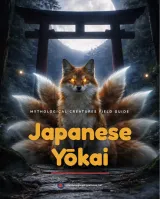
Japanese Yokai: A field guide to the spirits and demons of Japanese folklore
Fifteen spirits, with the signs to watch for and what the old tales say to do if you meet one.
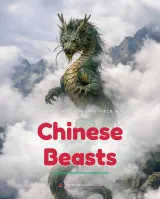
Chinese Beasts: A field guide to the dragons and demon kings of Chinese myth
From river dragons to demon kings, with the legends that shaped five thousand years of storytelling.
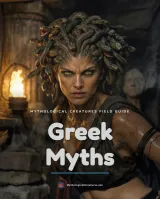
Greek Myths: A field guide to the monsters of ancient Greece
Every monster here earned its place in legend, and each gets a full page of artwork and the story behind it.
the legend in five swipes.
Partner with Mythological Creatures
Bring your myth-based world into ours
From game settings to narrative worlds, we work with partners who treat myths with care. Share your project for a potential sponsor slot.
Partner with usQuick Creature Info
Features:
Associations:
Our Mythic Legendary Rating:

Also Sometimes Known As:
Habitat:
Supernatural Powers:
Physical Attributes:
Abilities:
Behavior:
Lore:
Related Creatures, Tales or Lore
References
Discover Another Mythical Legend You May Not Have Heard Of?
Uncover the mysteries of ancient folklore and expand your knowledge of legendary beings from cultures around the world.
Dare to Meet the Danu....
-52c59d67-3349-45fe-b9a4-8275402f1451_small.webp "Depiction of Danu")
The Mythological Creatures Book Series
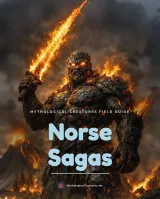
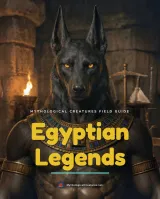
Yokai, Greek, Norse, Egyptian & Chinese. Five illustrated field guides to the creatures the old stories either warned or told you about.
Curated by the Mythological Creatures Team
Series editor: Mythological Creatures Directory
Primary desk: Asian & Pacific Myth Cycles Desk
(rev. November 2025)