
Asbolus: Asbolus is a centaur from Greek mythology known for his prophetic abilities.
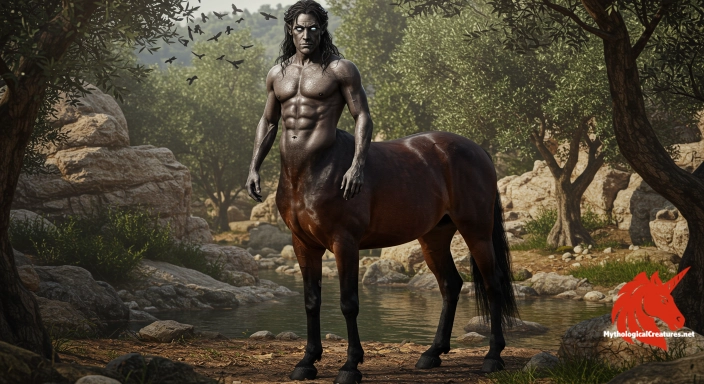
Asbolus
Asbolus - Asbolus is recognised for his rare prophetic abilities among centaurs, symbolising the blend of human wisdom and animal instinct in Greek myth.
Origins & First Encounters
In the ancient Greek mythos, Asbolus emerges as a singular centaur whose very name—meaning "sooty" or "carbon dust"—evokes both mystery and elemental power. His origins are interwoven with the rich tapestry of Greek mythology, where he is celebrated not merely as a creature of brute strength, but as a seer endowed with the ability to divine omens. Early attestations of his legend are found in classical texts, with Hesiod notably casting him in the role of an augur who interpreted the flight of birds. This dual nature—combining the untamed sensibilities of the natural world with the refined insights of prophetic wisdom—helped to cement his status within the pantheon of mythological figures. Asbolus’ story reflects a broader cultural reverence for the forces of nature, where even the wild centaurs could be custodians of divine knowledge. His character is depicted as bridging the gap between the celestial and the terrestrial, a role that underscored much of Greek religious thought. The layered narrative of his life adds depth to the archetype of the seer, woven into the fabric of an era that celebrated the interplay of fate and natural phenomena. In retellings passed down through generations, his legend has evolved to reflect both the human quest for knowledge and the awe inspired by the natural world. Such narratives enshrine Asbolus not only as a myth but as a symbol of wisdom emerging from the primal elements of existence.
Source Texts & Tale Variants
The literary record of Asbolus stretches back to some of the earliest accounts of Greek myth, with Hesiod being a primary reference who lauded his abilities as an augur. His mention in classical texts provided a foundation upon which later writers would embellish his prophetic attributes. Various fragments from ancient Greek literature hint at a creature who was both mystical and pragmatic, capable of realising the hidden messages in the flight of birds. Notions of his divinatory role were amplified in regional oral traditions, where storytellers interwove his persona with local cults of the divine. In some versions of the myth, Asbolus is portrayed as a solitary figure, whose prescient insights were sought during times of political or military upheaval. Other variants blend his character with ritualistic elements, aligning his prophecies with seasonal and celestial cycles. Although the surviving texts are fragmentary, they consistently emphasise his connection to the natural world and the cosmos. Later interpretations occasionally shifted focus toward his enigmatic nature, reflecting the evolving tastes of mythographers during the Hellenistic period. These diverse sources collectively underscore a myth that was as mutable as it was compelling, securing his place in the annals of mythological tradition.
Form & Powers
In depictions of Asbolus, the hallmark is his striking duality as both beast and sage. His lower body, that of a powerful and robust horse, is frequently illustrated in a dark, sooty hue, resonating with the literal meaning of his name. The upper half of his form, embodying human elements, is marked by a well-defined musculature and a countenance that hints at wisdom beyond mortal years. Artists have often noted the intensity of his deep-set eyes, which seem to capture the silent language of the skies. His features, rugged yet refined, offer a glimpse into the union of wild instinct and intellectual acumen. Detailed renderings sometimes include a mane that appears as if woven from wisps of smoke, an artistic nod to the ephemeral nature of his prophetic vision. Various portrayals add intricate markings along his skin, symbols that are interpreted as mystical runes or connections to cosmic forces. The interplay between his graceful human agility and the raw power of his equine form offers abundant material for artistic interpretation. Through such physical characteristics, Asbolus stands as an icon of the mythical hybrid, embodying both natural strength and supernatural insight.
Regional Faces
Regional narratives surrounding Asbolus illustrate how his myth was adapted to fit local traditions and natural landscapes. In rural areas of Greece, his image was often interlaced with agrarian cycles, where his abilities to read bird omens were seen as indicators of forthcoming seasonal changes. Local variations sometimes presented him as a guardian of sacred groves, a protector whose otherworldly vigilance extended to the cycles of both nature and society. In the rugged hinterlands, his dark, sooty imagery resonated with volcanic or shadowed terrains, thus reinforcing the impression of an elemental force. Coastal counterparts integrated his prophetic reputation with maritime superstitions, aligning bird flights with the shifting fortunes of seafarers. These adaptations allowed his mythology to flourish in diverse ecological contexts, each adding a unique layer to his character. In some regions, his mystical legacy was intertwined with local festivals and rituals, whereby community gatherings paid homage to the cyclical dance of fate and nature. This regionally varied portrayal underscores the versatility of his myth, capable of absorbing local colours while retaining a central motif of divination. Overall, Asbolus’ legend is a dynamic example of how mythology can be refracted through different cultural lenses, adapting to the rhythms of local life and belief.
Cultural Parallels
Asbolus occupies a distinctive niche within the broader spectrum of mythological seers and hybrid creatures. His function as an augur draws interesting parallels with other prophetic figures in Greek mythology, such as Chiron, who also blended martial prowess with celestial wisdom. Unlike some of his centaur peers who were primarily revered as warriors, Asbolus is celebrated for his interpretative acumen, a trait that invites comparisons to oracular figures in other ancient cultures. In the diverse tapestry of world mythology, similar archetypes can be found where natural phenomena are read as messages from the divine, suggesting a common human impulse to seek meaning in the randomness of nature. This motif is evident in the traditions of divination that utilised the behaviour of birds, a practice that spanned from the Mediterranean to regions of Asia. His mythological narrative also shares thematic similarities with seers in Celtic and Norse traditions, where the power of prophecy often derives from an intimate bond with nature. Such cultural parallels affirm that the role of the mystic who interprets omens is a recurring theme across civilizations. In synthesising these inter-cultural elements, Asbolus serves as an illustrative case of how mythical narratives transcend geographical borders while adapting to distinct societal frameworks. This comparative analysis not only highlights his unique characteristics but also situates him within the universal archetype of nature-bound prophecy.
Legacy & Modern Evolution
Over the centuries, the figure of Asbolus has evolved from a somewhat obscure centaur seer into a symbol representing the eternal confluence of nature and divine wisdom. Early literary sources presented him as a conduit for the language of the natural world, a role that resonated with ancient audiences attuned to the mystique of the natural environment. His portrayal gradually merged with allegorical narratives, thereby expanding his reach beyond classical myth into the realms of art and philosophy. During the Renaissance, reinterpretations of Greek myths saw Asbolus reimagined in the context of human reason and natural philosophy, often as a reminder of nature’s latent messages. In modern fantasy literature and visual media, his character has been adopted and reinterpreted, reflecting contemporary concerns with the balance between civilization and the wild. The resurgence of interest in mythological hybridity has led to new artistic explorations where Asbolus is depicted as a timeless oracle, endowed with a mysterious allure. Today, his legacy is evident not only in academic studies of myth but also in popular culture, ranging from novels and films to role-playing games that celebrate the magic of ancient lore. As the myth continues to be reinterpreted by each generation, Asbolus remains a compelling emblem of the enduring connection between the earthly and the ethereal. His journey from the dusty scrolls of antiquity to the vibrant canvases of modern art encapsulates the transformative power of myth across time.
Interesting Fact
Unlike many centaurs celebrated solely for their strength, Asbolus is distinct for his acute prophetic insight and role as an augur, underlining the multifaceted nature of mythological figures.
For serious myth projects
Feature your work alongside the legends
From academic works to story-rich games, we highlight projects that respect world mythologies. Talk to us about a measured, long-term placement.
Start a conversationQuick Creature Info
Origin:
Features:
Associations:
Our Mythic Legendary Rating:

Also Sometimes Known As:
Habitat:
Supernatural Powers:
Physical Attributes:
Abilities:
Behavior:
Lore:
References
Discover Another Mythical Legend You May Not Have Heard Of?
Uncover the mysteries of ancient folklore and expand your knowledge of legendary beings from cultures around the world.
Dare to Meet the Arduinna....

Curated by the Mythological Creatures Team
Series editor: Mythological Creatures Directory
Primary desk: Hellenic & Ancient Mediterranean Desk
(rev. November 2025)