
Astacia: Astacia is a minor nymph from Greek mythology, remembered for her ethereal beauty and the honour bestowed upon her by Dionysus who named a city after her.

Astacia
Astacia - Astacia is revered as a nymph whose influence was significant enough to inspire Dionysus to name a city after her.
the legend in five swipes.
the legend in five swipes.
Astacia Origins: The Earliest Accounts
Astacia emerges in the tapestry of Greek myth as an enchanting spirit whose legacy is intertwined with divine honour and natural splendour. Her myth is intrinsically connected to the celebratory act of Dionysus, who immortalised her by naming a city in recognition of her grace. The origins of her legend are steeped in the mystique of ancient cult practices, where the divine and the natural world coalesced. She is portrayed as a figure who embodies the intrinsic beauty of nature, transcending mortal bounds to emerge as an icon of both fertility and aesthetic allure. In ancient times, the act of naming a city after a nymph spoke of a deep reverence for the forces that governed the earth and its seasonal cycles. Astacia’s presence in myth underscores a broader cultural affinity for deities associated with the bounties of nature and the transformative power of the divine. Early attestations, though fragmentary, hint at a revered spirit who bridged the gap between the ephemeral and the eternal. Her enduring appeal lies in the delicate balance she represents between human civilisation and the raw beauty of the natural world.
Who wrote down the legend of Astacia?
Ancient texts offer only fleeting glimpses of Astacia’s myth, leaving much to the imagination of both classical and modern interpreters. References to her appear in fragments of poetry and minor mythographic works, which celebrate her association with Dionysus and the subsequent founding of a significant city. Although the primary sources are sparse, oral traditions and regional lore have supplemented these accounts with rich narrative variants. Some storytellers present her as a muse whose divine beauty catalysed the creation of sacred urban spaces. Multiple versions of her story have circulated, each accentuating different aspects of her ethereal charm and connection to nature. In several variants, the act of naming the city is depicted as a ritual honour that symbolised the synchronisation of mortal endeavour and divine inspiration. While the extant texts do not provide exhaustive details, a tapestry of ancillary myths hints at a syncretic tradition that celebrated both the lush land and its celestial patrons. Over time, commentators have woven her sparse mentions into broader mythological themes, reinforcing her status as an emblem of beauty and divine favour.
What could Astacia do?
Visual portrayals of Astacia highlight her as an epitome of ethereal beauty and grace, typical of the classical nymph archetype. Her form is often rendered with flowing, lustrous hair that cascades like the gentle torrents of a sacred spring. Depictions suggest that her eyes gleam with a mysterious luminescence reflective of both wisdom and charm. Artists have frequently adorned her with diaphanous garments that evoke the delicate interplay of light and shadow characteristic of nature at dawn. Accents of vine motifs and floral embellishments on her attire evoke a direct association with Dionysus and the fertility of the natural world. Her skin is imagined as luminous and flawless, bearing subtle patterns that echo the organic lines of leaves and water ripples. Some classical artworks attribute to her a serene and almost hypnotic allure that hints at her supernatural origins. The diversity in her portrayal, from soft, subtle features to a more dynamic and animated presence, underscores the fluidity with which her myth was adapted over time. These intricate details collectively paint a portrait of a nymph who not only captivates with her physical charm but also symbolises the timeless beauty of nature itself.
How did location shape the story of Astacia?
Across the varied landscapes of ancient Greece, the myth of Astacia has been reshaped to reflect distinct regional identities and cultural priorities. In some parts of the Greek world, she is celebrated not solely as a nymph associated with Dionysian revelry but as a guardian of the fertile countryside and the natural cycles of harvest. Coastal communities, for instance, have imbued her with maritime qualities, often intertwining her lore with that of sea deities and local water spirits. On the mainland, her presence is sometimes linked to the rites of spring and renewal, symbolising the rejuvenating power of nature itself. In certain city-states, local festivals honour her role as the divine patroness of the city that bears her name, thereby weaving her myth into the very fabric of civic identity. Variations in ritual practice and iconography reveal how local customs adapted her legend to resonate with both agrarian and urban sensibilities. Despite these differences, the core essence of Astacia as a symbol of beauty and divine favour remains a unifying thread. The regional adaptations serve as a testament to the fluid nature of myth, where even a single figure can embody diverse and dynamic roles across various cultural landscapes.
Astacia: Shared Themes in World Myth
Astacia’s myth finds resonant echoes in the broader canon of mythological figures who encapsulate nature’s splendour and ephemeral grace. Her character parallels that of other Greek nymphs, such as the Naiads and Oreads, who similarly bridge natural phenomena with divine attributes. Much like the revered deities of Athena and Artemis, her association with a city's founding lends her a distinctive civic dimension rarely afforded to other minor divine figures. In the larger Mediterranean mythos, comparable deities appear that symbolise the intermingling of the natural world with urban and cultural life. Roman interpretations of nature spirits, for instance, share several attributes with Astacia, underscoring a shared cultural emphasis on the vitality of the natural realm. Beyond the Greco-Roman sphere, echoes of her character can be discerned in the elemental deities found in Celtic and Near Eastern traditions, which celebrate nature’s inherent magic. This cross-cultural comparison reveals a common human impulse to worship and immortalise the natural world through divine personification. Astacia stands as an exemplar of this universal mythic archetype, linking the subtle grace of nature with the enduring legacy of civilisation.
Astacia: The Legend's Second Life
Over the centuries, the myth of Astacia has undergone a fascinating transformation, evolving from modest mentions in classical texts to a richly reimagined symbol of nature’s harmony with human endeavour. Her once-fragmentary story has been revisited by modern artists and writers, who appreciate the delicate interplay between her divine allure and the urban legacy bestowed by Dionysus. In contemporary artistic circles, she serves as a muse for creative reinterpretations that blend ancient myth with present-day philosophies of nature and civilisation. The city named in her honour is often portrayed as a living space where myth and memory converge, reflecting an enduring tradition of celebrating the divine in everyday life. Scholars and enthusiasts alike have found inspiration in her narrative, using it as a lens through which to examine the dynamic relationship between cultural identity and natural phenomena. Modern festivals and cultural revivals sometimes evoke her spirit, encouraging a re-engagement with the values of beauty, fertility, and artistic expression inherent in the ancient past. Despite the scarcity of early detailed records, her legend continues to influence both classical scholarship and modern creative pursuits. As new generations reinterpret her myth in literature, art, and performance, Astacia endures as an emblem of the timeless and transformative power of myth, bridging antiquity with contemporary visions of beauty and urbanity.
Interesting Fact
It is intriguing that Dionysus, a god known for his passion and revelry, chose to honour Astacia by naming a city after her, highlighting the influential role of even lesser-known nymphs in Greek mythology.
Mythological Treasures
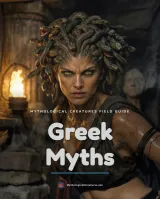
Greek Myths: A field guide to the monsters of ancient Greece
Every monster here earned its place in legend, and each gets a full page of artwork and the story behind it.
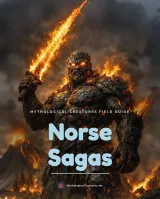
Norse Sagas: A field guide to the beasts of the Viking world
Drawn from the saga accounts themselves, with the powers, weaknesses and doom of each being set out.
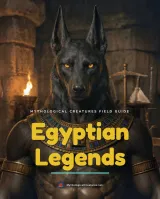
Egyptian Legends: A field guide to the gods and monsters of ancient Egypt
Guardians of the living and devourers of the dead, with the role each played in judgement.
the legend in five swipes.
Curated sponsor space
One subtle banner. Thousands of myth lovers.
We offer a small number of curated sponsor spots for relevant books, courses, games, and art. No clutter, just well-matched partners.
Partner with usQuick Creature Info
Origin:
Features:
Our Mythic Legendary Rating:

Habitat:
Supernatural Powers:
Physical Attributes:
Abilities:
Behavior:
Lore:
References
Discover Another Mythical Legend You May Not Have Heard Of?
Uncover the mysteries of ancient folklore and expand your knowledge of legendary beings from cultures around the world.
Dare to Meet the Sisiutl....

The Mythological Creatures Book Series
Yokai, Greek, Norse, Egyptian & Chinese. Five illustrated field guides to the creatures the old stories either warned or told you about.


Curated by the Mythological Creatures Team
Series editor: Mythological Creatures Directory
Primary desk: Hellenic & Ancient Mediterranean Desk
(rev. November 2025)