
Azhdaha: Azhdaha is a colossal, mythical dragon from Iranian mythology, known for its serpentine appearance and transformative nature.
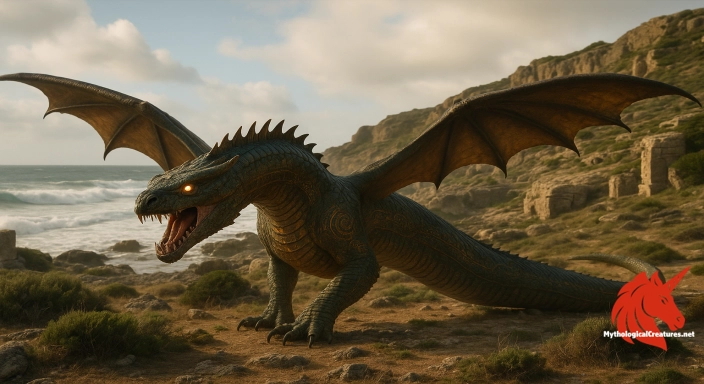
Azhdaha
Azhdaha - Represents the duality of destruction and miraculous healing, with its body parts believed to confer courage, healing, and fertility
the legend in five swipes.
the legend in five swipes.
Azhdaha: Where the Legend Started
Azhdaha is a majestic figure in Iranian mythology that melds the characteristics of an immense serpent with those of a legendary dragon. Its origins are woven into the fabric of ancient Persian lore, where it emerged as a being of transformation and power. Early literary traditions depict it as a simple snake that transcends its natural state through the passage of time. The creature makes its indelible mark in epic narratives such as the Shahnameh, where its evolution becomes part of the heroic cycle. Its mythic journey—from an ordinary serpent to a titanic, winged beast—symbolises the transformative forces of nature and destiny. The lore surrounding Azhdaha resonates deeply within the cultural tapestry of Greater Iran, evoking themes of both terror and wonder. Storytellers have long celebrated its dual role as a harbinger of chaos and a keeper of magical virtues. The legends also imbue the creature with the ability to influence the physical world, bestowing healing properties and enhancing courage through its very presence. This enduring myth not only captivates the imagination but also reflects an age-old fascination with the interplay between the mortal and the divine. Across centuries, Azhdaha has remained an emblem of metamorphosis and the eternal struggle between natural order and the supernatural.
Azhdaha: The Written Sources
Ancient texts such as the Shahnameh and Garshaspnameh vividly illustrate the awe-inspiring persona of Azhdaha within Persian literature. Detailed accounts in the Ajayeb ul-Makhlooghāt elucidate its gradual transformation from a common snake into a creature of immense proportion. The narrative is further enriched in the Nuzhat al-Quloob, which offers a dramatic recounting of the beast's evolution in the realm of the sea. Variants of the myth stress that the creature’s metamorphosis is a direct consequence of its prolonged lifespan and extraordinary growth. Epic tales recount heroic confrontations where celebrated figures like Rostam and Sām take on the formidable challenge of subduing Azhdaha. Each primary source contributes a unique perspective, intertwining elements of natural history with mythical grandeur. The records collectively portray a creature whose evolution is both a natural phenomenon and a divine intervention. Multiple story variants accentuate its role as a trial for heroes, while simultaneously hinting at its inherent connection to the forces of nature. These narratives provide a multifaceted account of Azhdaha’s character, ensuring its lasting place in mythic traditions. Over time, the varied sources have enriched its legend, adding layers of complexity and intrigue to its already formidable image.
Azhdaha: Appearance and Abilities
The Azhdaha is depicted as a colossal creature whose physical form seamlessly transitions from that of an elongated snake to a formidable dragon. Its body is vast and sinuous, growing exponentially over centuries until it rivals the scale of nature's grandest forces. The creature’s head is rendered with an unyielding ferocity, featuring a wide mouth replete with rows of sharp, intimidating teeth. Bright, blazing eyes further enhance its fearsome aspect, serving as windows into its formidable spirit. Notably, the snake’s body is cloaked in robust scales believed to possess magical healing properties. The transformation process is marked by significant anatomical changes, eventually culminating in the sprouting of wings that grant it the majesty of flight. Long and sinuous, its physical dimension is measured by traditional units, underscoring its extraordinary growth from modest beginnings. Illustrative lore suggests that upon being cast into the sea, its form adapts to aquatic life by developing fins alongside its wings. Variations in its size are immense, with some accounts stating it can stretch over ten thousand gazes. The composite imagery of scaled, winged, and finned elements renders the Azhdaha a singular marvel that bridges the gap between the terrestrial and the mythical.
Azhdaha: One Legend, Many Local Versions
Across the diverse landscapes of Greater Iran and its neighbouring cultures, the Azhdaha takes on a variety of regional interpretations. In some local traditions, it is known by names such as Azhdahak or Ezhdeha, reflecting the rich linguistic mosaic of the area. Its legend adapts gracefully to different environments, being portrayed as a creature haunting both expansive skies and mysterious depths. In coastal traditions, emphasis is placed on its aquatic transformation, with its movements said to stir the restless waves of the sea. Inland narratives, by contrast, often highlight its serpentine origins and its gradual metamorphosis into a fearsome being. Local artistic renditions may imbue it with unique decorative patterns or subtle nuances that differentiate one version from another. These regional variations speak to a broader cultural dialogue that adapts the myth to local landscapes and societal values. Some rural communities view its presence as a portent of natural blessing, while others revere it as a force of formidable challenge. The creature’s attributes are tailored in diverse ways to mirror the unique perceptions of nature and power that vary from one region to another. In this manner, the myth of Azhdaha embodies both a universal narrative and a series of localised legends.
Azhdaha: Similar Beings in World Folklore
The Azhdaha shares striking commonalities with dragons and serpentine creatures found across various mythological traditions. Its gradual metamorphosis from a simple snake into a majestic, winged beast mirrors motifs found in Eastern and Western dragon lore alike. Much like the dragons of European legend, it is portrayed as a guardian of divine mysteries and a catalyst for epic adventures. Its dual capacity for destruction and benevolence is reminiscent of mythic creatures in Chinese and Indian traditions that balance chaos with healing power. The creature’s ability to change form evokes themes of transformation found in myriad cultural narratives. Despite regional differences, its defining characteristics, such as a fierce face, luminous eyes, and an expansive body, align it with a universal archetype of the powerful serpentine guardian. The legends surrounding its physical metamorphosis offer a parallel to other myths where gradual evolution symbolizes a connection between nature and the divine. Comparative mythology reveals that while the Azhdaha is firmly rooted in Persian lore, its narrative resonates with concepts of rebirth and transcendence seen worldwide. This cross-cultural dialogue underscores a shared human fascination with beings that embody both the terrestrial and the celestial. The multifaceted nature of the Azhdaha ultimately enriches our understanding of myth, inviting comparisons with similar creatures that traverse the boundaries of time and space.
Azhdaha: How the Legend Lives On
The depiction of Azhdaha has undergone a dramatic evolution from its ancient literary origins to its modern incarnations in art and popular culture. Its early portrayal as a terrifying force of nature has gradually blended with contemporary themes, rendering it a multifaceted symbol. Over the centuries, the creature’s image has been reshaped by the dynamic interplay of folklore, epic poetry, and visual arts. Modern reinterpretations often highlight its transformative journey, resonating with themes of inner growth and renewal. In today's artistic expressions, Azhdaha appears in animations, graphic novels, and digital media as a being that is both awe-inspiring and enigmatic. Contemporary narratives tend to emphasise its role as an emblem of resistance and change, reflecting modern societal challenges. Its mythic properties, such as healing and the conferment of bravery, continue to captivate audiences and inspire creative reinterpretations. The continuous reimagining of Azhdaha reinforces its status as a timeless symbol, bridging ancient myth with modern innovations. By adapting its imagery to reflect contemporary concerns and aesthetics, the creature’s legend remains a living narrative in a rapidly changing world. As a result, Azhdaha endures not only as a relic of myth but also as an ever-evolving icon in the cultural landscape.
Interesting Fact
The metamorphosis of Azhdaha from a humble snake to a majestic winged dragon symbolizes the inherent potential for transformation and the complex interplay of danger and healing in nature.
Mythological Treasures
Egyptian Legends: A field guide to the gods and monsters of ancient Egypt
Guardians of the living and devourers of the dead, with the role each played in judgement.
Chinese Beasts: A field guide to the dragons and demon kings of Chinese myth
From river dragons to demon kings, with the legends that shaped five thousand years of storytelling.
Japanese Yokai: A field guide to the spirits and demons of Japanese folklore
Fifteen spirits, with the signs to watch for and what the old tales say to do if you meet one.
the legend in five swipes.
For myth educators and toolmakers
Built a resource for mythology learners?
If you offer courses, teaching tools, or research platforms focused on myth and folklore, consider a discrete placement on our reference pages.
Introduce your resourceQuick Creature Info
Origin:
Features:
Our Mythic Legendary Rating:

Also Sometimes Known As:
Habitat:
Supernatural Powers:
Physical Attributes:
Abilities:
Behavior:
Lore:
References
Discover Another Mythical Legend You May Not Have Heard Of?
Uncover the mysteries of ancient folklore and expand your knowledge of legendary beings from cultures around the world.
Dare to Meet the Polynome....
-d4c2d1be-4c7d-4028-952b-e199c363a913_small.webp "Depiction of Polynome")
The Mythological Creatures Book Series
Yokai, Greek, Norse, Egyptian & Chinese. Five illustrated field guides to the creatures the old stories either warned or told you about.



Curated by the Mythological Creatures Team
Series editor: Mythological Creatures Directory
Primary desk: Asian & Pacific Myth Cycles Desk
(rev. November 2025)