
Aziza: The Aziza are a beneficent supernatural race from West African folklore, known as diminutive, fairy-like beings residing in forests.
-313b4d7b-1eaf-42aa-97a4-7765b5c6a57a_small.webp "Aziza - Embodies wisdom and supernatural aid, providing both practical skills and spiritual insights to communities.")
Aziza
Aziza - Embodies wisdom and supernatural aid, providing both practical skills and spiritual insights to communities.
the legend in five swipes.
the legend in five swipes.
Where in the world do the Aziza come from?
The Aziza are celebrated as benevolent, mystical beings deeply embedded in West African cultural heritage, notably within Dahomey mythology. They are traditionally viewed as forest dwellers whose presence is believed to empower hunters with both practical skills and spiritual guidance. Their origins are shrouded in an enigmatic blend of myth and oral history, with early attestations emerging from the rich folklore of Dahomey. These beings swiftly earned a reputation as custodians of essential knowledge, such as the mastery of fire, which was crucial for survival and community progress. Although primarily depicted as a race of small, gracious people, some traditions singularise them into individual deities, highlighting the fluid nature of their mythological status. The Aziza are also linked with natural elements, often inhabiting the anthills and silk-cotton trees that punctuate their forest domains. Their influence transcends everyday life, imbuing the environment with a sense of wonder and sacred possibility. Even the scientific world acknowledges their cultural impact, with the plant genus Aziza named in their honour.
Where are the Aziza written about?
The narratives surrounding the Aziza are derived from a mosaic of oral traditions and folkloric accounts that have been passed down through generations. While many West African sources uniformly depict them as a race of diminutive, intelligent fairies, some strands of the tradition elevate a single figure under the same name to divine status. A striking variant comes from the Jeje oral tradition, where Aziza appears as a small, one-legged figure seen smoking a pipe, blending human quirks with otherworldly wisdom. Written records about the Aziza are sparse and often interlace with symbolic elements that make it difficult to delineate fact from allegory. The interplay of European contact and local storytelling during the Atlantic slave trade further muddied the waters, introducing a winged version that contrasts with longstanding depictions of earthy smallness. Diverse accounts, from Dahomey to the Urhobo traditions of the Niger Delta, suggest that regional storytellers adapted the character to fit local customs and environments. Over time, these sources have converged and diverged, creating a rich, if complex, tapestry of myth. Each variant adds a layer of depth, making the Aziza a subject of continual reinterpretation in the folklore of West Africa.
What abilities did the Aziza have?
The Aziza are most often portrayed as small, ethereal beings whose physical form encapsulates the charm and caprice of the natural world. Descriptions typically focus on their diminutive stature, signalling their ease in navigating both human and supernatural realms with apparent agility. In many accounts, they exude an air of gentle luminescence, which hints at their magical origins and unfathomable wisdom. Some narratives detail their affinity for specific natural habitats, suggesting that they have adapted to life among the anthills and the lofty silk-cotton trees that dot the forest landscape. In the Jeje tradition, a distinct individual version of the Aziza is described as having only one leg, a feature that contributes to an idiosyncratic and memorable appearance. Despite this, the core imagery consistently depicts them with a charming, almost playful mien that belies a deep connection to ancient knowledge. Variations in size are occasionally noted, with some traditions hinting at a spectrum ranging from diminutive sprites to slightly larger, more imposing presences. Overall, the Aziza are embodied in physical forms that effortlessly blend the earthly with the mystical, inviting awe and reverence in equal measure.
Aziza: Regional Versions and Local Names
The portrayal of the Aziza exhibits intriguing regional differences that mirror the diverse cultural landscapes of West Africa. Among the Dahomey traditions, they are predominantly seen as a benevolent fairy-like race with direct ties to the forest and its secrets. In contrast, within the Urhobo communities of Nigeria’s Western Niger Delta, the Aziza assume the role of a singular deity, indicating a more centralised, commanding presence in the local pantheon. The Jeje oral tradition offers yet another twist, portraying an individual with idiosyncratic physical attributes that set him apart from the commonly held image of the small people. Regional storytellers have also adapted their narratives to include unique environmental interactions, suggesting that the Aziza might inhabit specific natural locales such as anthills or ancient trees native to their regions. European accounts, emerging after contact during the Atlantic slave trade, occasionally introduce aspects like wings, a feature not typically observed in indigenous portrayals. These regional adaptations illustrate how the core qualities of the Aziza can be reinterpreted to reflect the values, aesthetics, and environmental realities of various communities. The fluidity of these portrayals has allowed the Aziza myth to remain dynamic and relevant across different cultural contexts.
How do the Aziza compare to figures in other traditions?
The Aziza share an array of characteristics with other mythological beings found around the world, offering rich comparative insights into the nature of folklore. Their diminutive size and forest-dwelling habits evoke themes familiar in European fairy lore, where small, enchanting creatures often function as both guardians and tricksters. Similar in essence to the pixies and sprites of Celtic stories, the Aziza embody the universal idea of nature’s magic and the delicate balance between human civilisation and the wild. These cross-cultural parallels hint at a common human impulse to personify the mysterious forces of nature and to embed lessons within the fabric of myth. Despite the superficial resemblances, the Aziza maintain a distinct West African identity, rooted in the specific cultural and ecological context of the Dahomey and Urhobo traditions. Comparisons extend to other indigenous spirits who impart essential knowledge to humankind, thereby reinforcing the notion of supernatural beneficence. The interplay of local and imported elements, especially the questionable influence of European fairy tales, adds another layer of complexity to their study. In many ways, the Aziza exemplify how cultural intersections facilitate the sharing and transformation of mythic motifs across continents and epochs.
Where do the Aziza appear in films and games?
The historical evolution of the Aziza reflects a fascinating interplay between indigenous myth and external influences over several centuries. Early depictions rooted in West African oral traditions emphasised their role as protective and enlightening spirits, crucial to the daily lives of those living close to the natural world. With the advent of European contact, a new dimension of the myth emerged, notably the winged variant, which has sparked debates over cultural exchange and mutual influence. Over time, the enduring image of the Aziza has transcended its original context, inspiring modern artistic representations, literary works, and even scientific nomenclature, as seen in the naming of the plant genus. Contemporary interpretations frequently focus on their symbolic significance as custodians of ancestral wisdom and as representations of humanity’s innate connection with nature. The evolution of the legend mirrors broader trends in mythology, where ancient deities are reimagined to address modern existential and environmental concerns. Today, the Aziza continue to be celebrated in festivals, stories, and academic discussions, ensuring that their legacy remains both dynamic and relevant. Their persistent presence in cultural memory exemplifies the power of myth to adapt and inspire across generations.
Interesting Fact
An intriguing aspect of the Aziza is the striking similarity between their depiction and that of European fairies, suggesting a potential cross-cultural exchange of mythological motifs during the Atlantic slave trade.
Mythological Treasures
Japanese Yokai: A field guide to the spirits and demons of Japanese folklore
Fifteen spirits, with the signs to watch for and what the old tales say to do if you meet one.
Greek Myths: A field guide to the monsters of ancient Greece
Every monster here earned its place in legend, and each gets a full page of artwork and the story behind it.
Norse Sagas: A field guide to the beasts of the Viking world
Drawn from the saga accounts themselves, with the powers, weaknesses and doom of each being set out.
the legend in five swipes.
Support the directory
Promote your myth project and fund more research
Sponsor placements help keep this directory growing and free to use while giving your work a focused, relevant audience.
Learn how sponsorship worksQuick Creature Info
Origin:
Features:
Associations:
Our Mythic Legendary Rating:

Habitat:
Supernatural Powers:
Physical Attributes:
Abilities:
Behavior:
Lore:
References
Discover Another Mythical Legend You May Not Have Heard Of?
Uncover the mysteries of ancient folklore and expand your knowledge of legendary beings from cultures around the world.
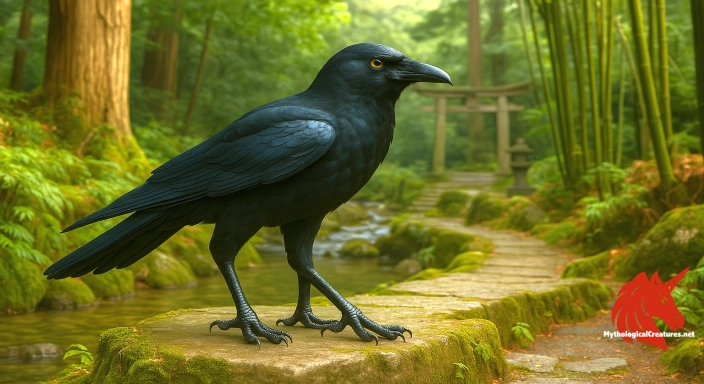
Dare to Meet the Yatagarasu....
The Mythological Creatures Book Series
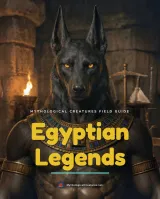
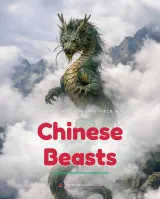
Yokai, Greek, Norse, Egyptian & Chinese. Five illustrated field guides to the creatures the old stories either warned or told you about.
Curated by the Mythological Creatures Team
Series editor: Mythological Creatures Directory
Primary desk: African & Diaspora Traditions Desk
(rev. November 2025)