
Balaur: The Balaur is a many-headed dragon from Romanian folklore, often portrayed as a monstrous serpent sometimes equipped with wings.
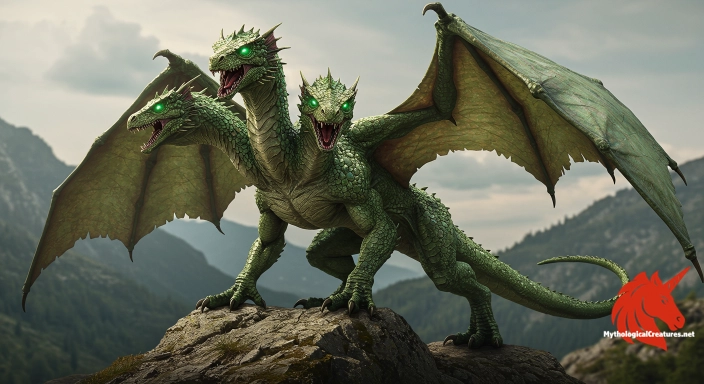
Balaur
Balaur - Embodies chaos and malevolence in folklore, serving as a formidable challenge that, when overcome, promises redemption.
the legend in five swipes.
the legend in five swipes.
The First Records of the Balaur
The balaur is one of the most formidable figures in Romanian folklore, a creature shrouded in both menace and mystique. Emerging from a rich oral tradition and medieval narratives, it is depicted primarily as a many-headed dragon or serpentine monster whose varied count of heads—from three to as many as twelve—mirrors the complexity of its mythic role. The earliest accounts cast it as an agent of chaos, whose appearance portends calamity and moral decay, while also serving as a catalyst for the heroic quests that define local legends. Over time, this beast has come to embody the eternal struggle between light and darkness, with heroes such as Saint George and Făt-Frumos undertaking epic battles against it. Intertwined with themes of sin and redemption, the balaur’s defeat was often seen as a path to absolution, making its narrative deeply moralistic. Its origins, though firmly rooted in local tradition, echo the broader European dragon mythos, influenced by both pagan beliefs and emerging Christian iconography. The creature’s portrayal reflects regional concerns with nature’s untamable forces, while also symbolising the ever-present threat of disorder. Through its many manifestations, the balaur remains a potent emblem of cultural identity and the perennial clash between order and chaos.
What are the earliest texts about the Balaur?
Historical sources documenting the balaur are as varied as the legends themselves, ranging from medieval manuscripts to orally transmitted folktales that have been carefully collected over generations. Some of the earliest written references appear in chronicles that blend myth with moral instruction, where the creature is portrayed as both a literal menace and an allegorical embodiment of evil. Oral renditions, passed down through rural communities, often embellish its attributes with elements of natural phenomena, such as weather manipulation and the mysterious production of precious stones from its saliva. In these narratives, the balaur is sometimes conflated with similar beings like the hala or ala, reflecting an intermingling of Romanian and pan-Slavic mythologies. The diverse versions of its story speak to a dynamic tradition, where each storyteller adapts the creature’s characteristics to reflect local customs and social values. Recurring motifs include its role in the abduction of maidens or princesses and the transformative acts of heroes who face it. Folklorists note that these texts—both written and oral—offer insights into the societal fears and aspirations of the times. The multiplicity of sources not only illustrates the creature’s deep-rooted presence in cultural memory but also highlights its adaptability across different historical periods and locales.
Did the Balaur have any weaknesses?
The balaur is most striking for its multiple heads, with traditional accounts commonly describing it with three, seven, or even twelve distinct visages that each exude a unique aura of malevolence. Its body, often envisioned as a massive, sinuous serpent cloaked in glittering, impervious scales, instils both awe and terror in those who dare to behold it. In many depictions, the creature is endowed with large, tattered wings that suggest an ability to both roam the earth and dominate the skies. Each head is frequently rendered with fiery eyes and gaping maws, capable of unleashing destructive forces such as flame or venom. The balaur’s anatomy is further enhanced by additional, fearsome features including curved horns, razor-sharp claws, and a long, whip-like tail that sometimes bristles with spines. Its overall form is a composite of reptilian and draconic elements, combining the natural ferocity of predators with the supernatural bravado of myth. Variations in size are common in the lore, with some legends describing it as an immense juggernaut capable of eclipsing entire hamlets, while other accounts cast it as a more elusive spectre haunting desolate landscapes. These detailed and often fluctuating portrayals serve to heighten the creature’s mythical stature and underscore its role as an embodiment of unbridled chaos and natural power.
Balaur: Regional Versions and Local Names
Across the varied landscapes of Romania and its neighbouring regions, the portrayal of the balaur demonstrates remarkable flexibility, reflecting local cultural and environmental concerns. In the Transylvanian and Moldavian traditions, the beast is often recast as a harbinger of natural disasters, its many heads symbolically linked to the multifaceted dangers of nature itself. Communities have at times merged the identity of the balaur with that of other mythological entities such as the hala or ala, resulting in a rich blend of narrative threads from both Romanian and broader Slavic traditions. In some areas, the creature is imbued with a connection to the weather, its presence signalling impending storms or climatic upheavals that directly impact agrarian life. Local legends frequently adapt the number of its heads and the extent of its powers to mirror regional experiences of chaos and renewal. Some villages even portray the balaur as a guardian of hidden treasures or mystical gateways, thus endowing it with a dual aspect that combines menace with magical allure. The regional variants also reflect distinctive artistic interpretations, where embellishments in its physical form are tailored to the natural and cultural landscape of each community. This regional fluidity not only strengthens the balaur’s position within local folklore, but also fosters a diverse and evolving mythic tradition that speaks to the complex tapestry of Eastern European cultural heritage.
Balaur: Similar Beings in World Folklore
The balaur occupies an intriguing niche in the wider spectrum of dragon mythologies, inviting direct comparisons with other multi-headed serpent creatures across different cultures. Much like the ancient Greek Hydra, which terrorised its surroundings with its regenerating heads, the balaur challenges heroes with its ominous multiplicity and seemingly inexhaustible might. Comparable figures can also be discerned in Slavic legends, such as the zmeu, whose multi-headed depictions similarly evoke themes of chaos and heroism. While Eastern dragons in Asian myth are often revered as benevolent or auspicious beings, the balaur is distinctly portrayed as malevolent, embodying the destructive edges of nature and human endeavour. This dichotomy highlights a broader pattern in mythology, where dragons can serve as both guardians and adversaries depending on cultural context. Beyond Europe, echoes of the balaur’s narrative can even be found in the serpentine monsters of Norse sagas, where legendary beasts are imbued with both physical terror and symbolic depth. The shared motif of a multi-headed creature across these traditions underscores a universal human fascination with the interplay between order and chaos. In this comparative landscape, the balaur stands out for its distinctive blend of physical horror and moral allegory, bridging regional folklore with the enduring, global dragon mythos.
Where does the Balaur appear in films and games?
The balaur’s mythic image has evolved considerably over the centuries, transitioning from a symbol of primordial chaos to an enduring emblem within modern cultural narratives. In its early representations, the creature not only challenged the hero’s physical prowess but also stood as a metaphor for overcoming inner darkness and societal disorder. As folklore migrated into the modern era, its terrifying visage was amplified by new artistic and literary interpretations, spawning a wide array of adaptations in books, films, and digital media. Contemporary portrayals often imbue the balaur with a hybrid quality, blending ancient, fearsome attributes with modern aesthetic innovations that appeal to today’s audiences. The legendary ability of the beast to generate precious stones from its saliva and control the weather has been reimagined as symbolic of nature’s capricious bounty and peril. Modern storytellers frequently explore its complex duality, sometimes casting it as a misunderstood guardian rather than a one-dimensional villain. This creative revitalisation has allowed the balaur not only to maintain its position in cultural memory but also to resonate with themes of transformation and redemption in a contemporary context. Ultimately, the creature’s enduring legacy underscores its status as a powerful mythic archetype—one that continues to bridge the gap between an ancient past and a dynamically evolving present.
Interesting Fact
A notable aspect of the Balaur is its dual representation as both a natural force and a moral test, embodying chaos and the potential for redemption in Romanian folklore.
Mythological Treasures
Japanese Yokai: A field guide to the spirits and demons of Japanese folklore
Fifteen spirits, with the signs to watch for and what the old tales say to do if you meet one.
Greek Myths: A field guide to the monsters of ancient Greece
Every monster here earned its place in legend, and each gets a full page of artwork and the story behind it.
Norse Sagas: A field guide to the beasts of the Viking world
Drawn from the saga accounts themselves, with the powers, weaknesses and doom of each being set out.
the legend in five swipes.
For serious mythcraft
Your project belongs among the legends
If your work deepens how people understand, play with, or teach mythology, a sponsor placement here keeps it in front of the right readers all year.
Submit a sponsorship enquiryQuick Creature Info
Associations:
Our Mythic Legendary Rating:

Also Sometimes Known As:
Habitat:
Supernatural Powers:
Physical Attributes:
Abilities:
Behavior:
Lore:
References
Discover Another Mythical Legend You May Not Have Heard Of?
Uncover the mysteries of ancient folklore and expand your knowledge of legendary beings from cultures around the world.
Dare to Meet the Tau....
-0a4c3d97-7836-406a-bd46-956319eb00e1_small.webp "Depiction of Tau")
The Mythological Creatures Book Series
Yokai, Greek, Norse, Egyptian & Chinese. Five illustrated field guides to the creatures the old stories either warned or told you about.
Curated by the Mythological Creatures Team
Series editor: Mythological Creatures Directory
Primary desk: Northern & European Folklore Desk
(rev. November 2025)