
Banyoles Monster: The Banyoles Monster is a legendary creature from the Lake of Banyoles in Catalonia, often depicted with draconic features.
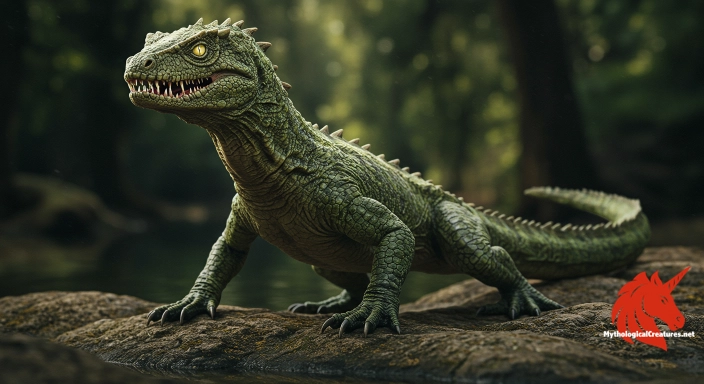
Banyoles Monster
Banyoles monster - An integral part of local folklore, symbolising the mysterious forces of nature in Catalonia.
Origins & First Encounters
The Banyoles monster is a fascinating figure that has long captured the imagination of those living near Lake Banyoles in Catalonia. It emerged from a tapestry of local legend, seamlessly blending elements of folklore with the mysterious beauty of the natural world. The creature’s origins are deeply rooted in a pre-Christian past where nature and myth overlapped, and its first glimpses appear in the fragmented oral traditions of rural communities. Over time, these stories wove the Banyoles monster into an emblem of both wonder and caution, reflecting local awe of the untamed forces of nature. The narrative is further enriched by its dual reputation: one of a benevolent guardian and the other of a harbinger of ominous changes. Its legend has been maintained primarily through the oral testimony of fishermen and villagers, making it a living part of regional identity. The myth encapsulates the enduring human fascination with the unknown, especially in landscapes where natural beauty meets eerie phenomena. Modern accounts continue to revere the creature, highlighting its role as a symbol of the delicate balance between civilisation and wild nature. Local lore positions the monster at the crossroads of supernatural power and environmental significance. In this way, the Banyoles monster remains both a relic of ancient myth and a contemporary emblem of Catalan cultural pride.
Source Texts & Tale Variants
The earliest references to the Banyoles monster are found in a collection of oral histories and anecdotal records rather than in formal ancient manuscripts. Local storytellers and village elders have preserved different accounts, each colouring the creature’s character with elements drawn from diverse historical periods. Several medieval parish records, though cryptic in detail, hint at phenomena around the lake that were later attributed to this mysterious being. Variants of the tale have been passed down through generations, with some versions focusing on its protective nature while others warn of its destructive potential. In local chronicles that document natural anomalies, the creature is mentioned as a spectral presence emerging during times of environmental change. Contemporary folklorists have collected multiple renditions of its story from the inhabitants of Banyoles and surrounding settlements. Artistic depictions found on historic walls and carvings in regional sanctuaries offer additional layers of interpretation about its mythic dimensions. The mutations of the story, as it travelled through time, reveal the rich interplay between communal memory and natural phenomena. While the primary sources remain modest in terms of written documentation, the enduring oral tradition serves as a reliable reservoir of the legend. This amalgamation of historical snippets and vibrant narratives demonstrates how the Banyoles monster continues to inspire and educate its audience.
Form & Powers
The Banyoles monster is typically imagined as a dragon-like figure with an enigmatic presence that merges both aquatic and terrestrial features. Its body is often described as being sinuous and elongated, reminiscent of a majestic sea serpent interlaced with the classic contours of a dragon. Shimmering scales, said to reflect the variegated hues of the lake and sky, add a mystical aura to its appearance. Detailed descriptions suggest that the monster possesses powerful, webbed limbs that hint at its adaptation to an aquatic environment. Observers from local tales speak of expansive, expressive eyes that seem to glimmer with ancient wisdom and an inner fire. A prominent, winding neck and a pronounced set of dorsal ridges further accentuate the creature’s otherworldly silhouette. Some accounts portray it as possessing graceful fins along its flanks which aid its swift, undulating movements in water. The depiction often includes an amalgamation of both reptilian and fish-like traits, creating an image that is as graceful as it is formidable. Variants in artistic renditions speak to an elusive quality, with slight differences in size and details that reflect the mutable nature of oral tradition. This physical portrayal, while variable, consistently underscores a creature of considerable power and mystique, guarding the secrets of its watery realm.
Regional Faces
The legend of the Banyoles monster, although rooted in Catalan tradition, exhibits intriguing regional variations that highlight local cultural interpretations. Communities in the immediate vicinity of Lake Banyoles often stress its connection with the water, portraying it as an essential spirit governing the lake’s health. In some neighbouring villages, the creature is depicted with more benevolent attributes, at times serving as a protector against external influences. Meanwhile, similar legends in neighbouring regions like Occitan and even parts of southern France have emphasised a more aggressive, tempestuous nature. Diverse local festivities have adapted the myth to resonate with regional identities, featuring symbolic emblems that mirror the creature’s dynamic character. Artistic manifestations—from rustic murals to contemporary sculptures—offer distinctive regional interpretations that vary in colour, form, and symbolism. Seasonal celebrations sometimes incorporate the monster as an allegory for nature’s unpredictable bounty and fury. Its narrative is also intertwined with local geographical features, such as the mists over the lake and the rugged surrounding landscapes. This adaptability showcases how each community has tailored the myth to reflect unique environmental and cultural experiences. The regional variations serve to enrich the overall legend, embedding the Banyoles monster deeply in the collective memory of diverse localities.
Cultural Parallels
The story of the Banyoles monster often invites comparison with similar mythological creatures found across different cultures. It shares notable similarities with the draconic figures from European folklore whose narratives also intertwine water and fire as dual elements of creation and destruction. In several Eastern traditions, water dragons that reside in lakes and rivers bear resemblances to this mysterious creature, highlighting common threads in human interpretations of the natural world. Comparisons can also be drawn with Celtic legends where serpentine water beings are revered as both protectors and harbingers of change. This interplay of benevolence and menace is a recurring motif in myths worldwide, suggesting the Banyoles monster is part of a broader archetype. Its depiction aligns with the classic image of a formidable sea guardian found in maritime cultures, reflecting both the fear and respect nature commands. Moreover, the fusion of aquatic and draconic attributes resonates with symbolic imagery seen in Chinese and Japanese lore as well. Such cross-cultural connections underscore a universal narrative of nature’s dual capacity for life and destruction. The dialogue between these varied mythic traditions not only enriches the character of the Banyoles monster, but also illustrates how communities across the globe have interpreted the power of natural forces. Through comparative analysis, it becomes evident that despite geographical and cultural differences, the underlying themes of mystery, reverence, and caution remain remarkably consistent.
Legacy & Modern Evolution
Over the centuries, the depiction of the Banyoles monster has undergone significant transformation, reflecting evolving social and environmental narratives. Early interpretations portrayed it as a mysterious force of nature, a living embodiment of the wild and unpredictable lake that both inspired reverence and instilled fear. As time passed, its image was adapted to meet the cultural currents and pressing concerns of modern society, often morphing into a symbol of the delicate balance between human progress and nature’s enduring power. Increasingly, the creature has been embraced by local communities as a cultural icon, emblematic of Catalan identity and the intrinsic value of natural heritage. Modern artistic representations, whether in literature, art installations, or digital media, have reimagined the monster with contemporary design sensibilities. Its legend now serves as a bridge between ancient folklore and current environmental debates, reflecting the risks and responsibilities of preserving natural ecosystems. Community festivals and local heritage events frequently celebrate the myth, intertwining it with modern narratives of ecological conservation. This evolution has transformed the Banyoles monster from a mere spectral entity into a dynamic symbol of both historical depth and modern artistic innovation. Today, the creature is celebrated not only as a keeper of ancient lore but also as a reminder of the ever-present dialogue between myth and the natural world. The multifaceted legacy of the Banyoles monster continues to inspire, educate, and engage a diverse audience in an ongoing celebration of myth, nature, and cultural identity.
Interesting Fact
Local lore suggests that the creature's appearances are often accompanied by strange weather patterns, deepening its aura of mystery.
Partner with Mythological Creatures
Bring your myth-based world into ours
From game settings to narrative worlds, we work with partners who treat myths with care. Share your project for a potential sponsor slot.
Partner with usQuick Creature Info
Associations:
Our Mythic Legendary Rating:

Habitat:
Supernatural Powers:
Physical Attributes:
Abilities:
Behavior:
Lore:
References
Discover Another Mythical Legend You May Not Have Heard Of?
Uncover the mysteries of ancient folklore and expand your knowledge of legendary beings from cultures around the world.
Dare to Meet the Deer Woman....
Curated by the Mythological Creatures Team
Series editor: Mythological Creatures Directory
Primary desk: Hellenic & Ancient Mediterranean Desk
(rev. November 2025)