
Basilisco Chilote: The Basilisco Chilote is a mythological creature from the Chiloé Archipelago in southern Chile, featuring a unique hybrid form with a rooster's crest and a serpent's body.
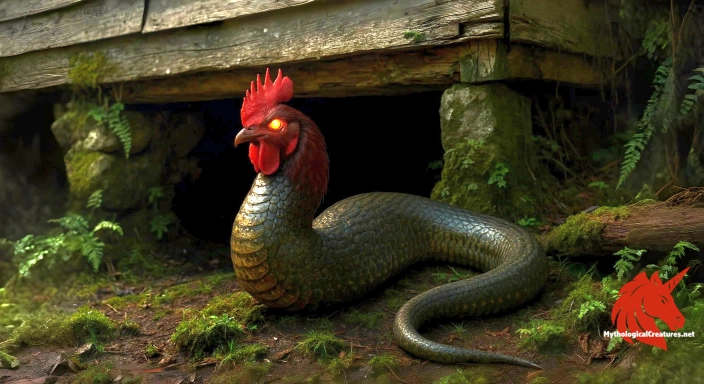
Basilisco Chilote
Basilisco Chilote - Acts as a cautionary symbol within Chilota mythology, warning of the supernatural dangers that may reside in domestic spaces and the deadly consequences of neglecting protective rituals.
Origins & First Encounters
The basilisco chilote is a fascinating creature from Chilota mythology that embodies both the mystery of nature and the ingenuity of cultural storytelling. Originating in the Chiloé Archipelago of southern Chile, this being has long captivated local imaginations with its unique blend of human and animal characteristics. It is said to combine the distinctive crest of a rooster with the sinuous body of a serpent, creating a striking figure that defies ordinary classification. The myth appears to have evolved from a fusion of indigenous Mapuche beliefs and European influences, resulting in a narrative that both terrifies and enthrals. Local tradition firmly situates the basilisco within the domestic sphere, where it is believed to lurk beneath houses, silently waiting to enact its deadly purpose. Oral recountings through generations have bestowed upon it both an ominous presence and a role as a symbolic reminder of nature’s unpredictable power. Its legend, interwoven with local superstition and cautionary wisdom, highlights the tension between the comforts of home and the lurking dangers of the natural world. Over time, the basilisco chilote has become a poignant emblem of communal memory, a creature at once feared and revered by those who call the Chiloé Archipelago home. Its enduring myth continues to fascinate both insiders and newcomers to Chilota culture, encapsulating the timeless interplay between myth and reality.
Source Texts & Tale Variants
Detailed accounts of the basilisco chilote have been meticulously preserved within the oral traditions and folklore of the Chiloé Archipelago. Stories handed down by elders illustrate a creature born from an egg incubated by a rooster, a detail that imbues its origin with both wonder and terror. The primary narratives consistently reinforce the idea that the basilisco’s emergence is closely tied to cursed domestic environments, where its presence is both an omen and a catalyst for tragedy. Variants of the myth often diverge on the intricacies of its creation, with some accounts highlighting the role of fate, while others underscore a more deliberate supernatural intervention. Local manuscripts and collected folk tales provide a rich tapestry of interpretations that reveal the fluid nature of myth-making in the region. In several renditions, the basilisco chilote is portrayed as part of a broader class of malevolent spirits that haunt household thresholds. These diverse narrative strands point to an evolving tradition where every community adapts the myth to its unique cultural context. The multiplicity of sources and story variants serves as a testament to the enduring power of the myth, ensuring that its core themes continue to resonate. Ultimately, these accounts form an intricate mosaic that captures the perennial human fascination with creatures that elude conventional explanation. The collective storytelling around the basilisco chilote not only records a myth but also preserves a vital part of the community’s cultural identity.
Form & Powers
The basilisco chilote is vividly depicted as an unusual amalgam of distinct animal features, chiefly the flamboyant crest of a rooster and the sinuous, scaled body of a serpent. Its head is often adorned with a prominent, colourful comb that bestows an almost regal quality upon an otherwise sinister creature. The undulating contours of its serpent-like form are described in rich detail, suggesting a body that moves with both elegance and lethal intent. Observers in local legends speak of glistening scales that capture and reflect light in eerie, almost hypnotic patterns. Many tales allude to penetrating eyes, imbued with a deadly power that seems capable of draining the vitality of those who dare meet its gaze. Despite the variations in its portrayal, the creature is typically envisioned as a sizeable entity, large enough to send shivers down the spine yet elusive enough to remain shrouded in mystery. The interplay between its avian and reptilian characteristics creates an unsettling duality that blurs the lines between beauty and danger. Artistic rendering of the basilisco often highlights this contrast, emphasizing both the vibrant colours of its rooster comb and the cold, menacing texture of its snake body. Every physical detail—from the rhythmic motion of its form to the subtle glimmer of its scales—contributes to a portrait of a mythic beast that is as enchanting as it is horrifying. Such descriptions ensure that the creature endures in the collective imagination as a symbol of the uncanny merge between the familiar and the fearsome.
Regional Faces
Within the Chiloé Archipelago, the basilisco chilote is presented in a variety of regional variations that underscore its deep cultural roots. In some communities, villagers view the creature as a malevolent guardian of the household, whose very presence portends disaster if proper precautions are not observed. Elsewhere, local legend depicts it as an untamable force of nature that infiltrates domestic spaces, reflecting a broader theme of the intimate intrusion of wild forces. These differing accounts are influenced by the confluence of indigenous Mapuche traditions and the European myths that came with early settlers. Local narratives sometimes adjust details such as its method of birth or the precise manner in which it inflicts harm, thereby tailoring the myth to resonate with specific community experiences. Certain locales even link the basilisco with other supernatural beings, weaving its tale into a larger, interrelated mythological tapestry. Variations in the prescribed methods to counter or exorcise the creature further illustrate how communities have adapted the legend to address their own societal concerns. This regional diversity not only reinforces the creature’s mystique but also highlights the dynamic way in which folklore evolves to mirror the collective anxieties and values of its people. The basilisco chilote thus remains a malleable symbol, its core themes reflecting local fears while adapting to the unique cultural landscapes across southern Chile.
Cultural Parallels
The basilisco chilote exhibits striking similarities with mythological hybrids found in diverse cultures, establishing intriguing comparative insights. Its combination of a rooster’s crest with a serpent’s body naturally calls to mind the European cockatrice, a creature infamous for its lethal attributes. Like the cockatrice, the basilisco is often depicted as a being that defies natural laws, its very form merging elements that traditionally remain separate. This parallel extends to other legendary figures such as the basilisk, where the notion of a deadly creature born from contradictory origins is a recurrent theme. Both in appearance and in the stories told about them, these creatures serve as metaphors for the unpredictable and often dangerous intersection of the natural and the supernatural. They also share the role of acting as cautionary symbols—embodying the consequences of meddling with forces that lie beyond human control. While the basilisco chilote is steeped in the local flavour of Chilota culture, its thematic overlap with other mythological beings underlines a universal human fascination with hybrid monsters. Comparative analysis indicates that these such creatures often serve as allegories for the societal and cosmic order disrupted by unnatural unions. In this respect, the basilisco chilote reinforces broader mythic motifs, echoing fears and taboos that traverse geographical and cultural boundaries.
Legacy & Modern Evolution
Over the centuries, the myth of the basilisco chilote has undergone significant evolution, reflecting shifting societal values and cultural landscapes. In its earliest iterations, the creature was portrayed as an ominous harbinger whose very presence signalled impending domestic catastrophe. As modern influences began to permeate even the remote communities of the Chiloé Archipelago, the narrative was adapted to incorporate contemporary themes such as environmental decay and the erosion of traditional lifestyles. The basilisco came to be seen not only as an agent of destruction but also as a symbol of the inevitable clash between modernity and age-old customs. Local artists, writers, and performers have since reimagined the creature, using its myth to explore themes of social change, resilience, and the preservation of cultural heritage. This modern reinterpretation has allowed the basilisco chilote to remain relevant, acting as a bridge between a storied past and a constantly evolving present. Popular culture in southern Chile now sometimes features the creature in literature, theatre, and visual arts, reconfiguring its deadly attributes into allegories of transformation and warning. Even as the original fears it once inspired have subsided, the myth continues to serve as a potent reminder of the dangers inherent in disrupting natural and societal balances. By adapting to new contexts while retaining its core symbolism, the basilisco chilote endures as a timeless emblem of both caution and cultural identity.
Interesting Fact
An interesting aspect of the Basilisco Chilote is its unique reproductive process, where a rooster incubates its egg, merging avian and serpentine characteristics and highlighting the syncretism present in Chilota mythology.
For publishers and studios
Your next readers are already here
Many of our visitors are looking for books, campaigns, and resources that deepen their journey into myth. Position your title or setting here.
Discuss a placementQuick Creature Info
Origin:
Features:
Our Mythic Legendary Rating:

Habitat:
Supernatural Powers:
Physical Attributes:
Abilities:
Behavior:
Weaknesses:
Lore:
Related Creatures, Tales or Lore
References
Discover Another Mythical Legend You May Not Have Heard Of?
Uncover the mysteries of ancient folklore and expand your knowledge of legendary beings from cultures around the world.
Dare to Meet the Sigi....

Curated by the Mythological Creatures Team
Series editor: Mythological Creatures Directory
Primary desk: Americas & Indigenous Traditions Desk
(rev. November 2025)