
Bestla: Bestla is a jötunn from Norse mythology, renowned as the mother of the gods Odin, Vili, and Vǽ.
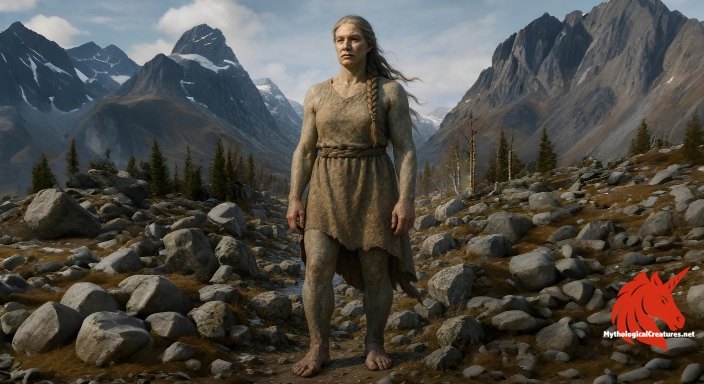
Bestla
Bestla - Bestla is pivotal in Norse myth as the giantess whose union with Borr produced Odin, Vili, and Vǽ, thereby linking the gods with the ancient jötnar and emphasizing the complex interrelations between divine and primordial forces.
Origins & First Encounters
Bestla emerges as a pivotal jötunn whose enigmatic presence continues to captivate scholars and enthusiasts of Norse myth. She is renowned as the mother of the gods Odin, Vili, and Vé, a legacy that cements her role within the divine genealogy. Her origins are shrouded in mystery, with accounts varying between her being the daughter or granddaughter of the formidable giant Bölþorn. The sparse early attestations in texts like the Poetic and Prose Edda only deepen her mystique, contributing to an aura of both power and uncertainty. Her presence reflects the complex interplay between the primordial forces of the jötnar and the emerging order of the gods. Beyond mere lineage, Bestla embodies the contrasting elements of chaos and creativity that are central to Norse cosmology. The repeated epithet ‘Bestla’s son’ found in skaldic verse not only honours her maternal influence but also underscores the enduring impact of her myth. Over time, she has come to symbolise the intricate relationships within the mythic family tree and the interdependence of divine and natural forces. Her mysterious character continues to inspire debate and reinterpretation, ensuring her place as an essential figure in the rich tapestry of Norse cultural history.
Source Texts & Tale Variants
The story of Bestla is primarily documented in the medieval compilations of Norse literature. Significant references are found in the Poetic Edda, where her enigmatic nature is interwoven with the fabric of ancient sagas. The Prose Edda by Snorri Sturluson offers additional layers of her identity, contributing to the layered, often ambiguous portrayal of her character. Skaldic verses further preserve her legacy by frequently identifying Odin as ‘Bestla’s son’, thereby linking her directly to the divine lineage. Though the textual accounts are brief, they provide a foundation that has been built upon by later oral traditions and variant manuscripts. Different manuscript traditions have occasionally introduced alternative genealogical details, such as her being connected to the giant Bölþorn in varied ways. These multiple versions underpin a tradition of fluid storytelling where myth adapts to the cultural and historical contexts of its tellers. Each source, whether in verse or prose, contributes to the enduring debate over her role, offering snippets of a character who remains as mysterious as she is influential.
Form & Powers
While early texts offer few explicit details about Bestla’s physical appearance, later artistic interpretations provide a vivid picture of her as a formidable giantess. She is often envisioned as possessing an imposing, statuesque form that reflects both the raw power and the untamed grace typical of the jötnar. Imaginative depictions frequently include long, windswept hair and keen, intense eyes, suggestive of the wild northern landscapes from which she originates. Her facial features are rendered with a certain rugged beauty, underscoring the ancient and elemental forces she embodies. In many interpretations, her appearance is a blend of austere strength and an almost regal elegance, hinting at her pivotal role in the cosmos despite her chaotic origins. Some modern renderings accentuate a subtle nobility that contrasts with the wild energy usually associated with giantesses. The lack of detailed canonical descriptions has allowed artists considerable freedom to explore a variety of visual interpretations, each highlighting different aspects of her mythic identity. This amalgamation of agreed themes and imaginative detail ensures that Bestla’s physical form remains as evocative as the mysteries surrounding her lineage.
Regional Faces
Across the diverse regions of Scandinavia, Bestla’s character has undergone significant reinterpretation to align with local cultural narratives. In some areas, she is not merely seen as a giantess but revered as a symbol of the untamed forces of nature that shape the landscape. Local variations in oral tradition have often emphasised her connection to the earth, portraying her as a guardian of the wild and a mediator between chaos and order. These regional adaptations sometimes imbue her with a more benevolent, even nurturing aspect, contrasting the more formidable depictions found in the canonical texts. Folklore in various Nordic communities interweaves her myth with local natural landmarks, suggesting that her spirit endures in the windswept mountains and deep ancient forests. The adaptability of her character illustrates the dynamic interaction between central myth and regional identity, allowing local storytellers to infuse Bestla with distinct attributes. In these settings, she becomes both a mythic progenitor and a personification of the elemental forces of nature. This regional diversity not only enriches her character but also underscores the inherent flexibility of myth as it passes through cultural and geographical transformations.
Cultural Parallels
The maternal role of Bestla shares striking similarities with other primordial figures across a range of mythologies. She is akin to various Earth Mother archetypes who bridge the gap between the raw forces of nature and the emergence of divine order. In many mythic traditions, a giantess or primal female figure serves as a progenitor of gods and heroes, mirroring the function that Bestla fulfils in Norse lore. Parallels can be drawn with figures such as Gaia, whose own enigmatic and multifaceted character resonates with the themes of creation and elemental power. Like many ancestral figures in Indo-European mythologies, Bestla’s ambiguous origins and commanding presence have made her an enduring symbol of the delicate balance between chaos and structure. Comparative analyses further reveal that her character intersects with broader narratives where the boundaries between the divine and the natural are blurred. Other cultures have similar legends of formidable matriarchs whose progeny shape the destiny of the world, underscoring a shared mythopoetic tradition. This cross-cultural examination enhances our understanding of Bestla, demonstrating that though her story is rooted in Norse belief, the themes she exemplifies are universal in the realm of mythology.
Legacy & Modern Evolution
Throughout the centuries, Bestla’s myth has evolved from sparse early mentions to a rich, multi-layered symbol in both scholarly discourse and popular culture. Her character, once confined to the brief references in early texts, now serves as a reservoir of cultural and mythological resonance in modern reinterpretations. Contemporary portrayals often explore her as the enigmatic precursor to the well-known gods, embodying themes of origin, mystery, and elemental power. Modern artists and writers have embraced the ambiguous nature of Bestla to reflect on the interplay between chaos and order, a topic that continues to fascinate today. Her story has become a touchstone for discussions on the complex relationships between the divine and the natural world. As innovative retellings and visual representations emerge in literature, films, and digital media, Bestla’s legacy adapts while remaining rooted in her mythic origins. This evolution not only reflects changing cultural sensibilities but also underscores the enduring power of myth to reframe our understanding of the past. In reimagining her tale, modern narratives pay homage to the ancient traditions of Norse lore, ensuring that the mystery and might of Bestla continue to inspire future generations.
Interesting Fact
An intriguing aspect of Bestla’s myth is her duality as both a primordial giantess and the mother of the gods, illustrating the complex and intertwined origins of divine power in Norse mythology.
Sponsor this space
Tasteful, fixed-fee placements for myth projects
No bidding wars or flashing banners. We offer simple placements for a small set of creators and brands aligned with our readers.
Request further detailsQuick Creature Info
Origin:
Features:
Associations:
Our Mythic Legendary Rating:

Habitat:
Supernatural Powers:
Physical Attributes:
Abilities:
Behavior:
Lore:
References
Discover Another Mythical Legend You May Not Have Heard Of?
Uncover the mysteries of ancient folklore and expand your knowledge of legendary beings from cultures around the world.
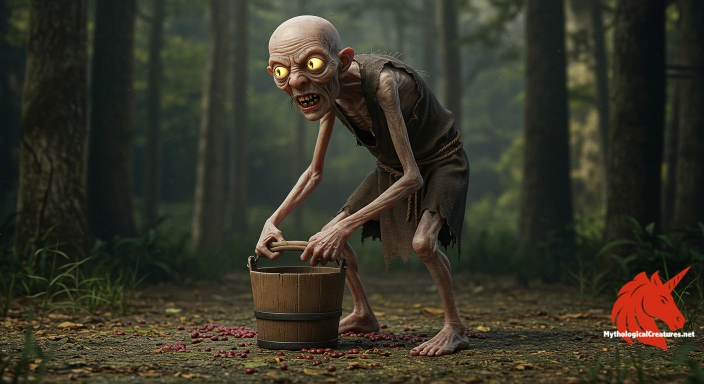
Dare to Meet the Azukiarai....
Curated by the Mythological Creatures Team
Series editor: Mythological Creatures Directory
Primary desk: Northern & European Folklore Desk
(rev. November 2025)