
Bheki: Bheki is a mythological creature from Sanskrit legend, originally a beautiful woman transformed into a frog.
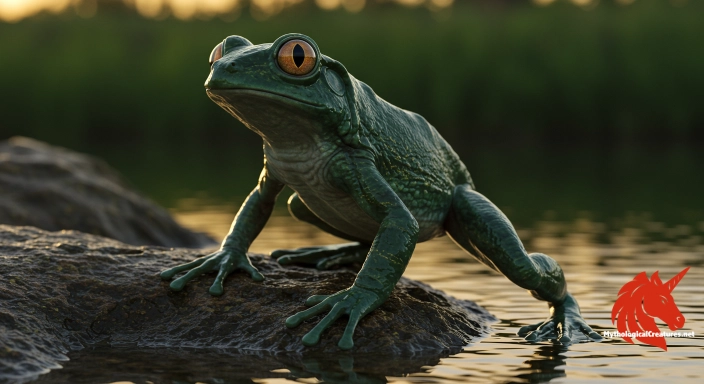
Bheki
Bheki - Bheki’s legend explains natural phenomena such as the sunset, and serves as a metaphor for transformation and the consequences of breaking divine conditions.
Origins & First Encounters
Bheki is a captivating figure rooted in ancient Sanskrit legend, embodying the interplay between human fragility and cosmic inevitability. Born as a beautiful woman, she became a symbol of the sunset, her tale intertwined with the imagery of the sun dipping below the horizon. Her narrative unfolds with a marriage that comes with a stringent condition—one that forbids any contact with water, an element that is both life-giving and transformative. This stipulation, dramatic in its simplicity, sets the stage for her metamorphosis and the subsequent loss of her human form. The allegory of Bheki mirrors the daily descent of the sun, marking the inexorable passage from light to darkness. Her story is not merely one of curse and transformation but also reflects deep connections to natural cycles and the transient nature of human existence. The myth, rich in symbolism, invites contemplation on beauty, sacrifice, and the ultimate price of unfettered desire. Over time, Bheki has come to stand as an emblem of both renewal and decline, encapsulating the eternal dance between celestial phenomena and mortal fate. Her presence in myth underscores a timeless appeal that resonates with those who seek meaning in the natural order of life.
Source Texts & Tale Variants
The origins of Bheki’s tale can be traced back to Sanskrit lore, where oral traditions and early texts wove her transformation into a narrative laden with symbolism. Although direct citations from ancient manuscripts are sparse, the essence of her myth has been preserved through generations of storytellers. Some versions of the narrative are embedded in collections of folk-tales that illustrate the consequences of defying natural laws. In a curious cross-cultural exchange, elements of Bheki’s story have found echoes in Germanic and Celtic mythologies, where local bards adapted the motif of transformation and forbidden water. These adaptations have introduced variations that embellish the original narrative with regional features and additional mythic episodes. The versions from European traditions often highlight the mystique of the enchanted water, emphasising its role as the harbinger of change. While certain details differ, the central theme of transformation via a single, irrevocable act remains strikingly consistent. Consequently, Bheki’s myth serves as an intriguing example of how a tale can bridge disparate cultures while maintaining its core allegorical message.
Form & Powers
In her human incarnation, Bheki is depicted as a woman of exceptional beauty, her features imbued with an ethereal grace that hints at a divine origin. The transformation into her amphibious form marks a dramatic shift in her physical presence, wherein the serenity of her human allure is merged with the mystique of nature. As a frog, her skin is often described as gleaming with the gentle radiance of the early dawn, capturing the golden hues associated with the sun on the horizon. Artists have portrayed her with an intricate blend of aquatic charm and understated elegance, where the contours of her form evoke both delicacy and quiet strength. Her eyes, deep and reflective, mirror the mysteries of twilight, suggesting a wisdom born of both beauty and sorrow. Variations in accounts describe her size as modest yet startlingly captivating, an embodiment of nature’s subtle splendor. The harmonious balance of soft, luminous tones with the natural textures of a frog provides a powerful visual metaphor for transformation. This duality in her physical depiction continues to inspire creative representations, each version highlighting the fine line between grace and metamorphosis.
Regional Faces
While Bheki’s origins lie in Sanskrit legend, regional adaptations have enriched her tale with diverse cultural nuances and interpretations. In South Asian traditions, her story is often seen as a poignant reflection on the impermanence of beauty and the sacredness of natural order. In contrast, Germanic retellings tend to accentuate the mysterious and even supernatural aspects of her transformation, frequently aligning her narrative with legends of enchanted waters and elusive spirits. The Celtic versions, imbued with the rich tapestry of faerie lore, blend the motif of metamorphosis with notions of seasonal change and the mystical cycles of nature. Local storytellers have re-interpreted the water taboo in various ways, sometimes emphasising the tragic cost of breaking natural laws. In these regions, her transformation is not only a personal loss but also a symbolic representation of the inevitable flow of time and nature’s relentless mandate. Despite these variations, the central theme—the irreversible moment when water triggers her metamorphosis—remains consistent and evocative. The regional differences add layers of depth, ensuring that Bheki’s myth remains both universally compelling and distinctly local.
Cultural Parallels
The legend of Bheki shares notable similarities with other global transformation myths, where an initial state of beauty gives way to an unexpected metamorphosis. One of the most striking parallels is found in the European tale of the Frog Prince, where a magical condition transforms the subject from one form into another, revealing the hidden intricacies of human nature. In many cultures, water is universally symbolised as a vessel of change, acting as the crucial agent that blurs the line between life and transformation. The recurring motif of an irrevocable condition—such as Bheki’s water taboo—serves as a powerful allegory for the consequences of defying natural boundaries. Comparisons with Celtic water deities and Germanic water spirits reveal a shared emphasis on themes of rebirth, renewal, and the inherent risks associated with disrupting the cosmic order. These cross-cultural connections highlight the universality of transformation myths, where the interplay between beauty and decay is a constant subject of human reflection. Bheki’s narrative, in this light, becomes a mirror for understanding the cyclical nature of existence as seen in myriad mythological traditions. The shared symbolism underscores a collective cultural acknowledgment that change, no matter how beautiful, is often inextricably linked with loss.
Legacy & Modern Evolution
Bheki’s myth has evolved significantly through the ages, adapting to the cultural and artistic sensibilities of each epoch. In early Sanskrit traditions, her story served as a moral parable, warning of the perils that lie in breaking sacred natural laws. Over the centuries, as the narrative found its way into Germanic and Celtic folklore, Bheki emerged as a multifaceted symbol of transformation, embodying both tragedy and a quiet defiance. Medieval literature often used her tale to illustrate the consequences of human frailty against the immutable forces of nature, a theme that resonated deeply with audiences of the time. In modern interpretations, the myth has been reimagined not only as a story of loss but also as a celebration of the beauty found in transformation and rebirth. Artists, writers, and digital creators have drawn upon her dual imagery—a beautiful woman and a reflective, sunlit frog—to explore themes of identity, metamorphosis, and the inevitability of change. Contemporary retellings frequently position her narrative within a broader context of environmental and existential discourse. Today, Bheki continues to inspire innovative works in literature and art, demonstrating how a centuries-old myth can resonate with modern audiences through its timeless allegory of transformation and renewal.
Interesting Fact
It is intriguing how Bheki's transformation fuses elements of romance, betrayal, and nature, symbolizing the ephemeral beauty of sunset and the inevitable change brought by time.
Mythology commerce, done carefully
Align your store with our global myth audience
If you sell myth-inspired jewellery, prints, decks, or collectibles, we can feature your brand without overwhelming the reading experience.
Partner with usQuick Creature Info
Features:
Associations:
Our Mythic Legendary Rating:

Habitat:
Supernatural Powers:
Physical Attributes:
Abilities:
Behavior:
Weaknesses:
Lore:
Related Creatures, Tales or Lore
- FFrog Prince
- FFrog Princess
References
Discover Another Mythical Legend You May Not Have Heard Of?
Uncover the mysteries of ancient folklore and expand your knowledge of legendary beings from cultures around the world.
Dare to Meet the Myaukhpet Shinma....
Curated by the Mythological Creatures Team
Series editor: Mythological Creatures Directory
Primary desk: Northern & European Folklore Desk
(rev. November 2025)