
Bienor: Bienor is a multifaceted name in Greek mythology, attributed to a centaur, a Trojan defender, a soldier in the Argonauts' campaign, and a city-founder.
-13939555-702a-425b-896d-2974bdcb09fb_small.webp "Bienor - The recurrence of the name Bienor highlights its symbolic use in Greek tradition, representing both the untamed nature of centaurs and the heroic legacy of mortal warriors and city-founders.")
Bienor
Bienor - The recurrence of the name Bienor highlights its symbolic use in Greek tradition, representing both the untamed nature of centaurs and the heroic legacy of mortal warriors and city-founders.
Origins & First Encounters
Bienor is a multifaceted figure in Greek mythology whose name has been associated with diverse heroic and tragic narratives. His legend appears in several episodes that span from the frenzied chaos of centaur combat to the disciplined valor of a warrior on the battlefields of Troy. In one telling, his presence at the famed wedding of Pirithous and Hippodamia marks him as a creature caught between celebration and ensuing bloodshed. Other traditions recount him as a steadfast defender of Troy, highlighting the noble yet perilous nature of ancient warfare. There is also a narrative in which he appears as the son of Pyrnus, a soldier whose fate was sealed in a clash with the Argonauts. An additional variant portrays him under the name Bianor or Ocnus, where his lineage is linked to divine river deities and he is credited with founding Mantua. His many forms illustrate the fluidity inherent in mythic traditions, where a single name can embody contrasting roles. The enduring appeal of his story lies in its dramatic shifts between wild, chaotic energies and the structured demands of heroic warfare. Overall, Bienor’s composite character reflects the adaptive storytelling methods of ancient Greek culture, appealing to both mortal and divine elements in myth.
Source Texts & Tale Variants
Early accounts of Bienor emerge from a broad array of ancient literary and oral traditions that have been passed down through generations. One narrative strand situates him at the illustrious wedding of Pirithous and Hippodamia, where his role as a centaur integrates themes of revelry and imminent conflict. In these texts, his sudden encounter with Theseus is rendered as a pivotal moment that combines heroic struggle with the chaotic unpredictability of myth. Additional stories recount his participation in the defence of Troy, casting him as one of the valiant warriors whose noble spirit is ultimately overcome by fate. Other literary fragments mention him as a soldier under the banner of Cyzicus whose life ended during a confrontation with the Argonauts. A distinct variant introduces him as the son of Pyrnus, which adds another layer to the martial tradition in ancient narratives. The story of Bienor as Bianor or Ocnus is preserved in local legends that link him with the founding of Mantua, thereby blending genealogy with the mythic origins of a city. These varied sources demonstrate how ancient myth-makers adjusted his story to suit differing narrative contexts. The convergence of these accounts underscores the complex and often overlapping nature of mythological storytelling.
Form & Powers
In his centaur form, Bienor is depicted with a powerful fusion of a robust, muscular human torso seamlessly attached to the strong, sinewy body of a horse. His upper body is portrayed as that of a seasoned warrior, complete with defined facial features that evoke both wisdom and a hint of wild savagery. The lower half, marked by a dynamic and spirited equine form, accentuates his rapid movement and untamed strength. In depictions from the Trojan War cycle, his mortal guise is that of a heavily armoured and resolute fighter, resplendent in battle gear that embodies the epic aesthetics of ancient martial iconography. There are also portrayals that hint at a nobility derived from his partial divine ancestry, suggesting finely chiseled features and an imposing presence on the battlefield. In some artistic renditions, the tension between his fierce eyes and the rugged textures of his form is emphasised, symbolising inner conflict and heroic resolve. The dual nature of Bienor’s anatomy reflects the broader thematic dichotomy between order and chaos in myth. His physicality, whether in the wild contours of a centaur or the battle-hardened visage of a mortal warrior, stands as a testament to the colourful diversity of ancient mythological representation. These varied descriptions reinforce his status as a complex figure whose appearance is as mutable as his many narrative roles.
Regional Faces
Regional storytelling traditions reveal a striking divergence in the portrayal of Bienor, reflecting the varied cultural landscapes of the ancient world. In the stories rooted in central Greece, his identity as a centaur aligns with other wild and chaotic figures known for their unpredictable natures and passionate outbursts during celebratory feasts. The eastern Mediterranean accounts, particularly those associated with the Trojan cycle, shift his portrayal towards that of a disciplined and tragic warrior whose heroic efforts are ultimately marred by the inevitability of death in battle. In areas where the myths of the Argonauts hold sway, he is presented as a soldier whose brief but memorable presence underscores regional military valour. The variant that casts him as Bianor or Ocnus, the founder of Mantua, illustrates a further adaptation of his myth in a distinctly Italian context, where local identity and the establishment of cultural origins are paramount. These regional narratives adjust not only his role but also his symbolic significance, emphasising varying aspects of strength, tragedy, and divine connection according to local values. Such contextual shifts highlight how different communities utilised his character to mirror their own societal ideals and historical experiences. The multiplicity of regional adaptations elevates Bienor from a single mythic figure to a versatile symbol that could be reshaped to fit a range of cultural narratives. This adaptability underscores the broader pattern in Greek mythology, where a character’s traits are reinterpreted in light of local tastes and historical circumstances.
Cultural Parallels
Bienor’s many incarnations evoke comparisons with several other mythological figures whose stories also traverse the realms of both human frailty and divine grandeur. His centaur aspect invites parallels with other mythic hybrids, highlighting the persistent tension between civilisation and the untamed forces of nature in ancient lore. Comparable figures in Roman and Near Eastern traditions similarly blend mortal courage with supernatural elements, forging characters that encapsulate the duality of existence. As a warrior who meets a tragic end in battle, his narrative resonates with the archetypal hero whose valour is ultimately shadowed by mortality. The variant in which he is linked with a river deity through his mother mirrors similar themes found in myths where natural forces and human passion intermingle. Such comparisons extend to the broader motif of the tragic antihero, a figure who, despite great bravery, is doomed by fate. His varying portrayals across different sources illustrate a common mythological strategy of merging conflicting traits to create a multifaceted persona. In this way, Bienor serves as an excellent case study in cross-cultural mythological analysis, where overlapping themes and recurring symbols reveal shared human preoccupations. Ultimately, his story forms a connective thread among diverse mythic traditions, demonstrating that despite cultural differences, the exploration of heroism, fate, and duality remains a universal pursuit.
Legacy & Modern Evolution
The myth of Bienor has experienced a remarkable evolution, echoing changes in artistic and cultural tastes from antiquity to the modern era. In ancient times, the fluidity of oral narratives allowed for a profound versatility in his portrayal, with each version reflecting the shifting priorities of different communities. During the Renaissance, the revival of classical themes resurrected his image, infusing his story with the aesthetics of neo-classicism and a renewed appreciation for classical heroism. Contemporary artistic expressions often focus on the tragic dimensions of his character, using well-established motifs to explore the consequences of heroic defiance against overwhelming odds. Modern literature and visual arts have reimagined Bienor not just as a relic of ancient myth, but as a potent symbol of the enduring struggle between human limitations and mythic aspirations. His rich, layered narrative has been invoked in discussions of identity, fate, and the interplay between divine intervention and mortal endeavour. Exhibitions of classical art continue to feature representations of Bienor, prompting modern audiences to re-examine his story from fresh perspectives. In many ways, his evolution mirrors that of other ancient figures whose identities have been continually reshaped to resonate with successive generations. Today, Bienor remains a testament to the timeless power of myth, bridging the gap between ancient storytelling and contemporary cultural discourse.
Interesting Fact
An intriguing aspect of Bienor is the reuse of his name across disparate mythological narratives, illustrating how ancient Greek tradition employed shared names to express diverse symbolic roles—from fierce centaurs to heroic city-founders.
Reach myth fans
Connect your myth-driven brand with this audience
Our readers are writers, educators, gamers, and collectors who care about mythology. Enquire about a limited sponsor placement on creature pages.
Enquire about sponsorshipQuick Creature Info
Origin:
Features:
Our Mythic Legendary Rating:

Also Sometimes Known As:
Habitat:
Physical Attributes:
Abilities:
Behavior:
Lore:
References
Discover Another Mythical Legend You May Not Have Heard Of?
Uncover the mysteries of ancient folklore and expand your knowledge of legendary beings from cultures around the world.
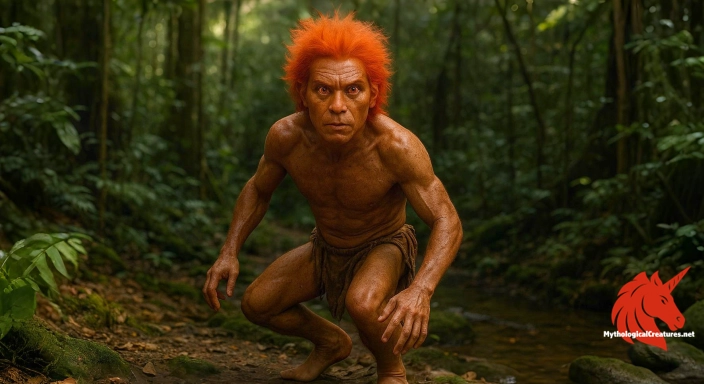
Dare to Meet the Curupira....
Curated by the Mythological Creatures Team
Series editor: Mythological Creatures Directory
Primary desk: Hellenic & Ancient Mediterranean Desk
(rev. November 2025)