
Blunderbore: Blunderbore is a fearsome giant from Cornish and English folklore, known for terrorising travellers and confronting heroic figures.
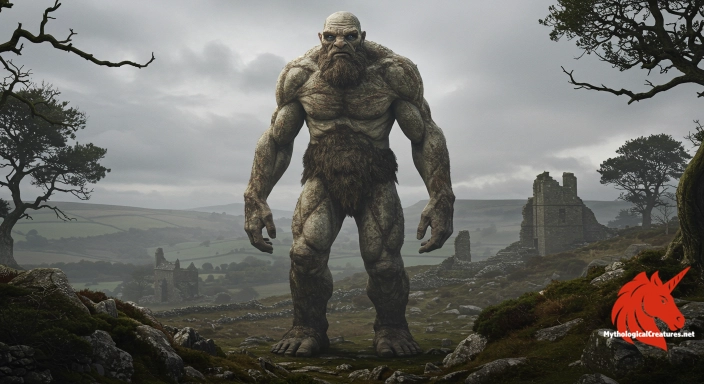
Blunderbore
Blunderbore - Blunderbore symbolises the archetypal giant villain in folk narratives, representing the challenge that heroes must overcome with wit and bravery.
Origins & First Encounters
Blunderbore stands as a formidable figure within the tapestry of Cornish and English folklore, emerging from a rich tradition where myth intertwines with the landscape and local history. His earliest mentions echo through the oral traditions associated with legends like Jack the Giant Killer, cementing his presence as a veritable terror of the regal wilds. His name, rendered variously as Blunderboar, Thunderbore, Blunderbus, or Blunderbuss, reflects the fluidity of local storytelling and the evolution of oral performance. The giant’s home in Ludgvan Lese, near the storied region of Penwith, adds a geographical anchor that evokes the ancient character of the Cornish countryside. Early attestation of his legend places him at the crossroads of folk narratives that celebrate heroic triumph and cautionary adversaries. His role in these tales is both as an embodiment of nature’s uncontrollable force and as a symbol of the human struggle against overwhelming odds. The myriad versions of his name and deeds underscore the adaptability of his myth, allowing him to be both a unique character and a representative of the giant archetype. Through these layered narratives, Blunderbore has come to occupy an enduring position in the cultural memory of the region, inviting both awe and introspection about the boundary between civilisation and the wild.
Source Texts & Tale Variants
The principal sources for Blunderbore’s legend are the myriad folk and fairy tales that have been passed down over centuries, with his exploits prominently featured in narratives like Jack the Giant Killer. Within these stories, he is often portrayed as one of the primary antagonists, whose presence challenges the heroic journeys of youthful protagonists. Beyond the well-known heroic saga of Jack, regional variants such as the Cornish adaptation of Tom Hickathrift—known locally as Tom the Tinkeard—incorporate a version of his character, ensuring that his identity evolves with local colour and context. In some renditions, Blunderbore emerges as an almost archetypal ogre, with his name even being applied to the giant in tales like Jack and the Beanstalk. Though there are few formal written texts from early medieval periods, the consistency of his portrayal across various retellings speaks to a deeply embedded oral tradition. Each version adds layers to his character, juxtaposing his brute strength with enigmatic qualities that suggest a more complex nature. The evolving textual record demonstrates a blending of heroic and cautionary elements, reflecting the dynamic relationship between local lore and literary influences. This convergence of sources not only delineates his role as a giant but also highlights how folk narratives preserve and transform cultural memory over time.
Form & Powers
Blunderbore is typically depicted as a colossal being whose very presence dwarfs ordinary men, casting a long shadow over the verdant Cornish landscape. Descriptions often emphasise his towering height and immense girth, attributes that seem to echo the rugged, weathered cliffs of his native land. His form is usually rendered as powerfully muscled, with a physique suggesting both raw strength and an ancient, elemental force. Visual accounts frequently describe his skin as having the texture and appearance of time-worn stone, marred by scars that speak of countless battles against heroes of old. His eyes, deep-set and intense, are said to mirror the turbulent skies of a storm, imbuing him with an almost supernatural foreboding. Wild, unkempt hair and a dishevelled beard add to the impression of a being who is as much a force of nature as he is a creature of myth. Artists and storytellers have at times endowed him with distinctive features, such as a pronounced brow or an almost monstrous visage that further distinguishes him from human adversaries. The variations in his depiction—from a lean, agile giant to a hulking figure beset with battle-worn armour—serve to reinforce his image as an ever-adapting legend. Overall, the physical descriptions of Blunderbore are as varied as they are vivid, capturing the imagination with every detail that underscores his monstrous, yet compelling, presence.
Regional Faces
Regional interpretations of Blunderbore reflect a rich interplay between local tradition and the broader narrative of giant folklore. In Cornwall, his legend is intertwined with specific locales such as Ludgvan Lese and the wild expanses around Penwith, where his myth is celebrated as part of community identity. Local storytellers have imbued his narrative with elements that resonate with the natural and social landscapes of the area, often portraying him as a guardian of, or threat to, the land. In other parts of England, the name Blunderbore may be applied more generically to giants, indicating a fluid threshold where individual legends merge into a broader cultural motif. Some regional variants introduce additional characters or familial ties, such as a brother figure named Rebecks, further enriching the narrative tapestry. These adaptations illustrate how site-specific concerns and local histories can reshape a myth over time, tailoring the giant’s character to reflect contemporary values and fears. In regions where the natural environment is formidable, Blunderbore’s figure becomes a potent symbol of untamed nature. The manner in which his legend is told and retold reflects a dynamic, living tradition that shifts with the cultural and environmental context of each area. Through these regional variations, the myth of Blunderbore continues to evolve, echoing the voices and experiences of diverse communities.
Cultural Parallels
The myth of Blunderbore shares intriguing similarities with giant figures found in many cultures, creating a bridge between local lore and broader mythological traditions. Like the titanic beings of Norse sagas or the colossal entities of ancient Celtic myths, Blunderbore symbolizes nature's formidable and often unpredictable force. In various cultural narratives, giants serve as both literal and symbolic obstacles to human progress, a role that Blunderbore fulfills with his own brand of fierce, unyielding might. His frequent portrayal as a formidable enemy in classic fairy tales echoes tales from other regions where heroes confront beings of supernatural power. Comparatively, his myth aligns with stories of giants from diverse traditions—each depicting massive, weather-beaten beings whose very existence challenges the norms of human civilisation. This cross-cultural resonance highlights the universal appeal of giant legends as metaphors for chaos, nature’s rebellion, and the ultimate triumph of human ingenuity. The recurring themes of confrontation, transformation, and the interplay between beauty and brutality unite Blunderbore with his mythic counterparts around the world. Such comparative analysis not only enriches our understanding of his character but also underscores the deep-rooted human fascination with figures who embody both awe-inspiring power and the mystery of the uncontrollable wild. Through these parallels, Blunderbore is cemented as a timeless archetype in global folklore.
Legacy & Modern Evolution
The legend of Blunderbore has undergone a remarkable evolution, mirroring the shifting tides of cultural narrative from medieval times to the modern era. In early folklore, he was depicted as a sheer force of untamed nature, a monstrous obstacle that heroes like Jack had to overcome, embodying the chaos that lay just outside the bounds of civilisation. Over time, his character has been reimagined and repurposed, transforming from a mere brute into a more layered symbol of a bygone era where the line between myth and reality was blurred. Contemporary reinterpretations cast him not only as a figure of terror but also as a poignant reminder of the ancient past, serving as a link between modern society and the world of myth. Artists, writers, and dramatists have re-envisioned his image, often giving him complex emotional undertones that reflect on themes of isolation, power, and the inexorable march of time. Local festivals and community events in Cornwall frequently celebrate his myth, ensuring that his legacy remains an active part of regional identity. In modern literature and visual arts, Blunderbore continues to inspire creative reimaginings that explore the interplay between the human and the monstrous. His enduring prominence in both scholarly works and popular culture speaks to the timeless nature of folklore and its ability to adapt to the modern imagination. As the myth modernises, Blunderbore remains emblematic of the rich narrative heritage that connects our present with the mythical past.
Interesting Fact
Blunderbore's name has transcended individual tales to become a generic term for giants in folklore, illustrating the dynamic evolution of myth through oral tradition.
For authors, artists, and makers
Created something from the realm of myth?
If your book, deck, game, or artwork draws from legendary creatures and lore, you can showcase it here in a tasteful, year-round placement.
Share your projectQuick Creature Info
Features:
Our Mythic Legendary Rating:

Also Sometimes Known As:
Habitat:
Supernatural Powers:
Physical Attributes:
Abilities:
Behavior:
Lore:
Related Creatures, Tales or Lore
- GGogmagog
- FFomorian Giants
- OOgres
References
Discover Another Mythical Legend You May Not Have Heard Of?
Uncover the mysteries of ancient folklore and expand your knowledge of legendary beings from cultures around the world.
Dare to Meet the Liriope....
-5a3d0c67-fb79-412f-94cd-3fd868629c22_small.webp "Depiction of Liriope")
Curated by the Mythological Creatures Team
Series editor: Mythological Creatures Directory
Primary desk: Northern & European Folklore Desk
(rev. November 2025)