
Bysen: Bysen is a legendary, gnome-like spirit from Gotland, Sweden, cursed to wander the forested island for a crime committed in life.
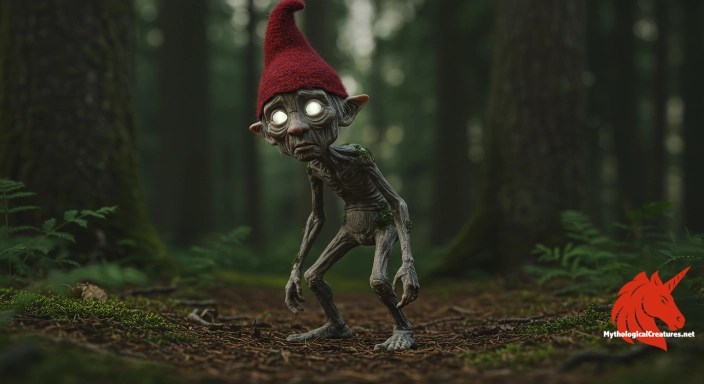
Bysen
Bysen - Bysen serves as a cautionary figure highlighting themes of eternal punishment and the mysterious, capricious forces of nature.
the legend in five swipes.
the legend in five swipes.
Where does the story of the Bysen begin?
The legend of the Bysen is rooted in the ancient woodlands of Gotland, where mysticism and nature intertwine in an enduring narrative. Born of local myth, this gnome-like creature is portrayed as a tormented soul condemned by a past misdeed and forced to wander the forests for eternity. His existence is steeped in the duality of retribution and guardianship, reflecting both a curse for a wrongdoing and a solemn duty as a ward of nature. Throughout generations, the tale has been passed down as a reminder of the delicate balance between human actions and the natural world. The myth serves to caution those who would disrespect the land or tamper with sacred boundaries. With a rich cultural resonance, the story of Bysen has filtered into local customs and storytelling traditions on Gotland. The character’s eerie presence is seen as a metaphor for nature’s unpredictable temperament as much as for the inevitable consequences of deceit. His ambiguous role—both a mischief-maker and a protector—continues to intrigue and terrify in equal measure. The enduring appeal of the Bysen myth reinforces the deep historical connection between the island’s people and the vast, mysterious forest. Over time, this legend has grown to be not only a tale of punishment but also a symbol of the eternal link between man, myth, and the natural environment.
Bysen: How the Tale Was Told and Retold
The lore of the Bysen has been transmitted primarily through a vibrant oral tradition rather than through definitive medieval texts. Local storytellers on Gotland have long recounted encounters with this enigmatic figure, embedding his image in the cultural memory of the island. Folkloric accounts often emphasise his role in misplacing boundary markers and interfering with the daily labours of foresters and tradesmen. Diverse narrative fragments have been collected in regional anthologies and folklore compendiums, each adding unique embellishments to his tale. Some renditions focus on his spectral ability to lure unwary travellers and disrupt human endeavours, while others stress a redemptive possibility linked to the correction of his misdeeds. Variants of the story have even emerged in comparative studies, highlighting his similar attributes to other Nordic spirits. The multiple versions of the narrative offer glimpses into differing local values, particularly the importance of land rights and the sanctity of nature. In many retellings, his curse is described as a burden that might be alleviated if someone sets the misplaced markers right, thus restoring the natural order. Over the years, the accumulation of these oral and written tales has ensured that his legend remains as dynamic as it is enduring. Collections of regional folklore repeatedly invoke the Bysen as a character emblematic of the moral and environmental lessons held dear by local communities.
What was the Bysen believed to be capable of?
The depiction of the Bysen is as varied as it is vivid, with his physical appearance evoking both sympathy and eerie forewarning. Often portrayed as a diminutive, gnome-like figure, he is described with a pale, grey complexion that blends seamlessly with the misty forest surroundings. In some accounts, his form is so subtly rendered that he appears as an inconspicuous stump or as a shadowy, almost imperceptible silhouette among the trees. A distinctive red woven cap sometimes crowns his head, inserting a bold splash of colour into the otherwise muted palette of his appearance. He is invariably seen carrying an old, weathered axe—a symbol of his eternal duty to slowly cut down the island’s ancient forest. The axe, with its timeworn edges and storied past, serves as both a tool of his penance and a marker of his troubled history. Small details such as his cautious, glinting eyes and slightly hunched posture hint at the weight of centuries of guilt and remorseless wandering. His facial features, etched with lines of sorrow and irregularities, suggest a past marred by error and everlasting regret. Some portrayals even attribute him with an almost spectral agility, as if his form can shift between that of a man and a natural element. Each artistic and narrative rendition contributes layers to his persona, making his physical form as enigmatic and mutable as the lore from which it sprang.
What do different regions call the Bysen?
The myth of the Bysen is most strongly associated with the island of Gotland, yet regional variations have given his legend a broader geographical footprint. On Gotland, he is seen as a peculiar fusion of a curse and a natural guardian, embodying both mischief and a reclamation of natural order. In contrast, on the Swedish mainland his counterpart emerges under the names skälvrängare or osaliga lantmätare, where the focus shifts subtly towards the themes of land entitlement and retribution. These regional adaptations underscore local concerns about property and the sanctity of natural boundaries, reflecting historical disputes over land and resources. In rural communities, the legend helps enforce social norms by warning against the fraudulent manipulation of land markers. The regional tales further highlight his role in upsetting human plans, whether by misguiding travellers or by deliberately causing mishaps in forestry work. In some locales, every misaligned boundary or fallen timber evokes the unmistakable presence of the Bysen, a reminder of ancient wrongs. These local narratives enrich the overall myth, reinforcing how a single character can adapt to convey different lessons across varied cultural landscapes. Through subtle variations, the essence of the Bysen transforms to meet the moral and environmental imperatives specific to each region. Thus, the regional versions of his story illustrate an evolving folklore that continues to resonate with diverse communities across Sweden.
Bysen: Related Figures Across Cultures
Comparative folklore studies draw fascinating parallels between the Bysen and other supernatural entities from across Northern Europe. A notable counterpart is the Norwegian Deildegast, a spectral figure similarly condemned by a past misdeed and doomed to wander the landscapes. Both figures serve as perennial warnings against dishonesty and the disruption of social and natural order. The thematic emphasis on boundary transgressions and the misplacement of land markers is common to these legends, underscoring a shared cultural preoccupation with the sanctity of property and environment. In many folkloric traditions, the notion of a cursed soul roaming as punishment taps into universal ideas of retribution and the possibility of ultimate redemption. The Bysen’s dual role as both mischief-maker and reluctant natural custodian resonates with similar archetypes found in other European mythologies. There is an underlying message about the inherent balance required between human endeavour and the natural world, a theme that is recurrent in diverse cultural narratives. Such cross-cultural connections suggest that the Bysen is not merely an isolated figure, but rather a representation of a broader human concern with justice and ecological harmony. The comparative analysis of these myths enriches our understanding of the cultural roots shared by Scandinavian folklore. In doing so, it highlights how stories of cursed individuals continue to serve as metaphors for moral transgression, environmental disturbance, and the hope for eventual reconciliation between man and nature.
Why does the Bysen still matter?
The enduring myth of the Bysen is a testament to how folklore can evolve while still preserving its core message across centuries. Initially a figure of retributive justice, he once served as a stark warning against fraudulent land dealings and the desecration of natural spaces. Over time, however, his story has grown to embody broader themes of environmental stewardship and the need for harmonious coexistence with nature. Modern interpretations often reframe him as a tragic, almost sympathetic figure—haunted by past misdeeds and driven by an unyielding compulsion to set things right. In contemporary artistic and literary circles, the Bysen has taken on symbolic roles, representing both human fallibility and the ineffable power of the natural world. His image is now frequently interwoven with the dialogue on sustainable forestry and the preservation of cultural heritage. As communities increasingly embrace environmental ethics, the once-cursed spirit becomes a metaphor for the enduring cycle of nature and the possibility of redemption through conscientious action. Local festivals, modern retellings, and academic discussions have all contributed to revitalising his legend for a new generation. The evolution of the Bysen myth mirrors changing societal values, where ancient punishments give way to contemporary calls for balance and restoration. Today, his story remains a captivating blend of mystery, caution, and hope—a timeless reminder that the actions of the past continue to shape our relationship with the land.
Interesting Fact
An intriguing aspect of Bysen is that his rare act of felling a tree—sometimes only one per century—not only marks his eternal duty but also symbolically reflects the inexorable passage of time and the deep, enigmatic bond between the spirit and the forest.
Mythological Treasures
Norse Sagas: A field guide to the beasts of the Viking world
Drawn from the saga accounts themselves, with the powers, weaknesses and doom of each being set out.
Egyptian Legends: A field guide to the gods and monsters of ancient Egypt
Guardians of the living and devourers of the dead, with the role each played in judgement.
Chinese Beasts: A field guide to the dragons and demon kings of Chinese myth
From river dragons to demon kings, with the legends that shaped five thousand years of storytelling.
the legend in five swipes.
For serious myth projects
Feature your work alongside the legends
From academic works to story-rich games, we highlight projects that respect world mythologies. Talk to us about a measured, long-term placement.
Start a conversationQuick Creature Info
Origin:
Features:
Associations:
Our Mythic Legendary Rating:

Habitat:
Supernatural Powers:
Physical Attributes:
Abilities:
Behavior:
Weaknesses:
Lore:
Related Creatures, Tales or Lore
- DDeildegast
- SSkälvrängare
References
Discover Another Mythical Legend You May Not Have Heard Of?
Uncover the mysteries of ancient folklore and expand your knowledge of legendary beings from cultures around the world.
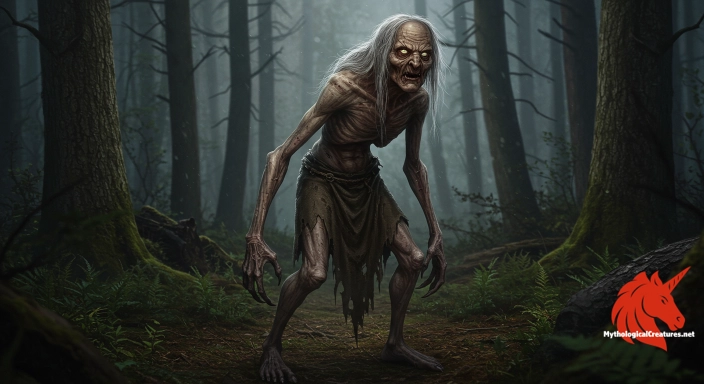
Dare to Meet the Hag....
The Mythological Creatures Book Series
Yokai, Greek, Norse, Egyptian & Chinese. Five illustrated field guides to the creatures the old stories either warned or told you about.

Curated by the Mythological Creatures Team
Series editor: Mythological Creatures Directory
Primary desk: Northern & European Folklore Desk
(rev. November 2025)