
Charon: Charon is the grim ferryman of the Greek underworld, tasked with transporting souls across the rivers Acheron and Styx.

Charon
Charon - Central to ancient Greek funerary practices, symbolising the obligatory journey from life to death with the obol as the fare.
Origins & First Encounters
Charon emerges from the depths of ancient Greek myth as the imposing ferryman who escorts souls from the realm of the living to the shadowy confines of the underworld. Born from a tradition steeped in both ritual and literature, his first attestations surface in the early oral and written traditions of Greece, where death and the transition to the afterlife were subjects of both fear and reverence. His singular role in transporting the deceased across forbidding rivers symbolises the inevitable boundary between mortal existence and eternal rest in Hades. Embedded within the cultural fabric of ancient Greece, Charon’s myth interlocks with funerary rites and memorial practices that emphasised the dignity and necessity of a proper send-off for the departed. The grave responsibility of ensuring safe passage for souls resonates in the archaeological evidence of coins placed with the dead, a small tribute to his uncompromising fee. This figure of myth not only underscores the perils of death but also embodies the idea of transformation through the journey into the netherworld. His story, woven into the fabric of both myth and ritual, has long been a subject of introspection about mortality and the afterlife. The recurring themes of duty, fatalism, and the inevitability of death continue to define his character in the rich tapestry of ancient lore. His portrayal has influenced generations of storytellers, ensuring that Charon remains a powerful symbol of crossing over. This enduring legacy speaks to the universal acknowledgement of life’s transitory nature and the mysteries that await beyond.
Source Texts & Tale Variants
Ancient literary works and archaeological artifacts serve as the primary conduits through which the myth of Charon has been transmitted over millennia. Early texts, though sparse in detail, mention him as the essential link between the world of the living and the realm of the dead. Narratives from classical poets and playwrights provided glimpses of his character, hinting at a stern figure who exacts a toll for passage. Virgil's Aeneid, in particular, enriches his legend by portraying him as an inexorable guardian of the underworld’s boundaries. Beyond literature, vase paintings and grave markers have captured his visage, enabling modern audiences to visualise his spectral presence. Variants of his story appear in diverse regional traditions, each adding its own nuance to his character and function. Folkloric retellings sometimes embellish his interactions with famed heroes, such as Heracles and Aeneas, thereby blending myth with cultural memory. Oral traditions across the Mediterranean further infused his legend with local colour and ritual significance, ensuring that his tale was both adaptable and enduring. These diverse sources collectively construct a multifaceted understanding of Charon, reinforcing his role in the cosmologies of death and transition. The multiplicity of narratives demonstrates how myths evolve across time and geography, yet still cling to their original gravitas.
Form & Powers
Although early descriptions of Charon are often terse, later artistic renditions and literary embellishments have offered a more detailed portrayal of his physical form. He is commonly depicted as a gaunt, spectral figure with deeply etched features that mirror the austerity of the underworld. His eyes, frequently rendered as sunken and reflective, seem to capture the profound sorrow and inevitability of death. Attired in a dark, tattered cloak that blends seamlessly with the murky shades of the underworld, he exudes an air of both menace and melancholic duty. Some images highlight a long, unkempt beard and a weathered face, which together evoke centuries of witnessing the passage of souls. In certain interpretations, his elderly and almost skeletal appearance underscores his timeless role that transcends mortal limitations. The depiction of his physique often contrasts starkly with the ephemeral human form, emphasising his function as a border guard between worlds. Floating at the prow of his creaking boat, he is typically shown holding a pole, a symbolic tool that steadies both vessel and passage. Such vivid and sometimes varying descriptions not only contribute to the haunting allure of his persona but also offer insight into how different eras visualised the abstract concept of death. His physicality, therefore, becomes a canvas upon which cultural fears and hopes about the afterlife are projected.
Regional Faces
While Charon’s origins are firmly rooted in Greek mythology, his presence has been adapted and reinterpreted across various regions around the Mediterranean and beyond. In some parts of ancient Greece, local traditions painted him as a more ambiguous figure—one whose grim duty was balanced by the necessary role he played in maintaining cosmic order. Regions such as Italy absorbed his myth, where artistic and literary adaptations sometimes portrayed him with gentler, almost paternal traits, reflecting local attitudes towards death and transition. In Byzantine and later medieval contexts, the ferryman’s image was frequently merged with indigenous beliefs about the afterlife, resulting in hybrid legends that echoed the original yet took on unique cultural resonances. Variations in his attire, countenance, and the symbolism of the coins associated with his passage further distinguish these regional adaptations. Local festivals and rituals occasionally invoked his presence, reinterpreting his stern call to the afterlife as a reminder of both mortality and moral accountability. Differences in the portrayal of the rivers he navigated, be it the Acheron or the Styx, also exemplify the distinct geographical and cultural flavour of his myth. These regional variants illustrate the fluidity of myth, adapting a canonical figure like Charon to reflect the spiritual concerns and aesthetic tastes of disparate communities. Ultimately, such variations highlight how a single mythic figure can encapsulate a range of cultural values across both time and space.
Cultural Parallels
The archetype represented by Charon finds echoes in numerous mythologies, underscoring the human fascination with the journey between life and death. Figures like the Egyptian Anubis, who also presides over transitions to the afterlife, share with Charon a role steeped in both duty and mystery. The Etruscan Charun, though often depicted with more ferocious attributes, is similarly concerned with guiding or challenging souls on their final journey. These cross-cultural parallels reveal an enduring motif: the presence of a guardian or guide at the threshold of the underworld. In many Eastern traditions, comparable psychopomps appear in the guise of deities or ancestral spirits tasked with ferrying souls away from the corporeal world. Despite regional differences in appearance and narrative detail, the underlying symbolism remains consistent, speaking to shared concerns about death, justice, and transition. The similarities extend even into modern reinterpretations, where literature and popular culture often blend characteristics from these diverse sources. Each variant reinforces the idea that the transition from life to death is both a physical and spiritual crossing, governed by archetypal figures. This comparative analysis not only highlights the universality of Charon’s myth but also demonstrates how cultures adopt and adapt similar symbols to articulate their understanding of mortality. Ultimately, the recurring theme of a death guide serves as a testament to the enduring human need to personify the final journey.
Legacy & Modern Evolution
The enduring image of Charon has experienced a fascinating evolution from the classical age to modern times, continually adapting to shifting cultural attitudes towards death. His early appearances in Greek myth laid the groundwork for a persona that would later influence Renaissance art and literature, where his spectral figure became a powerful metaphor for mortality. Over centuries, reinterpretations have seen his strict, uncompromising nature softened or even romanticised depending on the societal context. The archaeological discoveries of coins and grave artefacts not only affirmed his ancient role but also added a tangible dimension to his myth, linking ritual practices with mythic narrative. In contemporary popular culture, Charon is frequently reimagined in films, novels, and video games, often portrayed as both a menacing and enigmatic guide to the afterlife. Modern adaptations sometimes blend his traditional role with elements of existential and philosophical inquiry, reflecting today’s complex attitudes towards death. His presence in modern art underscores a timeless dialogue about the boundaries between life and the beyond. As reinterpretations continue to surface in various media, his myth remains a vital cultural touchstone that challenges and comforts in equal measure. The evolution of his imagery—from stark mythological figure to multifaceted cultural symbol—mirrors the broader human endeavour to find meaning in the face of the inevitable. Thus, Charon’s legacy persists not merely as a relic of ancient myth, but as a dynamic narrative that continues to inspire and provoke reflection on the nature of existence.
Interesting Fact
The coin known as Charon's obol not only served as fare for the soul’s journey but also became a lasting symbol of the ancient Greek perspective on death and the afterlife.
For myth educators and toolmakers
Built a resource for mythology learners?
If you offer courses, teaching tools, or research platforms focused on myth and folklore, consider a discrete placement on our reference pages.
Introduce your resourceQuick Creature Info
Origin:
Features:
Associations:
Our Mythic Legendary Rating:

Also Sometimes Known As:
Habitat:
Supernatural Powers:
Physical Attributes:
Abilities:
Behavior:
Weaknesses:
Lore:
References
Discover Another Mythical Legend You May Not Have Heard Of?
Uncover the mysteries of ancient folklore and expand your knowledge of legendary beings from cultures around the world.
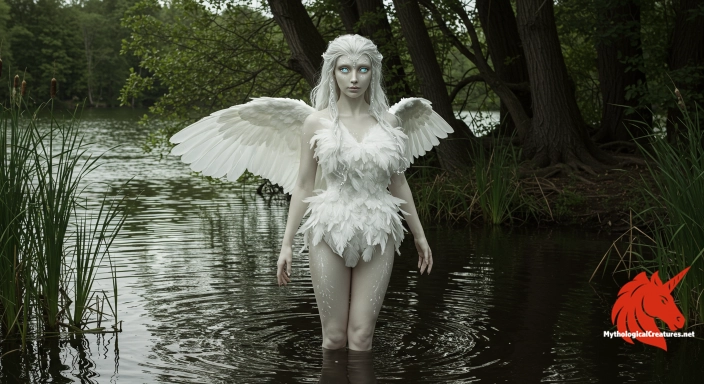
Dare to Meet the Swan maiden....
Curated by the Mythological Creatures Team
Series editor: Mythological Creatures Directory
Primary desk: Hellenic & Ancient Mediterranean Desk
(rev. November 2025)