
Charun: Charun is an Etruscan mythological figure who serves as a psychopomp in the underworld.
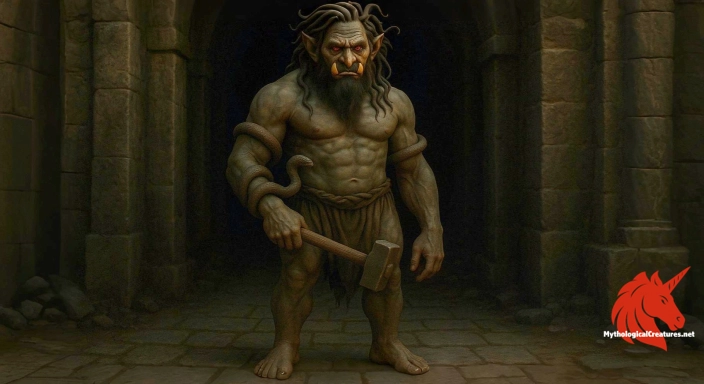
Charun
Charun - Charun is essential in guiding souls to the underworld, reflecting Etruscan beliefs about death and the afterlife.
Origins & First Encounters
Charun emerges as a striking personality in the ancient Etruscan pantheon, embodying the transition between life and the mysterious realm of the dead. His role as a psychopomp, distinct from the supreme deity of the underworld, underscores his unique purpose in guiding souls beyond mortal existence. The origins of his myth are intertwined with the ritual and spiritual practices of the Etruscan people, who celebrated life’s fleeting nature through elaborate funerary art. Early attestations from tomb paintings and artefacts indicate that his presence was integral to the rituals of passage into the afterlife. He is often seen flanked by Vanth, a winged figure whose ethereal form perfectly complements his own darker, more grounded attributes. His depiction reflects a cultural fascination with the liminal spaces between the living and the dead, capturing both dread and wonder in the face of mortality. The imagery associated with Charun suggests that the Etruscans viewed the journey of the soul as a complex and deeply spiritual endeavour. His enduring myth not only provided comfort in times of loss but also symbolised the continual cycle of transformation inherent in ancient belief systems.
Source Texts & Tale Variants
Ancient artefacts such as tomb paintings, ceramic pieces, and funerary inscriptions form the backbone of our understanding of Charun. These primary sources, predominantly uncovered in Etruscan necropoleis, vividly capture his ominous and enigmatic presence. Fragments of narrative and symbolic inscriptions suggest that Charun’s role may have extended beyond the simple escorting of souls, hinting at a protective facet in certain rites. Variants found in diverse sites reveal slight differences in his depiction, with some communities portraying him as a stern guardian and others as a more mysterious mediator. The pairing of his image with that of Vanth in many depictions further emphasises a dualistic approach to the afterlife. While surviving texts are sparse, the consistency in his iconography across artefacts provides a compelling narrative of his multifaceted role. Intermittent appearances in liturgical contexts imply that his myth may have evolved over time, absorbing local influences and interpretations. The body of evidence, though fragmentary, contributes to a rich tapestry of story variants that deepen our insight into Etruscan beliefs about death and the passage to the afterlife.
Form & Powers
Visual portrayals of Charun in Etruscan art reveal a figure both formidable and otherworldly. His countenance is often rendered with stark, rugged features that blend a human likeness with hints of bestial form, creating an eerie air of mystique. Many depictions showcase a furrowed brow, deep-set eyes, and a grim expression that speaks to the somber duty he performs. In some artistic renditions, a pair of horns emerges from his forehead, reinforcing his connection to the supernatural. The body of Charun is sometimes shown as elongated and gaunt, with limbs that convey both agility and a spectral quality. Artists have also employed symbolic adornments such as ritualistic scarves or ornamental motifs that underscore his role in the rites of passage. Size and posture vary across different sources, with some images portraying him as an imposing giant while others suggest a subtler presence. These detailed physical elements work together to encapsulate the duality of Charun—a fearsome guide to the afterlife wrapped in an aura of ancient mysticism.
Regional Faces
Regional interpretations of Charun reveal a dynamic interplay between core mythological attributes and local cultural influences. In central Italy, his image is sometimes softened to appear as a benevolent guide who eases the transition of souls, reflecting regional inclinations towards a more nurturing afterlife journey. Conversely, depictions from peripheral areas tend to emphasise a harsher, more punitive aspect of his nature, aligning him with figures of judgement or retribution in the netherworld. Local artistic conventions have introduced additional layers of detail, such as unique decorative elements or regional symbols, which enrich his character. The evolution of his portrayal in various communities highlights a broader tendency to adapt mythological figures to resonate with local rites and societal values. In some contexts, Charun is even merged with other chthonic spirits, further diversifying his role and symbolism. The variations underscore how the core myth was flexible enough to accommodate divergent cultural perceptions of death and the afterlife. These regional adaptations, while distinct, consistently maintain the essential role of Charun as the guardian of the threshold between life and death.
Cultural Parallels
Charun’s function as a psychopomp invites compelling comparisons with similar figures across different ancient mythologies. His role bears resemblance to Greek depictions of Charon, the traditional ferryman of the dead, even though Charun often displays a broader set of attributes beyond mere transportation. In Egyptian lore, a parallel can be drawn with deities such as Anubis, who presides over the journey to the afterlife with equal parts authority and enigma. The duality of his appearance, particularly when paired with Vanth, parallels cultural narratives that emphasise the balance between light and darkness in the realm of death. This shared motif of guiding spirits is echoed in Norse and other ancient traditions, where the mediator between life and the beyond assumes varied yet conceptually similar roles. The layered representation of Charun, combining elements of fear and guidance, illustrates a universal approach to understanding the unknown. Such comparative analysis highlights how disparate cultures have historically grappled with existential themes by crafting guardians of the afterlife. In this manner, Charun contributes to a broader, cross-cultural dialogue on mortality, transition, and the spiritual journey.
Legacy & Modern Evolution
The evolution of Charun’s depiction mirrors the shifting paradigms of cultural attitudes towards death over the centuries. In the ancient world, his image was integrally woven into the fabric of funerary rituals, symbolising a bridge between the realms of the living and the divine. With the passage of time, his character migrated into the narratives of the Roman and medieval periods, acquiring additional layers of dramatic and cautionary symbolism. In modern times, Charun has emerged as an influential icon in literature, film, and visual arts, where his formidable presence is reimagined to resonate with contemporary fears and fascinations. Artists and writers draw on his storied past to explore themes of mortality, transformation, and the enigmatic nature of the afterlife. His legacy is evident in the dark fantasy and gothic genres, where echoes of his myth inform portrayals of death and rebirth. The enduring appeal of Charun lies in his complex identity—a multifaceted figure that challenges simplistic notions of good and evil. As modern reinterpretations continue to evolve, his imagery serves as a potent reminder of the deep, ancient roots of our cultural engagement with the mystery of death.
Interesting Fact
An interesting aspect of Charun is his depiction alongside Vanth, which reflects a complex duality in underworld iconography and the multifaceted nature of death in Etruscan belief.
Advertising opportunity
Showcase your mythology project
We offer limited sponsor placements for books, courses, games, and creators aligned with our audience.
View partnership optionsQuick Creature Info
Features:
Our Mythic Legendary Rating:

Also Sometimes Known As:
Habitat:
Supernatural Powers:
Physical Attributes:
Abilities:
Behavior:
Lore:
Related Creatures, Tales or Lore
- CCharon (Greek)
- AAnubis (Egyptian)
References
Discover Another Mythical Legend You May Not Have Heard Of?
Uncover the mysteries of ancient folklore and expand your knowledge of legendary beings from cultures around the world.
Dare to Meet the Orithyia....

Curated by the Mythological Creatures Team
Series editor: Mythological Creatures Directory
Primary desk: Hellenic & Ancient Mediterranean Desk
(rev. November 2025)