
Daramulum: Daramulum is a sky hero from south-east Australian Aboriginal mythology, uniquely depicted with one leg, one arm, an emu-back, and a large foot.
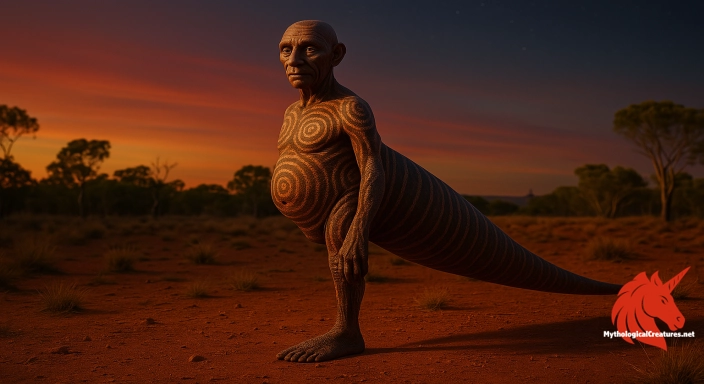
Daramulum
Daramulum - Central to ceremonial traditions and Aboriginal cosmology, symbolizing the connection between the sky and the bush.
the legend in five swipes.
the legend in five swipes.
Daramulum: First Encounters and Early Records
Daramulum is a revered sky hero in the traditions of south‐east Australia whose narrative has been interwoven with the spiritual fabric of Aboriginal communities for countless generations. His origins lie deep within ancient oral histories, where he is often mentioned alongside cosmic figures such as Baiame. Emerging from a name that combines elements meaning ‘leg’ and ‘one’, his identity is both unique and symbolically vibrant. Many stories portray him as not only a creator spirit but also a guide during important initiation ceremonies. His role as a shapeshifter underscores his connection to both the natural world and the expanses of the sky. Vivid depictions in rock art reveal a figure whose singular form and expressive features hint at celestial powers. The sound of the bullroarer, used to invoke his presence, further attests to his enduring influence and mystical voice. Over time, his legend has come to symbolise a bridge between earthly existence and the vast cosmos, enriching the cultural heritage of Aboriginal Australia. His tale continues to inspire and instruct, illustrating a timeless dance between human tradition and the energy of the universe.
What sources tell us about Daramulum?
Ancient oral traditions and rock art serve as the primary sources for our understanding of Daramulum, offering a window into an age-old spiritual world. Stories passed down through generations often depict him in relation to the sacred bullroarer and celestial markings in the sky. Carvings and engravings, such as those found along the Elvina Track in Ku‐ring‐gai Chase National Park, have been crucial in preserving his image. Various Aboriginal groups, including the Guringai and Yuin, have maintained diverse versions of his tale, each reflecting local insights and ritual practices. Some narratives provide a detailed account of his one‐legged form and his intimate bond with an emu-wife, while others focus on his role as a cosmic guide. The use of different names and spellings, including Darhumulan and Dharramaalan, indicates a rich tapestry of cultural variations. These traditional sources are complemented by ceremonial accounts, wherein the bullroarer and the natural environment play important roles in the retelling of his legend. Such varied accounts continue to offer profound insights into his myth, demonstrating the dynamic and adaptive nature of Aboriginal spiritual storytelling.
Daramulum: Form, Powers and Weaknesses
The physical depiction of Daramulum is marked by striking and intriguing features that set him apart from typical human forms. Artistic representations often focus on his unique one‐legged stance, a detail that conveys both mystery and symbolic power. In many engravings, he is shown in semi‐profile, which accentuates the fluidity of his form and the blend of human and animal characteristics. His figure is further defined by a single extended arm and a robust, large foot that ground him in the earthly realm. Carvings sometimes illustrate an emu‐back design, a feature that connects him intimately with his emu-wife and the broader natural world. The inclusion of indentations meant to evoke star groups reinforces his association with the heavens. Each element of his physical portrayal is carefully rendered to reflect his shapeshifting abilities and cosmic significance. The deliberate contrast between his singularity and the conventional human form invites viewers to contemplate the deeper symbolism present in every detail of his character.
How did location shape the story of Daramulum?
Across the varied landscapes of south‐east Australia, Daramulum’s portrayal adapts to the distinct cultural expressions of different Aboriginal groups. In some regions, his image is seamlessly merged with the local environment, symbolising the deep connection between nature and spirituality. For example, among the Guringai people, he is linked with the Alpha Crucis of the Southern Cross, where the remaining stars symbolise the head of his emu-wife. Such regional interpretations highlight the way celestial patterns and terrestrial features combine to form a coherent spiritual narrative. Variations in his depiction, from his bodily form to the ceremonial instruments associated with him, reflect the diversity of local traditions. Some communities emphasise his role as a guide in initiation rituals, while others stress the continuity of his presence in ancient trees and rock art. The multiplicity of names and visual cues across regions further demonstrates the adaptability of his myth. Local art and ceremonial practices continually renew his essence, affirming that his legacy is not static but evolves in harmony with the natural and cultural landscape. These regional nuances reveal a dynamic interplay between shared spiritual themes and unique local identities, enriching the tapestry of his narrative.
How does the Daramulum legend compare worldwide?
A comparative look at Daramulum reveals parallels with sky deities and cultural heroes from a range of indigenous traditions worldwide. His role as an intermediary between the earthly and the celestial echoes that of similar figures in other cultures, such as the Native American Thunderbird or the broader concept of the creator god. The distinctive one‐legged motif that characterises his form sets him apart and invites comparisons with mythic figures noted for their singular or anomalous features. His symbolic association with the bullroarer, an instrument used to connect with spiritual entities, finds echoes in other indigenous rituals based on sound and natural resonance. The duality of his existence, combining both human-like attributes and animalistic characteristics, is a recurring theme witnessed in numerous global mythologies. Cross-cultural analysis underlines a shared human impulse to embody the mysteries of the cosmos through striking physical imagery and transformative legends. Within Aboriginal tradition, his foundational narrative is complemented by other creator figures like Baiame, further highlighting a regional motif of celestial guidance. The diversity in his portrayal, when set against global myth, demonstrates the universal dialogue between ritual, art, and the indefinable forces of nature. His enduring myth serves as a powerful testament to the ways in which individual cultures address universal themes of creation, transformation, and cosmic balance.
Daramulum: The Legend's Second Life
Throughout the centuries, the story of Daramulum has continually evolved, reflecting shifts in both cultural memory and artistic expression. Once exclusively transmitted through oral tradition and ancient rock art, his legend now appears in modern reinterpretations that still honour traditional symbolism. The bullroarer remains a central element in ceremonial practices, serving as a living connection to the ancestral past. Contemporary artists have embraced his image, incorporating his distinctive features into visual and performance artwork that bridges the old with the new. This continuing evolution of his legacy underscores a collective commitment among Aboriginal communities to preserve and celebrate their spiritual heritage. Daramulum’s image is now more than a myth; it is a dynamic emblem of identity, resilience and the enduring power of nature. As modern cultural discourse increasingly values the wisdom of indigenous narratives, his tale offers both historical insight and ongoing inspiration. Through exhibitions, cultural festivals, and academic discussions, his presence continues to resonate and adapt, symbolising a broader narrative of renewal and continuity. This bridging of ancient lore with contemporary expression reaffirms the timeless significance of his myth and its relevance in today’s world.
Interesting Fact
An intriguing aspect of Daramulum's identity is that his spirit is believed to reside in specific trees, making the bullroarer a sacred object that must be sourced from a tree imbued with his essence.
Mythological Treasures
Japanese Yokai: A field guide to the spirits and demons of Japanese folklore
Fifteen spirits, with the signs to watch for and what the old tales say to do if you meet one.
Greek Myths: A field guide to the monsters of ancient Greece
Every monster here earned its place in legend, and each gets a full page of artwork and the story behind it.
Norse Sagas: A field guide to the beasts of the Viking world
Drawn from the saga accounts themselves, with the powers, weaknesses and doom of each being set out.
the legend in five swipes.
Partner with us
Sponsor this space
Reach thousands of mythology enthusiasts with a curated placement on our creature pages.
Learn about sponsorshipQuick Creature Info
Origin:
Features:
Associations:
Our Mythic Legendary Rating:

Also Sometimes Known As:
Habitat:
Supernatural Powers:
Physical Attributes:
Abilities:
Behavior:
Lore:
Related Creatures, Tales or Lore
- BBaiame
- BBunjil
- WWandjina
References
Discover Another Mythical Legend You May Not Have Heard Of?
Uncover the mysteries of ancient folklore and expand your knowledge of legendary beings from cultures around the world.
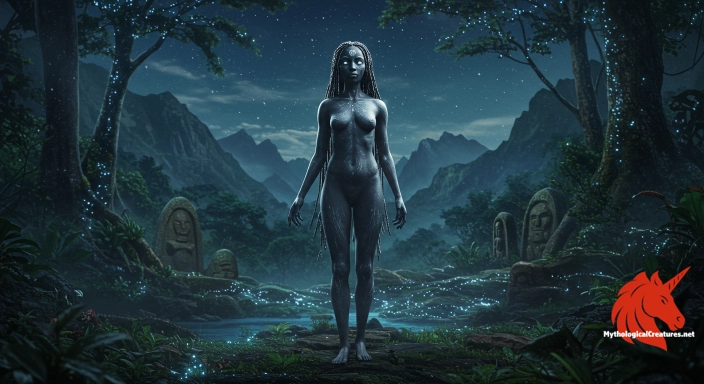
Dare to Meet the Nzambici....
The Mythological Creatures Book Series
Yokai, Greek, Norse, Egyptian & Chinese. Five illustrated field guides to the creatures the old stories either warned or told you about.
Curated by the Mythological Creatures Team
Series editor: Mythological Creatures Directory
Primary desk: Asian & Pacific Myth Cycles Desk
(rev. November 2025)