
Dòideag: Dòideag is a legendary witch from the Isle of Mull in Scotland, famed in local folklore for her magical prowess and the sinking of a Spanish Armada ship.
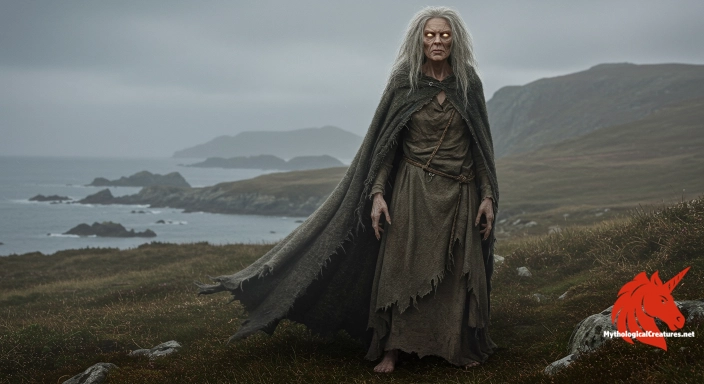
Dòideag
Dòideag - Dòideag holds an enduring place in Scottish folklore as a figure of magical retribution and maritime mystery.
Origins & First Encounters
Dòideag emerges from the mists of the Isle of Mull as an enigmatic and powerful witch whose legend has been woven into the very fabric of Scottish folklore. Her story is deeply entwined with a period of maritime uncertainty, where the supernatural intermingled with the historical tides of conflict. Born of oral tradition and local myth, her exploits reverberate as a symbol of both protection and defiance against overwhelming adversity. She is often remembered for her reputed intervention during the perilous days of the Spanish Armada, an act that cemented her status as a formidable guardian of her homeland. Early testimonies present her as a solitary sorceress, yet later narratives expand her character to encompass a collective of seafaring witches. These layers of history and myth provide her tale with a complex, almost eerie vibrancy that has been passed down through countless generations. The interplay of legend and historical event in her story encapsulates the struggle between human endeavour and the mystic forces of nature. Her enduring legacy speaks to a deeper cultural resonance—a reminder of an era when magic was interlaced with the everyday, and heroes could be found in the most unexpected figures. Over time, Dòideag has transcended her role as a mere folk figure, becoming a living emblem of Scottish resilience and mystery.
Source Texts & Tale Variants
The primary corpus of Dòideag’s legend is rooted in the vibrant oral traditions of the Isle of Mull, where stories of her deeds have been recounted with both reverence and awe. Diverse narrative threads have been preserved by local storytellers, each adding unique details that enrich her mythic persona. Some renditions detail a solitary entity wielding spells potent enough to alter the course of history, while others position her as part of an elite group known as Na Dòideagan. These variants often converge on her alleged role in thwarting the Spanish Armada, a feat that has been celebrated in local lore with a blend of historical ambiguity and supernatural intrigue. There is lively debate among traditional sources regarding which specific armada vessel was doomed by her intervention—accounts suggest names like Almirante di Florencia and San Juan De Sicilia. In some retellings, her affiliation with the Maclean of Duart clan further deepens the narrative, merging political alliances with otherworldly prowess. The scarcity of written records coupled with the accidental preservation in folk ballads has made her story a tapestry of intermittent details and imaginative embellishments. Each variant contributes to a broader, evolving understanding of a character who is as elusive as she is captivating. Collectively, these sources underscore the dynamic and mutable nature of folklore, where every teller leaves a personal stamp on the legend.
Form & Powers
Dòideag is frequently envisioned as a figure of commanding presence, her appearance reflecting both the rugged beauty of Mull and the ethereal qualities of ancient magic. Her eyes are often depicted as deep and penetrating, imbued with a luminous intensity that hints at hidden knowledge. Many accounts describe her face as marked by weathered lines, as though the capricious elements have etched the wisdom of countless storms upon her features. Her dark, unruly hair is portrayed as flowing in waves that mimic the turbulent ocean, reinforcing her elemental connection. Attired in garments that blend earthy tones with flashes of iridescence, she appears at once both natural and supernatural. The graceful arch of her brow and the set determination in her gaze evoke a sense of authority that transcends mortal frailty. Her hands, slender and seemingly capable of conjuring the forces of nature, add an element of mystique to her overall demeanour. Artistic depictions have sometimes incorporated enigmatic symbols into her attire, suggesting a legacy of esoteric tradition and ancient lore. Ultimately, the detailed physical portrayals of Dòideag serve to reinforce her image as a timeless embodiment of nature’s wild, untamable spirit.
Regional Faces
The lore of Dòideag is as diverse as the landscapes of Scotland, with local traditions moulding her story to reflect distinct regional identities. On the Isle of Mull, she is celebrated as a singular force of both protection and retribution, her deeds eternally linked to the island’s maritime history. In nearby coastal villages and Gaelic communities, variations arise where she is sometimes seen as one of many mystical beings forming the collective Na Dòideagan. In these retellings, her actions are interwoven with the fortunes of local clans, notably the Maclean of Duart, adding a layer of historic allegiance and regional pride. Some areas emphasise her role as a supernatural guardian whose interventions were pivotal during times of external threat, notably against seaborne invaders. In more remote regions, her figure transforms into an elemental symbol, with the local weather and tides often cited as manifestations of her presence. Storytellers in these communities imbue her myth with both reverence and caution, reflecting the broader cultural ties between the people and their natural surroundings. Variants of her legend have absorbed regional motifs, resulting in an array of portrayals that range from benevolent protector to fearsome harbinger. These local adaptations demonstrate how a single mythic figure can be continuously reinterpreted to mirror the values, fears, and aspirations of diverse communities.
Cultural Parallels
The legend of Dòideag bears remarkable parallels with other celebrated mythological witches and enchantresses across European folklore. Similar to figures like Morgana Le Fay in Arthurian tales, she embodies a blend of mystique, defiance, and elemental wisdom that transcends a singular narrative tradition. Her dual role as both protector and destroyer resonates with archetypes seen in Celtic and even Scandinavian myths, where supernatural women challenge the natural order. As with the Irish banshee or the enigmatic fae of the Highlands, her alternate depictions serve to warn and to inspire, encapsulating the community’s reverence for forces beyond human control. Comparative analysis reveals that many cultures have fashioned such figures as embodiments of the ambiguous boundary between civilised order and wild nature. The recurring theme of a powerful woman wrestling with maritime and chaotic elements can be seen as a universal metaphor for the mysteries of the natural world. In several traditions, her character is invoked as both a curse and a blessing, reflecting the ambivalence that often accompanies the supernatural. This cross-cultural connection underscores an enduring human fascination with the liminal, a space where myth and reality converge. Ultimately, Dòideag stands shoulder to shoulder with other legendary enchantresses, her story a testament to the universal appeal of the mystical and the unknown.
Legacy & Modern Evolution
Throughout the centuries, the myth of Dòideag has been subject to transformation, mirroring shifts in cultural attitudes and historical circumstances. Originating in the oral traditions of the Isle of Mull, her legend was once a local chronicle of magical intervention and maritime defiance. As time passed, her story was progressively embellished through retellings that intertwined historical events with supernatural elements. During the Romantic era, her myth experienced a revival, with poets and artists recasting her as a symbol of resistance and the wild majesty of nature. This creative resurgence helped cement her status as an icon of both cultural heritage and mystical power. In modern times, she has been reimagined in literature, film, and local festivals, each medium contributing to the evolution of her multifaceted identity. Contemporary portrayals often highlight her as both a guardian of the land and a figure of enigmatic beauty whose powers defy easy explanation. The ongoing reinterpretation of her legend exemplifies how ancient myth can be revitalised to address modern themes of environmental stewardship and cultural resilience. Today, Dòideag endures as a captivating emblem of Scotland’s rich folkloric tradition, bridging the gap between a storied past and an ever-evolving present.
Interesting Fact
An intriguing aspect of her legend is the debate over which Spanish Armada ship she sank, reflecting the layered and sometimes conflicting nature of oral tradition in Scottish folklore.
For serious myth projects
Feature your work alongside the legends
From academic works to story-rich games, we highlight projects that respect world mythologies. Talk to us about a measured, long-term placement.
Start a conversationQuick Creature Info
Features:
Our Mythic Legendary Rating:

Habitat:
Supernatural Powers:
Abilities:
Behavior:
Lore:
References
Discover Another Mythical Legend You May Not Have Heard Of?
Uncover the mysteries of ancient folklore and expand your knowledge of legendary beings from cultures around the world.
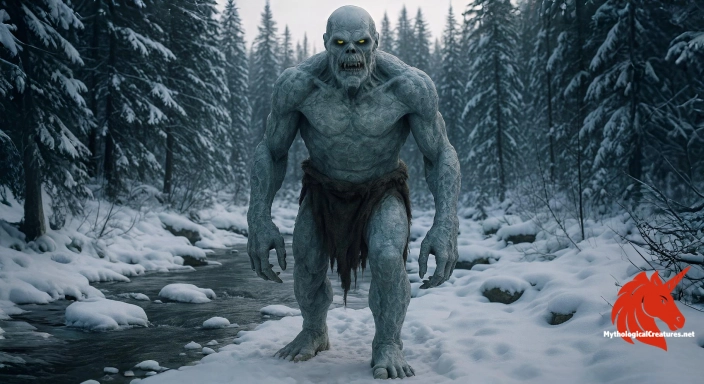
Dare to Meet the Chenoo....
Curated by the Mythological Creatures Team
Series editor: Mythological Creatures Directory
Primary desk: Northern & European Folklore Desk
(rev. November 2025)