
Dryalus: Dryalus is a centaur from Greek mythology known for his role in the Centauromachy.
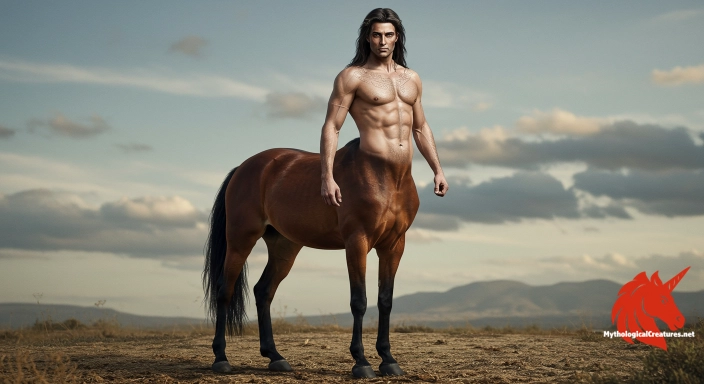
Dryalus
Dryalus - Dryalus represents the archetypal centaur warrior, embodying the blend of human intellect and equine strength, and plays a notable role in the legendary Centauromachy.
the legend in five swipes.
the legend in five swipes.
Where does Dryalus come from?
Dryalus emerges from the depths of Greek myth as a centaur whose existence encapsulates the enduring tension between civilization and the wild. Born of Peuceus, his lineage hints at a storied tradition of beings who straddle the realms of man and beast. His brief but resonant mention at the renowned wedding of Pirithous and Hippodameia places him at a crucial crossroads of mythic celebration and tragedy. The legendary Centauromachy, in which he fought alongside his kin against the Lapiths, offers a glimpse into the chaotic energy that defined many ancient conflicts. His participation in these grand events positions him as a symbol of the unpredictable forces that both challenge and enrich human society. The narrative of Dryalus is interwoven with the themes of duality and metamorphosis that pervade Greek mythology. Even though his story is not as elaborately chronicled as some of his peers, his impact resonates within the broader tapestry of centaur lore. This melding of human dignity and bestial vigor continues to fascinate those who explore the mythological past, casting Dryalus as a subtle reminder of an age when nature and culture were in constant dialogue.
Where can you read about Dryalus?
The primary records of Dryalus’s exploits can be traced to the fragmentary texts and evocative vase paintings that survive from classical antiquity. His name is interspersed among the recensions of centaur narratives that detail the chaos of the Centauromachy. Although the surviving literary sources do not offer expansive biographies, they firmly plant him amidst the warriors of myth during one of its most illustrious feuds. Artistic depictions from ancient Greece offer visual attestations that complement the scant textual mentions, lending him a tangible presence despite his brevity in the written record. Oral traditions, passed down through generations, have subtly enriched his character beyond the terse accounts found in early sources. Some local variants even imbue him with qualities of both combativeness and reflective restraint, highlighting the multifaceted nature of centaur folklore. In certain regional epics, Dryalus is portrayed not merely as a fighter but as a symbol of the wild spirit that challenged the order of human society. The interplay between these various sources has ensured that Dryalus remains a topic of scholarly interest, with each retelling contributing layers to his mythic persona.
What powers did Dryalus have?
In artistic renditions and poetic descriptions, Dryalus is typically envisioned as the quintessential centaur, melding the noble form of a warrior with the robust build of a spirited steed. His upper body, marked by a sinewy musculature and a face of resolute determination, hints at both human intellect and the intensity of battle. The lower half of his body bears the unmistakable form of a powerful horse, complete with a sleek coat and an aura of wild grace. Artists often depict him with a flowing mane that cascades around his shoulders, symbolising the untamed force of nature he embodies. His eyes, alive with an inner fire, have been described as reflecting both the fury of combat and a deeper, more contemplative soul. Subtle scars and marks from ancient skirmishes are sometimes portrayed, suggesting a long life spent in the constant ballet of conflict and survival. Variations in artistic style have led to depictions where he appears either more lithe and agile or robust and imposing, each interpretation reinforcing different aspects of his character. Every detail of his form captures the hybrid vigour that is the hallmark of centaur imagery, making Dryalus an enduring emblem of mythic duality.
Dryalus: Local Variations in the Story
Regional interpretations of Dryalus showcase a fascinating array of cultural adaptations that reflect local artistic and narrative traditions. In many mainland Greek traditions, he is depicted as a fierce and almost untamable warrior, emblematic of the rugged landscapes from which these legends arose. Communities in the northern regions often accentuate his wild disposition, imbuing him with a raw edge that blurs the boundaries between human and animal. By contrast, some island traditions tender a more refined image, portraying him with an undercurrent of nobility and a closer affinity to the pastoral world. Local storytellers have sometimes highlighted his role as a bridge between humankind and nature, a mediator who embodies both the beauty and terror of the wilderness. Artistic renderings in different regions vary in the details of his armour and weaponry, reflecting local martial aesthetics and cultural sensitivities. In some tales, his name itself is rendered with connotations that evoke the wooded realms and the secrets of the forest. This regional variability not only enriches his character but also underscores the adaptability of myth to diverse cultural landscapes. The resultant mosaic of interpretations has ensured that Dryalus remains a dynamic figure, shaped by the distinct voices of various Greek communities.
The Global Cousins of Dryalus
In the grand catalogue of Greek myth, Dryalus stands alongside renowned centaurs such as Chiron, yet he embodies a contrasting facet of the centaur mythos. Whereas Chiron is celebrated for his wisdom and mentorship, Dryalus represents the raw, unbridled energy of his kind, a warrior whose presence underscores the chaotic forces at play during mythic battles. This duality resonates with a wider mythological pattern where hybrid beings illustrate both the blessings and curses of a divided nature. In a similar vein, figures like Nessus and Eurytion contribute to the narrative of centaurs who straddle the line between nobility and savagery. Comparisons extend beyond the confines of Greek lore, touching upon other cultures that feature mythic hybrids symbolising the coexistence of intellect and instinct. The recurrent motif of half-human, half-beast across global mythologies highlights a collective fascination with the interplay of order and chaos. Such cross-cultural parallels speak to an enduring human struggle to reconcile the refined and the wild. Dryalus, in this context, emerges not merely as a participant in a singular story but as a representative of a broader archetype that has captivated imaginations through the ages. His portrayal invites us to explore how different societies have interpreted the balance between civilization and the untamed, reaffirming the universal appeal of mythic hybrids.
How is Dryalus remembered today?
The evolution of Dryalus’s image over time is a testament to the enduring power of myth and its capacity for reinvention. In classical antiquity, he was depicted in the context of grand martial spectacles and dramatic confrontations with order and chaos. As centuries passed, his brief mentions in ancient texts were absorbed into the collective archetype of the centaur, influencing how later generations envisioned these hybrid creatures. During the Renaissance, artists revisiting Greco-Roman themes often reimagined him with heightened detail and nuance, marrying classical form with emerging humanistic ideals. Modern fantasy literature and visual media have since drawn upon these earlier imagery and narratives, weaving Dryalus into broader stories that explore identity, duality, and the clash of nature versus civilisation. Contemporary interpretations tend to highlight the inner turmoil and moral ambiguity inherent in his character, reflecting modern concerns over the loss of natural integrity in an increasingly mechanised world. Academics and enthusiasts alike continue to analyse his figure as a symbol of the eternal balance between rational thought and natural instinct. His legacy, therefore, is not fixed but fluid, mirroring the ever-changing ways in which societies interact with their mythic past. In classrooms, art galleries, and popular culture, Dryalus remains a subtle yet potent reminder of the timeless exploration of what it means to be caught between two worlds.
Interesting Fact
Dryalus, though not as prominently featured as figures like Chiron, stands out as a representative of the chaotic spirit of centaurs, emphasizing their intrinsic conflict with human society.
Mythological Treasures
Greek Myths: A field guide to the monsters of ancient Greece
Every monster here earned its place in legend, and each gets a full page of artwork and the story behind it.
Chinese Beasts: A field guide to the dragons and demon kings of Chinese myth
From river dragons to demon kings, with the legends that shaped five thousand years of storytelling.
Japanese Yokai: A field guide to the spirits and demons of Japanese folklore
Fifteen spirits, with the signs to watch for and what the old tales say to do if you meet one.
the legend in five swipes.
Curated sponsor space
One subtle banner. Thousands of myth lovers.
We offer a small number of curated sponsor spots for relevant books, courses, games, and art. No clutter, just well-matched partners.
Partner with usQuick Creature Info
Origin:
Features:
Associations:
Our Mythic Legendary Rating:

Habitat:
Supernatural Powers:
Physical Attributes:
Abilities:
Behavior:
Lore:
References
Discover Another Mythical Legend You May Not Have Heard Of?
Uncover the mysteries of ancient folklore and expand your knowledge of legendary beings from cultures around the world.
Dare to Meet the Ithome....
-b131fb97-782a-4945-a984-37097af6bfb2_small.webp "Depiction of Ithome")
The Mythological Creatures Book Series
Yokai, Greek, Norse, Egyptian & Chinese. Five illustrated field guides to the creatures the old stories either warned or told you about.

Curated by the Mythological Creatures Team
Series editor: Mythological Creatures Directory
Primary desk: Hellenic & Ancient Mediterranean Desk
(rev. November 2025)