
Dungavenhooter: The dungavenhooter is a fearsome critter from American folklore resembling a large, crocodilian beast.
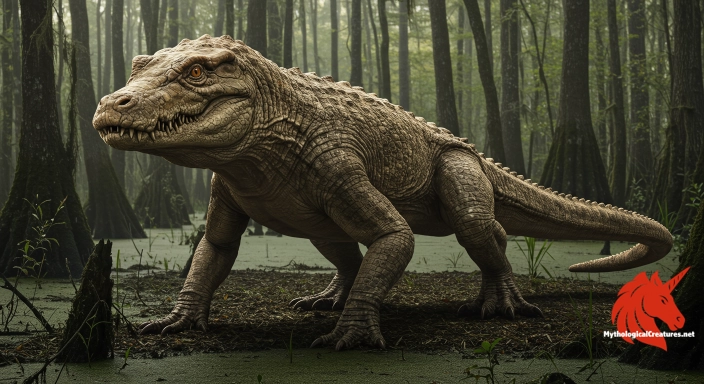
Dungavenhooter
Dungavenhooter - Embodies the bizarre and intimidating aspects of American tall tales and serves as a cautionary symbol of the untamed wilderness.
Origins & First Encounters
The dungavenhooter is a storied figure emerging from the heart of American folklore, imbued with an aura of dread and mystique that captures the imagination of those who dare recount its legend. Its form, reminiscent of a massive crocodilian, suggests a creature forged in the wild and untamed frontiers of early America. Early narratives depict it as a strange, almost spectral predator, whose absence of a conventional mouth only deepens its enigmatic reputation. Witnesses in early frontier communities recounted encounters that blurred the boundaries between myth and reality, lending the beast an air of both terror and fascination.
Local raconteurs would tell tales during long, humid nights in misty swamps, where the dungavenhooter emerged as a living symbol of nature’s inscrutable power. Its unique feeding method, involving the pulverisation of prey into a fine powder and the subsequent snorting through wide nostrils, has cemented its place in the pantheon of fearsome critters. The creature’s inexplicable design stirred both admiration and trepidation among those who dwelt near the wild watercourses and tangled forests. As these stories travelled through generations, the dungavenhooter became more than just a beast – it grew into a potent emblem of the wilderness. Its legend continues to echo through the annals of American tall tale tradition, reflecting a time when the natural world was as mysterious as it was magnificent.
Source Texts & Tale Variants
Primary sources concerning the dungavenhooter are largely woven into the fabric of oral tradition, passed down by frontier loggers and rural inhabitants. Early printed broadsides and compilations of tall tales from the 19th century capture the essence of its legend with vivid, if embellished, detail. These narratives, often recounted around campfires and in isolated border towns, offer a rich glimpse into the creature’s early mythic origins. Regional newspapers also sporadically mentioned sightings and eerie encounters, reinforcing its status as a creature of shadowy lore.
Variations of the tale proliferated with each retelling, with some versions accentuating its nocturnal habits while others focused on its bizarre method of consumption. The creature’s portrayal would shift subtly depending on the local cultural milieu, with communities infusing the legend with hints of humour or moral caution. As these different strands intermingled, they produced a tapestry of narratives that reveal as much about the storytellers as about the beast itself. Recent folkloric studies have revisited these accounts, noting that the dungavenhooter’s diverse representations serve as a catalyst for discussions on nature, danger, and myth. Overall, these multifarious sources underscore the adaptive nature of folklore and the enduring allure of this peculiar creature.
Form & Powers
The dungavenhooter is depicted with a physique that is both formidable and deeply unconventional, echoing the appearance of ancient reptiles steeped in mystery. Its body is robust and elongated, covered in a thick, mottled hide that appears as if it were weathered by time and the harsh elements. Notably, the creature lacks a conventional mouth, a feature that immediately distinguishes it from most known predators. Instead, it possesses a series of large, prominent nostrils, which legends claim are used to ingest the finely pulverised remains of its victims.
Eyewitness accounts often highlight its variable size, with some suggesting a behemoth several metres in length while others describe a more compact yet equally menacing form. Its eyes, said to glimmer with a predatory intensity, add to its aura of stealth and danger. The limbs of the dungavenhooter are stout but agile, supporting swift, silent movements in its preferred watery or marshy habitats. Additional details, such as a sinuous tail that aids in balance and subtle ridges along its back, contribute to an overall visage that is both awe-inspiring and disconcerting. Every aspect of its unusual anatomy reinforces the creature’s position as an aberration in the natural order, a testament to the power of folklore to create legends that defy ordinary explanation.
Regional Faces
Though firmly rooted in American folklore, the dungavenhooter’s legend adapts intriguingly to the varied landscapes and cultural backdrops across the United States. In the Southern states, particularly within misty bayous and humid wetlands, the creature is often portrayed as an ethereal guardian of the deep marshes. Local narratives in these regions frequently evoke images of a beast that haunts the darkness, emerging with an almost supernatural presence when the night falls. Such tales underscore a cultural relationship with nature that is as much about caution as it is about awe.
In contrast, stories from the North Eastern woodlands highlight its reclusive and elusive tendencies, painting it as a solitary figure shrouded in mystery along foggy riverbanks and rugged terrain. Indigenous communities and early settlers alike have woven regional traits into the dungavenhooter myth, sometimes aligning its existence with themes of nature’s retribution. Variations in its described size, colour, and behavioural nuances further reflect the local environment’s influence on the tale. These regional interpretations serve to both personalise and universalise the legend, ensuring its resonance with audiences from diverse cultural and geographical backgrounds. The result is a multifaceted myth that adapts its fearsome qualities to the mood and character of each distinct locale.
Cultural Parallels
The dungavenhooter occupies a curious niche in global mythologies, where creatures with anomalous features captivate the human imagination. Its striking absence of a mouth, replaced by large, functional nostrils, finds echoes in other regional legends that challenge conventional biological norms. Much like the eerie cryptids of European marsh legends and the monstrous entities of South American river lore, it serves as a symbolic embodiment of nature’s capacity for the extraordinary. In these diverse narratives, abnormal physical traits are often imbued with metaphoric significance, reflecting humanity’s inherent desire to mythologise the unknown.
Comparative analysis reveals that across cultures, such beasts frequently represent the liminal border between civilisation and the untamed wild. Some indigenous myths speak of water creatures with similarly bizarre anatomies, while others recount ferocious predators that consume their prey in unconventional ways. These global parallels highlight a shared thematic concern: the battle between human order and the chaotic forces of the natural world. By drawing such comparisons, the dungavenhooter not only asserts its place within American folklore but also connects with a wider tradition of mythical beasts that embody fear, mystery, and the sublime. In this way, the creature’s legend becomes part of a universal dialogue on the boundaries of nature and the power of collective imagination.
Legacy & Modern Evolution
Over the decades, the dungavenhooter has transitioned from a shadowy figure of local lore into an enduring symbol of the mysterious forces that reside in the wild. Once merely a whispered caution among frontiersmen, its legend has now permeated modern culture, inspiring fascination among cryptozoologists, artists, and storytellers. Contemporary reinterpretations tend to focus on the beast’s paradoxical nature – a monstrous entity that is as much an artefact of its time as it is a timeless emblem of nature’s unpredictability. Its unusual feeding method and distinctive anatomy continue to provoke intrigue, often serving as metaphors for transformation and the darker aspects of natural order.
In today’s digital era, the dungavenhooter has found new life in online forums, independent films, and graphic novels, where its myth is both revered and reinvented. Creative communities use its image to explore themes of environmental decay, cultural memory, and the collision between modernity and wilderness. Festivals and local gatherings occasionally celebrate the legend as part of a broader tradition of American tall tales. The evolution of its portrayal – from a monstrous warning to a subject of speculative fiction – mirrors shifting societal attitudes towards nature and the unknown. Ultimately, the dungavenhooter’s legacy endures as a potent reminder of the power of myth to capture collective fears and aspirations across generations.
Interesting Fact
One of the most unusual aspects of the dungavenhooter is its mouthless design, which subverts conventional animal anatomy and underscores its status as a product of inventive folklore.
For serious mythcraft
Your project belongs among the legends
If your work deepens how people understand, play with, or teach mythology, a sponsor placement here keeps it in front of the right readers all year.
Submit a sponsorship enquiryQuick Creature Info
Origin:
Features:
Associations:
Our Mythic Legendary Rating:

Habitat:
Supernatural Powers:
Physical Attributes:
Abilities:
Behavior:
Lore:
Related Creatures, Tales or Lore
- GGharial (mythologized version)
- CCrocodile (as featured in folkloric exaggerations)
- OOther American fearsome critters
References
Discover Another Mythical Legend You May Not Have Heard Of?
Uncover the mysteries of ancient folklore and expand your knowledge of legendary beings from cultures around the world.
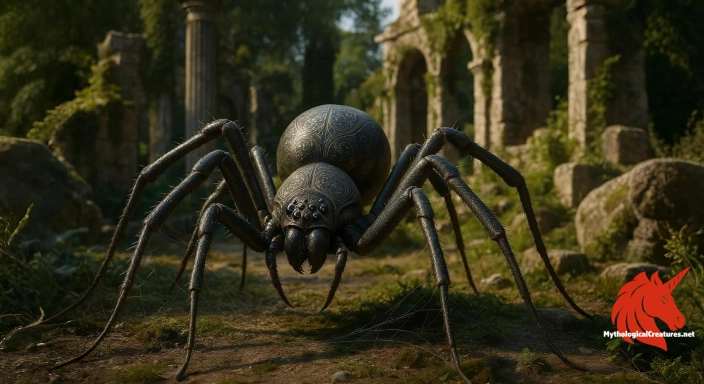
Dare to Meet the Arachne....
Curated by the Mythological Creatures Team
Series editor: Mythological Creatures Directory
Primary desk: Americas & Indigenous Traditions Desk
(rev. November 2025)