
Ekādaśamukha: Ekādāśamukha is a bodhisattva manifestation of Avalokiteśvara in Mahayana Buddhism, revered for offering salvation to beings, particularly those in the asura realm.
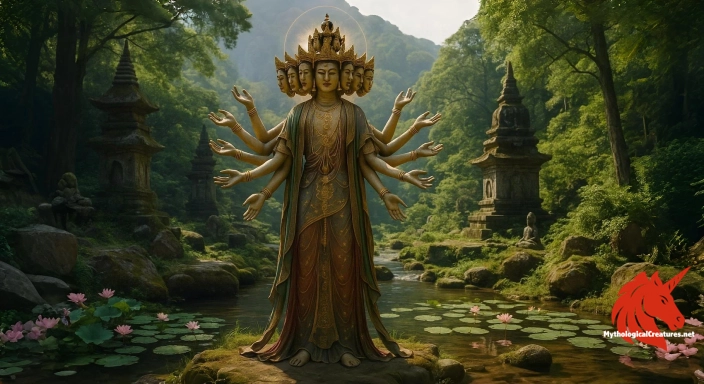
Ekādaśamukha
Ekādaśamukha - Represents the compassionate intervention of Avalokiteśvara, offering salvation across the six realms of saṃsāra
Origins & First Encounters
Ekādaśamukha emerges as a striking embodiment of compassion and wisdom within the Buddhist pantheon, uniquely designated with eleven faces that symbolise its all-encompassing vision. It is a manifestation of Avalokiteśvara, inheriting the deep-rooted virtues of mercy and salvation present in Mahayana Buddhism. The deity’s first attestations can be found in early Sanskrit texts that have travelled across Asia through translations and cultural exchange. Its appellation, meaning 'Eleven-Faced', reflects both an intricate iconographic tradition and a philosophical depth that portrays the infinite aspects of insight. The figure is intrinsically tied to the concept of salvation, particularly for those destined for the asura realm of conflict and strife. Devotees have long regarded Ekādaśamukha as a personal saviour who perceives the suffering of beings from every angle. The rich symbolism embraced in its multiple faces alludes to the diverse expressions of compassion and the multifaceted nature of enlightened vision. The bodhisattva’s narrative is interwoven with the cultural contexts of both ancient Indian spirituality and the evolving practices of East Asian Buddhism, making it a beacon of hope and understanding across diverse traditions.
Source Texts & Tale Variants
Ancient scriptures and Mahayana sutras form the bedrock of the narrative surrounding Ekādaśamukha, providing a textual lineage that links it directly to the early days of Buddhist thought. Various Sanskrit manuscripts and commentarial works detail the attributes and significance of its multiple faces in vivid descriptive language. Textual evidence from Chinese and Japanese translations further enriches its legacy, with adapted narratives that resonate with local religious practices. Early iconographic guides and ritual manuals also mention the deity as one among several compassionate manifestations of Avalokiteśvara. Folklore traditions often interlace these canonical texts with local oral accounts, emphasising the bodhisattva’s omnipresence in the realm of suffering. Several variant story forms develop across time, each underlining the transformation of the deity’s iconography to mirror the needs of worshippers in different regions. These ancient sources underscore the essential role of Ekādaśamukha as a salvific figure who aids beings trapped in cycles of pain. The multiplicity of texts and oral traditions collectively enrich the portrayal of Ekādaśamukha, offering layers of narrative that evolve in tandem with the cultural milieu in which they are embraced.
Form & Powers
The physical depiction of Ekādaśamukha is as fascinating as its spiritual significance, with eleven faces arranged in a harmonious yet intricate pattern. Each face is rendered with distinct expressions that range from serene contemplation to fierce determination, symbolising the breadth of perceptual insight. Traditional iconography often portrays the bodhisattva with elaborate crown adornments and radiant halos that accentuate its divine presence. The multiple visages are meticulously detailed, with varying hairstyles and subtle shifts in facial expression that illustrate emotional nuance. Artisans throughout history have incorporated fine lines and delicate ornamentation to accentuate the divine nature of each face. The deity is typically depicted in a meditative posture, seated gracefully while emanating a luminous aura that enhances its celestial appearance. Variations in size and attire reflect regional artistic sensibilities, yet the overlapping theme of multifaceted vision remains constant. This array of faces converges symbolically to offer an all-seeing perspective that reassures devotees of the bodhisattva’s ability to perceive and alleviate suffering.
Regional Faces
Regional portrayals of Ekādaśamukha reveal a vibrant tapestry of artistic reinterpretation and religious adaptation. In China, the figure is well known as Shíyīmìan Guānyīn, where its depiction is imbued with elaborate drapery and a sense of serene benevolence that harmonises with Confucian and Taoist aesthetics. Japanese traditions revere this figure as Jūichimen Kannon, often depicted with a gentle yet focused gaze that reflects the local emphasis on refined spirituality and simplicity. In regions of Tibet and other Himalayan cultures, subtle stylistic variations emerge in the form of intricate thangka paintings, where the deity’s eleven faces are rendered with delicate brushstrokes and vibrant colours. Local artisans sometimes incorporate indigenous design motifs, creating a fusion of Buddhist iconography with regional artistic traditions. The attire and accompanying symbols, such as lotus blossoms and radiant haloes, are particularly attuned to the cultural and spiritual needs of the community. These regional adaptations serve to maintain the timeless relevance of Ekādaśamukha while celebrating the unique artistic language of each culture. Together, these diverse portrayals underscore the fluidity of mythological imagery as it transits through geographical and cultural boundaries.
Cultural Parallels
Ekādaśamukha shares intriguing parallels with several multi-faceted deities and concepts in global mythologies, creating a rich field for comparative analysis. Like the many-armed avatars of Hindu deities such as Durga and Vishnu, its multiple faces symbolise varied qualities of divine intervention and protection. The notion of a deity with multiple visages is not uncommon, as seen in other cultural traditions where gods or spirits are depicted with different aspects to convey omniscience. Although Janus from Roman mythology is noted for his two faces symbolising transitions and duality, Ekādaśamukha’s eleven faces extend this concept by encompassing a wider spectrum of perception. Both figures prompt worshippers to consider life’s multifarious challenges from several perspectives, albeit through different symbolic languages. The synthesis of multiple faces in one divine form indicates a profound understanding of the complexity inherent in the human condition. Cross-cultural comparisons also highlight how various traditions employ layered iconography to communicate universal themes of compassion and vigilance. This multifaceted portrayal encourages a deeper appreciation for the ways in which different cultures interweave aesthetic dynamics and spiritual significance through their depictions of divine beings.
Legacy & Modern Evolution
Over the centuries, Ekādaśamukha has undergone a fascinating evolution, reflecting both artistic innovation and enduring spiritual relevance. Early depictions in ancient Indian art were gradually adapted and refined as Buddhism spread through East Asia, giving rise to distinctive styles in Chinese, Japanese, and Tibetan artistic traditions. Modern interpretations often blend traditional iconography with contemporary aesthetics, making the deity accessible to a new generation of spiritual seekers. The enduring symbolism of the eleven faces continues to resonate deeply with those who perceive each face as an embodiment of different aspects of human struggle and compassion. In modern temple settings and art exhibitions, Ekādaśamukha is celebrated not only as a religious icon but also as a work of transcendent art. The bodhisattva’s image is frequently reimagined in sculptures, paintings, and digital media, thereby ensuring that its message of salvation and insight remains culturally dynamic. Contemporary interpretations sometimes emphasise the meditative quality of its expression, urging practitioners to cultivate a broader perspective on life’s challenges. As modern scholarly research and popular media alike revisit traditional narratives, Ekādaśamukha's legacy as a symbol of comprehensive compassion and transformative wisdom continues to thrive.
Interesting Fact
An interesting aspect of Ekādāśamukha is his multifaceted identity, which bridges linguistic and cultural traditions across India, China, and Japan, reflecting the syncretic evolution of Buddhist iconography.
Limited sponsor opportunity
One slot, carefully chosen partners
We only feature a small number of relevant sponsors at any time. If you create serious myth content, we would like to hear from you.
Partner with usQuick Creature Info
Features:
Associations:
Our Mythic Legendary Rating:

Also Sometimes Known As:
Habitat:
Supernatural Powers:
Physical Attributes:
Abilities:
Behavior:
Lore:
Related Creatures, Tales or Lore
- AAvalokiteśvara
- GGuanyin
- JJūichimen Kannon
References
Discover Another Mythical Legend You May Not Have Heard Of?
Uncover the mysteries of ancient folklore and expand your knowledge of legendary beings from cultures around the world.
Dare to Meet the Chullachaki....

Curated by the Mythological Creatures Team
Series editor: Mythological Creatures Directory
Primary desk: Asian & Pacific Myth Cycles Desk
(rev. November 2025)