
El Tío: El Tío is a devil-like spirit revered in the Cerro Rico mines of Potosí, Bolivia as the Lord of the Underworld.
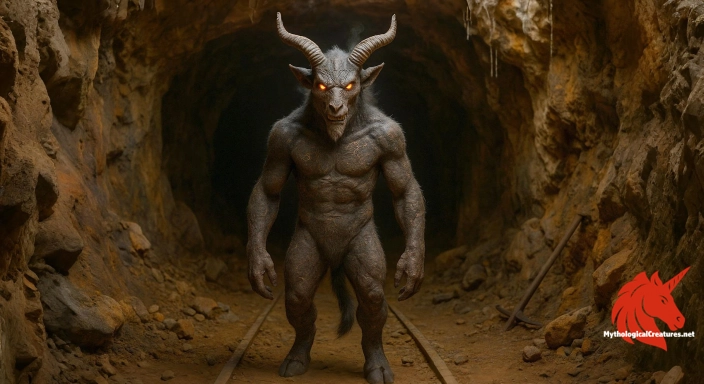
El Tío
El Tío - Represents the dual aspects of protection and destruction in mining life; central to rituals of appeasement among miners
Origins & First Encounters
El Tío, revered as the Lord of the Underworld, is a captivating figure rooted in the mystical traditions of Cerro Rico, Potosí, Bolivia. His origins lie in the convergence of indigenous Andean spirituality and the influences of Spanish Catholicism, creating a unique character who embodies both protection and peril. The myth of El Tío is interwoven with the history of the mining communities, emerging as a supernatural guardian within the dangerous confines of the mines. His early attestations appear in the tangible world as statues and effigies erected deep within the passages of Cerro Rico, where intricate rituals are performed to honour his dual nature. Miners deliberately offer cigarettes, coca leaves, and alcohol to appease him, reflecting a pragmatic respect for his unpredictable power. Although depicted with devilish and sometimes goat-like features, his image bridges the gap between earthly hardship and the mystical realm. The dual capacity to protect and destroy encapsulates the harsh realities faced by those who toil in the mines. Every aspect of his legend speaks to a deeper cultural resilience in the face of adversity. El Tío remains a potent emblem of the intertwining of fear, reverence, and survival in a community shaped by the depths of the earth. His myth continues to thrive as both a historical relic and a living symbol of cultural identity.
Source Texts & Tale Variants
The narrative of El Tío is primarily conveyed through the living oral traditions of miners and villagers alike, who pass down stories as enduring as the mines themselves. Statues and altar-like installations within Cerro Rico serve as enduring physical records of his presence, each telling its own story through weathered stone and artisan craftsmanship. The intricate rituals performed—ranging from offerings of cigarettes to the ceremonial sacrifice of a llama—provide a rich tapestry of practices that vary subtly between different mining groups. These diverse accounts have given rise to numerous story variants, where some emphasise his benevolent protection while others highlight his capacity for retribution. Beyond the tangible depictions, local folklore thrives on mythical narratives that paint El Tío as both a benefactor and a fearsome force of nature. The interplay between these variants reflects the complexities of life underground, where fortunes are made and lost in equal measure. Community festivals and rites, especially those during the Carnaval de Oruro, add yet another layer of interpretation through dramatic reenactments. Historical records from the colonial and post-colonial eras occasionally mention the figure, hinting at an evolving mythology shaped by societal changes. The vibrant mosaic of sources—from carved effigies to ceremonial practices—ensures that the legend of El Tío remains both diverse and dynamic. These multifaceted narratives continue to be vital touchstones for those who live in the shadow of Cerro Rico’s legacy.
Form & Powers
The physical representations of El Tío are as varied as they are compelling, showcasing a blend of fearsome and enigmatic qualities. Statues found in the depths of the mines often display a goat-like visage, complete with curling horns and a rugged, weathered face that captures the harsh working conditions of the miners. Artists have depicted him with deep, penetrating eyes that seem to judge the souls of those who enter his realm. His form is frequently rendered in rough-hewn stone, embodying the raw and unrefined character of the mountainous landscape. In many depictions, elongated limbs and a muscular physique are evident, symbolising both the physical strength required to navigate the mines and the enduring spirit of the community. The textures and lines carved into his statues evoke a deep connection to the earth, providing a tactile reminder of the environment from which he arises. Some images include primitive adornments that hint at ritualistic traditions, linking him to ancient Andean practices. Variations in size—from imposing sentinel-like figures at mine entrances to smaller icons hidden in recesses—reflect different intended roles and degrees of influence. The shifting attributes across depictions capture the essence of a deity whose physical form continually adapts to the needs and fears of those who worship him. Every chiseled detail in his imagery contributes to a layered mythos that is at once formidable and intimately connected to the miners’ lives.
Regional Faces
Across the various communities within Bolivia, the depiction and interpretation of El Tío differ, reflecting the diverse cultural landscapes of the region. In the mining towns near Cerro Rico, he is primarily seen as a guardian spirit, whose favour is essential for protecting workers in the dangerous underworld of the mines. Some local traditions paint him as a benevolent figure who ensures the steady flow of minerals, while other accounts stress the dire consequences of neglecting proper rituals. Ritual practices, including the ritual slaughter of a llama and the smearing of its blood at mine entrances, highlight how deeply ingrained his influence is within local customs. In more urbanised areas adjacent to mining regions, the figure of El Tío is sometimes reimagined to address modern social and economic challenges, although his core attributes remain intact. Rural interpretations tend to preserve the archaic elements of his myth, reinforcing the idea that he is as much a part of the natural world as the rugged terrain in which the mines are situated. Although some communities might incorporate subtler Christian elements into their celebrations, the overall narrative distinctly maintains his role as an underworld deity. The diversity of rituals and iconography underscores the adaptive quality of his legend, ensuring its survival through changing times. These regional variations not only enrich the myth but also affirm how local experiences and environmental conditions shape cultural belief systems. Such adaptations demonstrate that El Tío is a dynamic, living symbol, deeply responsive to the nuances of regional identity.
Cultural Parallels
El Tío occupies a singular space within Bolivian folklore, yet his characteristics find intriguing parallels in mythologies across the world. Similar to other underworld deities, such as the ancient Greek Hades or the Roman Pluto, his realm is characterised by the mysteries of life, death, and the earth’s hidden treasures. Like many chthonic figures, El Tío embodies a dual nature—both protective and vengeful—a theme that resonates in other cultures where spirits serve as mediators between mortal endeavours and the unknowable forces of nature. The goat-like imagery that frequently appears in his depictions can be seen in various European and Mediterranean traditions, where similar animals are often endowed with symbolic associations with fertility, chaos, and the untamed wild. Other Latin American cultures also have their versions of mine spirits or earth deities that underscore human vulnerability in the face of natural forces. The coexistence of Christian and indigenous iconography in his image mirrors global trends in religious syncretism, where conflicting influences blend to form uniquely local mythologies. In contrasting El Tío with figures from other cultures, one can detect a universal motif: the human urge to rationalise and personify the caprices of nature and fate. This cross-cultural examination highlights how communities around the globe have developed ritualistic practices to appease and celebrate supernatural entities. His story, therefore, not only stands as a cornerstone of local belief but also as part of a broader tapestry of myth that connects the human experience across time and space. These comparative insights enrich our understanding of how underworld deities serve as metaphors for the interplay between danger, protection, and the human condition.
Legacy & Modern Evolution
The transformation of El Tío from an ancient deity to a modern emblem of cultural identity reflects the enduring power of myth in the face of modernisation. Over the centuries, his image has shifted from a solemn guardian of the mine depths to a celebrated character in the colourful and dynamic festivals of Bolivia, particularly during the Carnaval de Oruro. This evolution represents a dialogue between the traditional practices of miners and the broader currents of popular culture. Once confined to the subterranean world, his representations now permeate artistic mediums, including literature, visual arts, and performance, attesting to his resilience as a symbol. Despite the stringent condemnations by the Catholic Church, the figure of El Tío has not only persisted but also flourished as a counterpoint to mainstream religious narratives. His modern legacy encapsulates both a reverence for the hardships of mining life and a broader reflection on economic and social struggles. Contemporary artists and storytellers have embraced his myth, reinterpreting his physical attributes and narrative roles to speak to new generations. The ritualistic practices associated with him continue to offer valuable insights into community resilience and the negotiation of identity in uncertain environments. As the legend of El Tío adapts to the modern era, it maintains a robust connection to its ancestral roots, symbolising the timeless interplay between human endeavour and the enigmatic forces of nature. In essence, his myth serves as a bridge linking historical memory with the evolving challenges of the contemporary world.
Interesting Fact
El Tío exemplifies a unique blend of indigenous belief and Catholic influence, reflecting the complex spiritual landscape of Bolivian mining culture.
For indie creators
Give your myth project a permanent home
Indie authors, artists, small studios, and makers can secure an annual, non-intrusive sponsor slot that meets readers where they explore.
Obtain more informationQuick Creature Info
Origin:
Features:
Associations:
Our Mythic Legendary Rating:

Also Sometimes Known As:
Habitat:
Supernatural Powers:
Physical Attributes:
Abilities:
Behavior:
Weaknesses:
Lore:
Related Creatures, Tales or Lore
- MMictlantecuhtli
- HHades
- TThe Devil
References
Discover Another Mythical Legend You May Not Have Heard Of?
Uncover the mysteries of ancient folklore and expand your knowledge of legendary beings from cultures around the world.
Dare to Meet the Kanaloa....

Curated by the Mythological Creatures Team
Series editor: Mythological Creatures Directory
Primary desk: Americas & Indigenous Traditions Desk
(rev. November 2025)