
Electryon: Electryon is a mythological king from Greek tradition, ruling Tiryns, Mycenae, and Medea in Argolis.
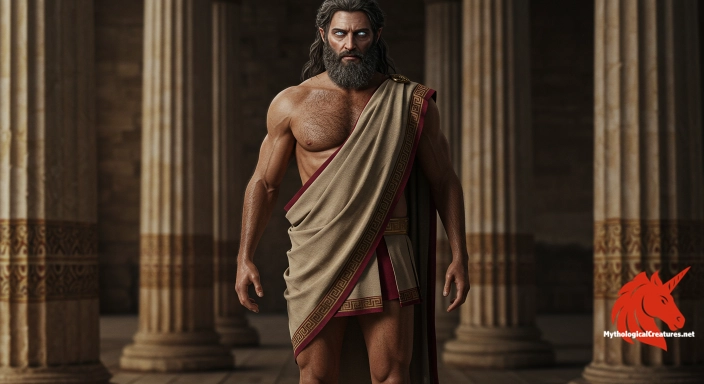
Electryon
Electryon - Electryon is a pivotal figure in the mythological history of Mycenae and Argolis, linked to the heroic lineage of Perseus and recognised as the father of Alcmene, thereby connecting him to the legacy of Heracles.
Origins & First Encounters
Electryon stands as a storied monarch in Greek mythology, celebrated as the king of Tiryns and Mycenae or Medea in Argolis. His lineage is traditionally traced back to the heroic union of Perseus and Andromeda, a connection that imbues his narrative with divine favour and an air of ancient majesty. His reign, though not as elaborately detailed as those of later legendary heroes, forms a critical bridge in the mythic genealogy that eventually leads to figures such as Heracles. The legacy of Electryon embodies the dual nature of kingship in myth, where the burdens of noble birth and the tragic flaws of mortal existence intertwine. His story, passed down through generations, reflects the evolving nature of heroic narratives in early Greek civilisation. The traditions surrounding his rule often highlight the responsibilities and trials inherent in his position, adding layers of complexity to his character. Chroniclers and later mythographers alike found in his tale a theme of foreordained destiny coupled with human vulnerability. Over the centuries, his myth has been sustainably preserved in the cultural memory of Greece, each retelling infusing new insights into the nature of ancient royalty. His enduring presence in myth underscores the timeless fascination with the origins and challenges of heroic rule.
Source Texts & Tale Variants
Ancient texts, most notably the works attributed to Pseudo-Apollodorus, offer glimpses into the life and reign of Electryon, though details can sometimes be fragmentary. Multiple accounts, preserved through oral tradition and later literature, have contributed to a multi-faceted portrayal of his character. Some sources emphasise his descent from Perseus, thereby linking him to the heroic narratives that shaped early Greek mythos. In various manuscripts, his role as a king is outlined alongside familial and political intrigues, providing a backdrop for the subsequent exploits of his progeny. The differing accounts—whether he ruled Mycenae, Tiryns, or Medea in Argolis—illustrate the fluid nature of myth-making and regional storytelling. Poets and playwrights from antiquity occasionally alluded to his reign, embedding subtle references that would resonate with audiences familiar with the heroic age. Variations in the retelling suggest that his story was adapted to suit the particular cultural and historical contexts of different Greek regions. As a result, Electryon’s myth presents a fascinating study in how mythological figures are reinterpreted over time. Through these diverse textual sources, one can trace the contours of a legend that was both mutable and integral to the Greek heroic tradition.
Form & Powers
Artistic and literary portrayals of Electryon often envision him as a man of commanding presence and robust dignity, epitomising the ideals of ancient royal beauty. His features are typically rendered with a blend of strength and refinement, suggestive of the heroic blood that runs in his veins. Often, he is imagined with a well-groomed beard and a resolute, penetrating gaze that hints at both wisdom and a warrior’s spirit. The physical imagery associated with him tends to highlight an imposing stature, befitting the archetype of a king whose life was steeped in both grandeur and turmoil. Early vase paintings and sculptures sometimes capture him adorned in regal attire, with a mantle or crown that symbolises his authority and divine right to rule. His athletic build and confident bearing reflect the Greek ideal of a leader who is as accomplished in physical prowess as he is in statecraft. Variations in depictions also suggest a man who balanced the aesthetics of beauty with the rigour of martial discipline. Even as the myth evolved, traditional drafts of his image continued to evoke a synthesis of noble features and heroic valor, reinforcing his status as an exemplar of ancient kingship. The careful integration of physical detail in Electryon’s portrayals underscores the importance of visual representation in cementing his legendary stature.
Regional Faces
The legend of Electryon takes on varied hues throughout different regions of ancient Greece, each infusing his story with local colour and emphasis. In Argolis, for instance, his reign is sometimes placed within the context of Medina or Medea, aligning his myth with specific local traditions and areas of influence. The conflicting accounts regarding his dominion—ranging from Mycenae to Tiryns—speak to the regional pride and rivalries that shaped historical narratives. Local adaptations of his myth allowed communities to claim a direct connection to the heroic past, thereby reinforcing a sense of cultural identity. In rural as well as urban settings, storytellers tailored elements of his narrative to fit the historical and environmental backdrop of their localities. Such regional variations often include subtle shifts in his character traits, heroic exploits, or even in the portrayal of his familial relationships. Communities might stress different virtues in their retelling, whether it be his martial might, his judicious reign, or the tragic nuances of his lineage. This multiplicity in interpretation highlights how a single mythic figure can serve diverse functions in various cultural landscapes. The fluidity in Electryon’s regional depictions underscores the adaptive quality of myth in addressing local historical concerns while maintaining a broader pan-Hellenic appeal.
Cultural Parallels
Electryon’s narrative invites comparison with other legendary rulers across different mythological traditions, serving as a touchstone for the archetypal king of ancient lore. Like many mythic monarchs, his story blurs the lines between the divine and the mortal, much in the same manner as figures in the Trojan epics and the storied lineage of Agamemnon. His descent from a divine hero situates him within a broader tradition where legitimacy and destiny are intertwined, echoing similar themes found in the myths of Perseus and other semi-divine rulers. The recurring theme of a tragic yet noble lineage appears in a variety of cultural contexts, suggesting that the challenges of rule and destiny are universal motifs. In comparing his character with other royal figures, one can observe parallels in the internal conflicts and external challenges that define his reign. Such comparative analysis enriches our understanding of how ancient societies elevated certain moral and heroic ideals among their leaders. His myth stands alongside other classical figures whose stories serve as allegories for the struggles inherent in authority and familial legacy. The interweaving of his life with the destiny of his offspring, notably through the eventual birth of heroes, further aligns his narrative with a widespread cultural motif of heroic reproduction. Through these comparisons, Electryon’s myth not only illuminates his own story but also contributes to a deeper exploration of the enduring archetype of the tragic king across different mythologies.
Legacy & Modern Evolution
Across the millennia, the myth of Electryon has undergone a series of reinterpretations, evolving from brief mentions in classical texts to a subject of modern scholarly interest. His portrayal has shifted from that of a distant, somewhat enigmatic king to an integral part of the complex tapestry that is Greek heroic ancestry. The transformation found in later literary and artistic renditions underscores a growing appreciation for the nuances inherent in his character and reign. Contemporary interpretations often focus on the interplay between his mortal limitations and the weighty legacy of divine lineage, thereby casting his story in a more reflective light. His narrative, though eclipsed in grandeur by those of later heroes, is increasingly viewed as foundational in understanding the dynamics of ancient kingship and the transmission of heroic values. The evolution of his myth reflects broader societal changes, where classical themes are reimagined to address modern concerns about heritage, authority, and destiny. In academic discourse, Electryon’s legacy is frequently used to illustrate the process by which myth adapts to the shifting imperatives of cultural identity. Even in modern popular culture, echoes of his tale can be discerned in literature and visual arts that capture the timeless conflict between fate and free will. Ultimately, the enduring influence of Electryon’s myth underscores the continuous human fascination with the origins and burdens of power in the landscape of ancient legend.
Interesting Fact
A particularly notable aspect of Electryon's legacy is his role as the father of Alcmene, which directly links him to the lineage of Heracles and underscores the profound interconnection between mortal rule and divine myth in Greek tradition.
For myth educators and toolmakers
Built a resource for mythology learners?
If you offer courses, teaching tools, or research platforms focused on myth and folklore, consider a discrete placement on our reference pages.
Introduce your resourceQuick Creature Info
Origin:
Features:
Our Mythic Legendary Rating:

Habitat:
Physical Attributes:
Abilities:
Behavior:
Lore:
Related Creatures, Tales or Lore
- AAgamemnon
- MMinos
- AAtreus
References
Discover Another Mythical Legend You May Not Have Heard Of?
Uncover the mysteries of ancient folklore and expand your knowledge of legendary beings from cultures around the world.
Dare to Meet the Centaurus....
-74379e4c-ebf7-4192-bc84-3a0a4dd164d3_small.webp "Depiction of Centaurus")
Curated by the Mythological Creatures Team
Series editor: Mythological Creatures Directory
Primary desk: Hellenic & Ancient Mediterranean Desk
(rev. November 2025)