
Faunus: Faunus is the ancient Roman rustic god of forests, plains, and fields, celebrated for his horned, pastoral visage and divine fertility.
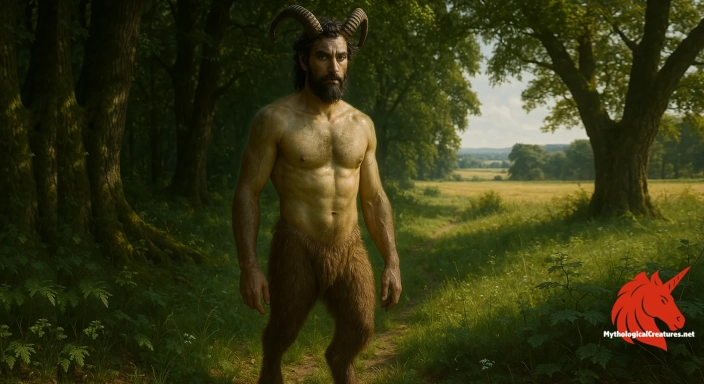
Faunus
Faunus - Faunus is revered as one of the oldest indigenous deities in Roman religion, embodying natural fertility and mystical prophecy.
the legend in five swipes.
the legend in five swipes.
Who first told stories about Faunus?
Faunus emerges as one of the most ancient and enigmatic figures in Roman mythology, embodying the untamed spirit of nature and pastoral fertility. Rooted deeply in the rustic landscapes of ancient Italy, his origins can be traced back to the primal pulsations of the earth. Once revered as one of the di indigetes, Faunus was venerated as a guardian of the forests, plains, and fields, bridging the gap between humanity and the wild. His myth evolved over time, expanding from purely fertilising the land to serving also as a prophetic presence whose secrets were whispered in sacred groves. The narratives surrounding him highlight a complex fusion of human intellect and animal instinct, reflecting the delicate balance between civilisation and nature. His association with cattle fertility, celebrated under the name Inuus, further accentuates his role in the daily cycles of agrarian life. Celebrated in festivals and rituals, his essence became a symbol of both abundance and the mysterious forces that shape the natural world. Faunus continues to captivate the imagination, his legend inviting modern audiences to reflect on the enduring relationship between man and the untamed earth. His enduring myth illustrates the resilience of ancient belief systems and the timeless allure of nature’s mysteries.
Faunus: Variants Across the Sources
Ancient literary accounts form the cornerstone of our understanding of Faunus, woven into the fabric of Roman religious texts and epic poetry. Virgil's narratives offer one of the earliest portrayals, painting him as a legendary king and a patron of the rustic virtues. Other poetic and historical records detail his role as a conduit for divine prophecy, where dreams and nocturnal voices served to reveal the future. The writings of Marcus Terentius Varro underscore his significance by noting that the god’s oracular responses were delivered in the traditional Saturnian verse. In sacred sites such as the groves near Tibur and on the Aventine Hill, Faunus was revered under the name Fatuus, further enriching his diverse mythos. Over time, local inscriptions, folklore, and ritual practices added layers to his character, integrating regional anecdotes and sacred rites. These varied sources, though fragmentary in nature, collectively contribute to a multifaceted vision of Faunus that resonates through the ages. The surviving texts continue to serve as a testament to his influence, offering glimpses into the dynamic interplay of myth, spirituality, and daily life in ancient Rome.
The Appearance and Powers of Faunus
Artistic depictions of Faunus reveal a striking figure that seamlessly blends human and bestial qualities. He is often portrayed with a robust, muscular build that hints at the vitality of the natural world he oversees. Iconography typically shows him with distinctly goat-like elements, such as gracefully curved horns and partially cloven lower limbs. His features, including a wild cascade of hair, evoke images of untamed vegetation and echo the rustic landscapes of his worship. This synthesis of human form with animalistic traits is designed to encapsulate the dual nature of nurturing wisdom and primal instinct. Representations in statues and frescoes frequently capture him in fluid, dynamic poses that mirror the ever-changing rhythms of nature. His visage commonly carries a look of mischief intertwined with solemnity, suggesting a deity who is both playful and profoundly mysterious. The aesthetic evolution of Faunus, displaying varied degrees of human and caprine attributes, continues to intrigue and inspire interpretations across artistic traditions.
Where in the world is Faunus known?
Local traditions and regional cults offered unique dimensions to the character of Faunus, reflecting the diversity of ancient Italian communities. In Rome itself, he was deeply interwoven with the state religion, his cult sites situated in prominent urban settings as well as in the countryside. Specific localities celebrated his prophetic aspects by venerating him under distinct names such as Fatuus, often linked to sacred groves and ancient wells. In various parts of the Italian peninsula, his image was adapted to incorporate traits of nearby deities, including associations with the winds and agricultural prosperity. Rural communities, in particular, embraced his legacy as a symbol of natural abundance and the cyclical renewal of the land. These regional adaptations allowed his myth to absorb local flavours and ritualistic practices, reinforcing his status as both a universal and a community-specific deity. This fusion with indigenous beliefs provided a multifaceted portrayal that resonated deeply in the lives of those who relied on the earth for survival. Through these diverse interpretations, Faunus remained a vital and dynamic presence across the sprawling landscape of ancient myth and ritual.
Faunus: Counterparts Around the World
Faunus occupies a singular place within the tapestry of classical mythology, offering rich parallels to similar rustic deities across cultures. His attributes evoke a strong resemblance to the Greek god Pan, with both figures celebrated for their embodiment of wild, natural energies. Whereas Pan is often associated with musical revelry and capricious behaviour, Faunus is equally revered for his dual aspects as a fertility deity and a prophetic figure. The merging of human qualities with animal instincts in both gods symbolises a perennial bond between mankind and the wilderness. This intermingling is visible in the shared iconography of horns, goat-like features, and a free-spirited demeanour. Moreover, such deities from disparate cultures serve as metaphors for the mysterious and cyclical nature of the natural world, emphasising themes of rebirth and renewal. Their mythic narratives invite comparisons that highlight how different societies have articulated their reverence for the wild. By examining these cross-cultural intersections, we gain a deeper appreciation for how the profound allure of nature has inspired similar deific representations throughout the ancient world.
Why is Faunus still popular?
The legacy of Faunus has undergone a fascinating transformation as his myth has traversed through the epochs of history. In the transition from a purely pagan deity to a broader cultural symbol, he has come to embody the mysteries of both nature and prophecy. His image, once a vital part of rustic ritual and agricultural practice, was reinterpreted during the Renaissance to evoke the untamed charm of the natural world. Texts and artworks spanning from antiquity to the modern era now view him as a beacon of fertility and renewal, symbolising nature's intricate balance. Over time, his prophetic voice was woven into the literary tapestry of medieval and early modern thought, enriching discussions about the interplay between divine influence and earthly existence. Contemporary interpretations often draw upon his classical heritage to explore themes of environmental stewardship and the human connection with nature. The enduring allure of Faunus serves as a reminder of the complex ways in which ancient mythologies continue to resonate with modern sensibilities. His evolving image reflects not only a historical continuity but also an ever-adapting symbol that bridges ancient traditions with today’s cultural and ecological dialogues.
Interesting Fact
An intriguing aspect of Faunus is his dual identity as both a fertility deity and a prophetic oracle, a rare combination that bridges the natural and the divine in Roman myth.
Mythological Treasures
Japanese Yokai: A field guide to the spirits and demons of Japanese folklore
Fifteen spirits, with the signs to watch for and what the old tales say to do if you meet one.
Greek Myths: A field guide to the monsters of ancient Greece
Every monster here earned its place in legend, and each gets a full page of artwork and the story behind it.
Norse Sagas: A field guide to the beasts of the Viking world
Drawn from the saga accounts themselves, with the powers, weaknesses and doom of each being set out.
the legend in five swipes.
Partner with Mythological Creatures
Bring your myth-based world into ours
From game settings to narrative worlds, we work with partners who treat myths with care. Share your project for a potential sponsor slot.
Partner with usQuick Creature Info
Origin:
Features:
Associations:
Our Mythic Legendary Rating:

Also Sometimes Known As:
Habitat:
Supernatural Powers:
Physical Attributes:
Abilities:
Behavior:
Lore:
Related Creatures, Tales or Lore
- PPan
- FFavonius
References
Discover Another Mythical Legend You May Not Have Heard Of?
Uncover the mysteries of ancient folklore and expand your knowledge of legendary beings from cultures around the world.
Dare to Meet the Cocollona....

The Mythological Creatures Book Series
Yokai, Greek, Norse, Egyptian & Chinese. Five illustrated field guides to the creatures the old stories either warned or told you about.


Curated by the Mythological Creatures Team
Series editor: Mythological Creatures Directory
Primary desk: Hellenic & Ancient Mediterranean Desk
(rev. November 2025)