
Gamigin: Gamigin is a Goetic demon who appears initially as a small horse before transforming into a hoarse-voiced human.
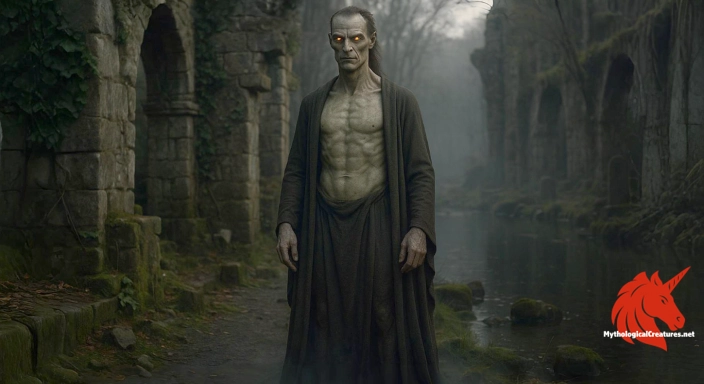
Gamigin
Gamigin - Represents the complex interplay between esoteric knowledge and demonic influence, marking a significant figure in occult traditions
Origins & First Encounters
Gamigin emerges from the shadowy annals of Western occult traditions as a compelling and enigmatic demon, whose roots trace back to medieval demonological grimoires. His first known appearances are found in seminal texts such as The Lesser Key of Solomon and Johann Weyer's Pseudomonarchia Daemonum, where his character is meticulously detailed. In these elaborate works, he is depicted as a marquis of the infernal hierarchy, a title that reflects both his authority and his nuanced role among demonic entities. Early accounts portray him with the remarkable ability to transform from an unusual small equine figure into a human with a characteristically hoarse voice. His presence within these texts is enmeshed with elaborate summoning rituals and the occult art of soul manipulations. Embedded within a cultural context of hidden knowledge and ritualistic practices, Gamigin has long fascinated seekers of arcane wisdom. He is often invoked for matters relating to the liberal arts and the recounting of sinful lives post-mortem, indicating a multifaceted role in esoteric studies. His introduction into the literary corpus of demonology has contributed to an enduring legacy that continues to spark curiosity and debate among occult enthusiasts.
Source Texts & Tale Variants
The grimoires that recount Gamigin’s characteristics offer a rich tapestry of narrative variants and detailed tasks. The Lesser Key of Solomon lists him as the fourth Goetic demon, and in this context his role is succinctly sketched as a teacher of liberal arts and an informer of sinful souls. In contrast, Johann Weyer's Pseudomonarchia Daemonum, where he is dubbed Gamygyn, furnishes a more elaborate account that includes his unique abilities concerning souls that have experienced a watery demise. Texts such as Thomas Rudd's variant of the Ars Goetia further embellish his myth by describing how he compels souls, especially those lost to drowning, to assume airy forms capable of answering queries. Additional narrations in works like the Dictionnaire Infernal provide further detail by suggesting that his influence extends even to souls lingering in purgatory. This breadth of narrative variation demonstrates how different sources have adapted his tale to fit varying theological and cultural needs in their own epochs. The diversity in his representations highlights the complex interplay between didactic purposes and fearful warnings in occult literature. Overall, the textual tradition surrounding Gamigin is replete with variant accounts that emphasise both his educational responsibilities and his manipulative prowess with the souls of the drowned.
Form & Powers
Descriptions of Gamigin’s appearance are as dynamic and transformative as his myth suggests. His initial form is strikingly depicted as that of a small horse, which imbues him with a surprising agility and an almost spectral dignity that sets him apart from ordinary creatures. This equine manifestation is often rendered with subtle hints of the supernatural, suggesting a delicate fusion of natural form and esoteric power. Upon undergoing a change, he reveals a human visage, albeit one marked by a distinctive and hoarse vocal quality that hints at otherworldly suffering. In this human state, there are lingering traces of his original animal form, with certain illustrations suggesting features that are both ambiguous and unsettling. The visual detail in various texts sometimes portrays him adorned in archaic regalia, a testament to his noble rank among infernal hierarchies. His physical form is not static; instead, it embodies a flux that symbolises the duality of the corporeal and the ethereal. Such a detailed portrayal underscores the layered symbolism inherent in his persona, making him a unique figure in demonological lore.
Regional Faces
The depiction of Gamigin has been subject to diverse interpretations across different regions within Europe, each adding local flavour and nuance to his story. In the traditional Western context, he is consistently identified as a marquis with the power to reveal the fate of sinful souls, yet local texts sometimes emphasise his role as a guide for those who have drowned. In parts of continental Europe, particularly in areas with rich occult histories, his equine beginning and later human transformation have been elaborated with distinctive iconography reflective of local artistic sensibilities. Some regional adaptations paint him with a more somber and foreboding aspect, aligning him with local superstitions surrounding death and the afterlife. In the Renaissance milieu of Italy and France, for instance, his teaching role within the liberal arts was sometimes highlighted to reflect the period’s reverence for both ancient wisdom and innovative thought. Conversely, in Central European esoteric texts, the focus might lean more towards his terrifying ability to manipulate souls and interact with the spectral realm. These varied portrayals reveal how regional cultures have selectively adopted and reinterpreted his myth to suit their unique ritualistic and symbolic needs. This dynamic regional divergence has enriched Gamigin’s overall mythos, revealing a complex interplay between universal themes and local traditions.
Cultural Parallels
In examining the character of Gamigin, one can discern striking parallels with other demonic figures in mythologies that traverse boundaries of culture and time. His duality—a transformation from a small animalistic form to a human with a haunting vocality—mirrors the shapeshifting attributes seen in other demonic entities, which oscillate between animal and human traits. Such fluidity is comparable to the likes of Paimon or Stolas, both of whom also exhibit a multifaceted nature that blurs the line between different realms of existence. This transformative ability can be found in various cultural narratives where mythic intermediaries or trickster spirits adopt multiple forms. Across different mythological frameworks, there is a recurring motif of creatures that guide or mislead souls, much like Gamigin’s function in influencing both the living and the departed. These common threads run deep in the tradition of spirits who serve as bridges between the corporeal and the transcendent. His role as both an educator and a manipulator of souls invites comparisons to psychopomps in other cultural epicentres, where spiritual guides mediate between life and death. Consequently, Gamigin occupies a space that is both unique and familiar, resonating with age-old archetypes that continue to inspire and caution in equal measure.
Legacy & Modern Evolution
The figure of Gamigin has undergone a remarkable evolution from medieval grimoires to modern occult and popular culture narratives. His initial portrayal in demonological texts as a mysterious marquis has gradually been reinterpreted to suit the aesthetics and thematic demands of modern occult literature. In the Romantic era, his enigmatic qualities were often romanticised, transforming him into a wistful and misunderstood guide rather than a mere agent of maleficence. Contemporary occult practitioners continue to invoke his legacy, seeing him as a repository of ancient wisdom and esoteric knowledge that transcends literal interpretations of good and evil. His image is frequently modernised in artistic and literary works, wherein his dual nature is celebrated as a metaphor for the inherent contradictions of the human condition. Over time, Gamigin has come to symbolize not only the arcane rites of the past but also the perennial search for hidden truths within the modern psyche. This evolution reflects a broader trend in the reinterpretation of mythological figures, where historical fear is often supplanted by an appreciation for their rich symbolic resonance. Ultimately, the enduring presence of Gamigin in both academic and popular venues underscores the timeless allure of ancient myth reincarnated in contemporary cultural dialogues.
Interesting Fact
An intriguing aspect of Gamigin is his dual manifestation, which mirrors the broader theme of transformation and ambiguity common in demonological lore.
Limited sponsor opportunity
One slot, carefully chosen partners
We only feature a small number of relevant sponsors at any time. If you create serious myth content, we would like to hear from you.
Partner with usQuick Creature Info
Our Mythic Legendary Rating:

Also Sometimes Known As:
Habitat:
Supernatural Powers:
Physical Attributes:
Abilities:
Behavior:
Lore:
References
Discover Another Mythical Legend You May Not Have Heard Of?
Uncover the mysteries of ancient folklore and expand your knowledge of legendary beings from cultures around the world.
Dare to Meet the Grey wolf....
-8995973f-1703-4734-b0e9-66f60831a3ae_small.webp "Depiction of Grey wolf")
Curated by the Mythological Creatures Team
Series editor: Mythological Creatures Directory
Primary desk: Hellenic & Ancient Mediterranean Desk
(rev. November 2025)