
Grimhild: Grimhild is an evil sorceress from Norse mythology renowned for her dark magic and manipulative nature.
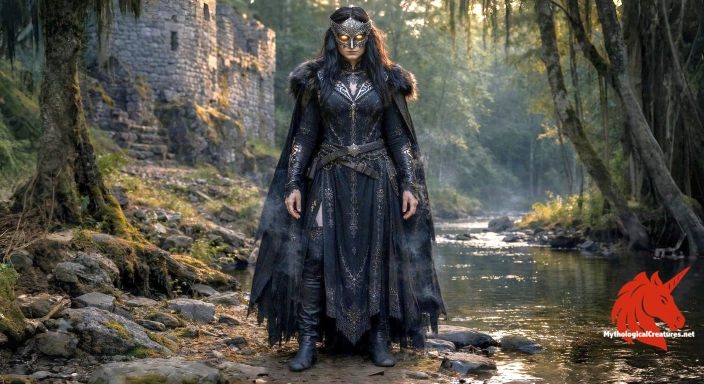
Grimhild
Grimhild - Her dark magic and manipulative actions shape the tragic narratives of her offspring and the saga's events.
Origins & First Encounters
Emerging from the mists of Norse legend, Grimhild embodies a delicate interplay of beauty and forbidden power, captivating those who encounter her tale. Her story unfolds in the storied pages of the Völsunga saga where she is portrayed as both an enchanting and malevolent sorceress. The legacy she leaves is entwined with royal ambition, as her marriage to King Gjäki of Burgundy places her at the heart of epic narratives. Bearing the name that means 'masked battle', her character hints at hidden depths and veiled conflicts that transcend the ordinary realm of mortal affairs. Her role as the mother of celebrated figures such as Gunnar, Hǽgni, Guthormr, and the noble Gudrun further cements her place in the annals of myth. In an age where the boundaries between magic and destiny were fluid, her life illustrates the potent, albeit dangerous, influence of supernatural forces. The interplay between her beguiling appearance and her darker intentions offers a rich commentary on the duality of nature and spirit. Timeless in appeal and layered in complexity, Grimhild remains a compelling study of the ancient balance between grace and treachery. Her narrative continues to resonate with audiences, inviting reflections on the costs of power and the enigmas of fate. Even today, her myth challenges the reader to see beyond surface allure to the mysteries hidden beneath.
Source Texts & Tale Variants
The myth of Grimhild has been preserved through a tapestry of sagas that illuminate different facets of her character. The Völsunga saga stands as the principal source where her cunning and formidable sorcery are interwoven with royal lineage and epic destiny. Her presence is also acknowledged in the Illuga saga Gríðarfróstr, where the narrative takes a nuanced turn by incorporating her multifaceted role. Another variant appears in Gríms saga loðinkinna, contributing alternative perspectives that embellish her ominous reputation. Each account, while maintaining her core attributes, offers subtle deviations that highlight the variability of oral traditions. These literary sources have allowed storytellers to explore the thematic resonance of magic melded with betrayal, setting a stage for generations of interpretation. The variations in her portrayal underscore the evolving nature of myth as storytellers adapted her image to suit shifting cultural paradigms. Over time, her narrative has been adapted, reinterpreted, and expanded in ways that reveal a spectrum of moral and emotional complexity. The interplay between these sources enriches our understanding of a figure whose legend grows with every retelling. The convergence of these texts forms a multifaceted portrait that continues to inspire both scholarly debate and artistic reinterpretation.
Form & Powers
Grimhild is often envisioned as a striking embodiment of enigmatic allure, where every feature hints at the mysteries of her sorcery. Despite the sparseness of early descriptions, later impressions have rendered her as possessing an ethereal grace that borders on the supernatural. Her face is typically depicted with refined, symmetrical features and eyes that seem to glint with both insight and malice. The very meaning of her name, 'masked battle', has inspired portrayals where she is sometimes shown with a decorative mask or veil that conceals her innermost truths. Flowy, elaborately embroidered garments suggest both her regal associations and her deep connections to the mystical arts. Modern interpretations often cast her hair as cascading locks imbued with subtle hues that evoke the play of light and shadow on an ancient tapestry. Her slender yet commanding figure exudes a forceful presence that combines elegance with an undercurrent of menace. Detailed adornments, such as runic jewellery and intricately patterned attire, serve to underscore her role as a conduit of arcane power. The visual narrative of her appearance not only captivates the eye but also symbolises the duality of beauty and danger. In every artistic rendition, Grimhild stands as a visual metaphor for the concealed forces that shape destiny.
Regional Faces
Interpretations of Grimhild vary considerably across the Norse and broader Germanic cultural landscape, reflecting local artistic and moral sensibilities. In Scandinavian narratives, she is frequently cast as the archetypal enchantress whose allure masks a capacity for ruthless manipulation. The Völsunga saga, with its Burgundy setting, infuses her character with the nuances of courtly ambition and the complexities of noble lineage. In contrast, Icelandic renditions tend to accentuate her mysterious and foreboding qualities, portraying her as both a maternal figure and a potent harbinger of chaos. Some local adaptations inject additional layers of tragedy into her story, suggesting that her malevolence is interwoven with personal sorrow and fatal destiny. Variations in her myth also highlight how regional storytelling traditions explore the dynamics of power, fate, and female agency in distinct ways. These diverse portrayals echo the shifting attitudes towards the supernatural and the role of women wielding magic. The multiplicity of her representations serves to enrich the wider canon of Norse mythology. By absorbing regional influences, Grimhild's myth becomes a versatile emblem of the darker facets of folklore. Such localised narratives affirm her status as a dynamic and adaptive symbol across time and space.
Cultural Parallels
Grimhild’s layered character invites stimulating comparisons with a host of enchantresses that populate mythologies across Europe. Like Medea or Morgan le Fay, she is a figure whose luminous beauty is inseparably linked with a formidable capacity for manipulation and dark sorcery. These parallels underscore a recurring motif in myth where female empowerment is as dangerous as it is captivating. In various traditions, her transformation from a beguiling mother to a sinister sorceress mirrors the broader narrative of women whose extraordinary talents unsettle established orders. The symbolic resonance of her name, 'masked battle', further aligns her with the archetype of the hidden warrior, a theme echoed in disparate cultural legends. Similar archetypes in Celtic, Anglo-Saxon, and even later medieval stories highlight how female magic is associated with both healing and harm. Grimhild’s narrative, therefore, serves not only as a cautionary tale about the misuse of power but also as a canvas for exploring gendered dichotomies in folklore. The intricate balance between allure and malevolence in her character invites analysis of how societies have historically perceived and mythologised women who challenge normative boundaries. In drawing these comparisons, one observes a universal fascination with the potent duality of beauty and magic. The enduring appeal of such figures underscores a common cultural dialogue about the intrinsic risks and rewards of transcendent power.
Legacy & Modern Evolution
Over the centuries, the myth of Grimhild has undergone a compelling evolution that mirrors changing cultural preoccupations with power and sexuality. In its earliest incarnations, her tale was told with stark bravado, defining her as a merciless sorceress intertwined with the destinies of kings and heroes. Gradually, her character absorbed additional layers of complexity, shifting from an embodiment of unbridled malevolence to a more nuanced symbol of tragic female defiance. Modern reinterpretations have frequently reimagined her as an enigmatic figure caught between taboo ambitions and the strictures of a patriarchal society. Contemporary artists, writers, and theatre directors have drawn on her myth to explore issues of identity, resistance, and the ambiguous intersections of beauty and brute power. This evolving portrayal reflects broader shifts in societal attitudes towards figures of authority and the supernatural. Her image, once a straightforward cautionary emblem, now serves as a mirror for modern debates about the dynamics of gender and agency. Exhibitions, performances, and literary works continue to draw on her storied past, recontextualising her mystery for new audiences. As her legend is reinterpreted for the twenty-first century, Grimhild remains a haunting symbol of the timeless allure of dark power and the enduring complexities of human nature. The modern legacy of her myth, balancing admiration with caution, ensures that her story lives on as a vibrant part of cultural discourse.
Interesting Fact
An interesting facet of Grimhild's character is that her name, meaning 'masked battle', may symbolically represent the hidden conflicts and deceptive strategies that underpin her actions throughout the sagas.
For publishers and studios
Your next readers are already here
Many of our visitors are looking for books, campaigns, and resources that deepen their journey into myth. Position your title or setting here.
Discuss a placementQuick Creature Info
Origin:
Features:
Associations:
Our Mythic Legendary Rating:

Also Sometimes Known As:
Habitat:
Supernatural Powers:
Physical Attributes:
Abilities:
Behavior:
Lore:
Related Creatures, Tales or Lore
- MMedea
- CCirce
- EErishkigal
References
Discover Another Mythical Legend You May Not Have Heard Of?
Uncover the mysteries of ancient folklore and expand your knowledge of legendary beings from cultures around the world.
Dare to Meet the Yako....
-8c256dd0-c772-4c5d-8ba2-41d83dc921ae_small.webp "Depiction of Yako")
Curated by the Mythological Creatures Team
Series editor: Mythological Creatures Directory
Primary desk: Northern & European Folklore Desk
(rev. November 2025)