
Gufna: Gufna is an uthra from Mandaeism that personifies the grapevine and inhabits the World of Light.
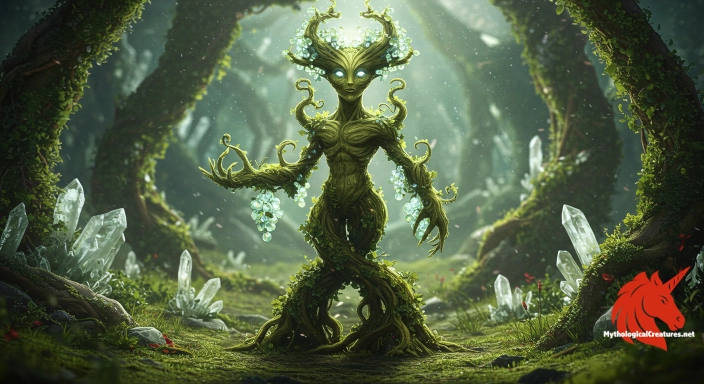
Gufna
Gufna - Gufna symbolizes the intertwining of nature and divine light, embodying notions of regeneration and eternal life.
Origins & First Encounters
Residing in the luminous expanses of the World of Light, Gufna emerges as a singular and revered celestial entity within Mandaean belief. Born as a personification of the grapevine, its origins are interwoven with symbols of growth, nourishment, and spiritual renewal. The entity is traditionally regarded as an uthra, a divine messenger whose inception is steeped in ancient myth and esoteric wisdom. Over time, Gufna has come to embody the cyclical interplay of life and regeneration, reflecting the eternal dance of decay and rebirth. Its name, reminiscent of flourishing vineyards, evokes both the material and metaphysical sustenance found in nature. Through ritual recitations and sacred hymns, the figure has been venerated as a beacon of divine light and cosmic order. Early attestations in liturgical texts underscore its integral role in the Mandaean cosmology, bridging the human experience with celestial mysteries. The enduring presence of this symbolic vine encourages adherents to seek harmony and interconnectedness with all forms of life. Its myth continues to serve as a testament to the creative power of the divine, nurturing both body and soul. The narrative of Gufna thus remains an essential pillar in the spiritual edifice of Mandaeism.
Source Texts & Tale Variants
Ancient manuscripts and liturgical compositions serve as the primary sources for understanding Gufna, where its image is woven into metaphorical narratives that celebrate divine light. Sacred texts such as the Ginza Rabba contain allegorical references that hint at the grapevine’s mystical role in the celestial hierarchy. Variants of these texts present its attributes with subtle differences, some emphasising its regenerative power, while others portray it as a mediator between the earthly realm and the World of Light. Oral traditions have further enriched its lore, passing along tales of its divine interventions and symbolic acts in ritual practices. As these accounts spread through generations, minor divergences emerged, offering a tapestry of interpretations that reflect the evolving nature of Mandaean spirituality. Recensions in various liturgical contexts illustrate Gufna’s dynamic role, adapting to shifting theological emphases over time. Ritual practitioners sometimes invoke its image during sacred ceremonies to symbolise connection with nature’s bounty. The composite portrait of Gufna in these sources underlines a multifaceted portrayal that transcends simplistic definitions. Together, these stories and textual variants contribute to an enduring mythos that continually resonates with themes of life, light, and transformation.
Form & Powers
The physical manifestation of Gufna is often depicted as a graceful, luminous vine that exudes an ethereal quality. Artists and scribes illustrate its sinuous branches twisting in elegant curves, each tendril imbued with a radiant glow that hints at its divine origin. Clusters of shimmering, almost jewel-like grapes adorn its boughs, symbolising abundance and the perpetual cycle of regeneration. The leaves, rendered in varying shades of green intermingled with subtle hints of iridescent colours, evoke the vibrancy of life under a celestial light. In many artistic traditions, the vine appears to pulse gently, as if alive with the breath of the divine. Detailed portrayals capture its dual nature: both a natural element and a metaphysical conduit between the mortal and the divine. Variations in size and intricacy are noted, with some depictions presenting a delicate vine while others offer a grand, towering symbol of cosmic vitality. This dynamic physicality not only highlights its connection to nature but also reinforces its role as a bearer of light and eternal nourishment. Every brushstroke or carved detail in its image emphasises the seamless fusion of organic beauty with spiritual significance.
Regional Faces
Interpretations of Gufna vary subtly across regions where Mandaeism has taken hold, each local community adding layers of meaning to its divine symbolism. In the heartlands of southern Iraq, Gufna is often envisioned as a gentle guardian whose vine-like form guides believers toward spiritual fulfilment. Local artistic renditions in this area tend to infuse earthy textures with a sense of ancient Mesopotamian artistry, reflecting the deep cultural interplay between nature and spirituality. In contrast, communities in contemporary Iran have embraced a more vibrant portrayal, highlighting its incandescent qualities and celestial radiance. These regional adaptations also mirror differing ritual practices, with local ceremonies occasionally incorporating natural motifs that symbolically echo the grapevine’s imagery. Diasporic groups further enrich the narrative by blending traditional iconography with modern artistic influences, creating diverse expressions of its legacy. Such regional variations underscore the fluidity with which Gufna is reimagined, adapting to both time and place. The regional narratives collectively illustrate how a singular mythic entity can evolve in dynamic response to local cultural landscapes. This geographical tapestry not only enhances the creature’s mystique but also cements its role as a universal emblem of splendor and renewal.
Cultural Parallels
The symbolic essence of Gufna resonates with numerous mythological traditions that similarly revere the natural world as a conduit to the divine. Comparable to the Grecian Dionysus, who is celebrated for his association with the vine and ecstatic transformation, Gufna also captures the dual themes of fertility and renewal. Both figures serve as reminders of nature’s bounty alongside its transformative power, bridging the gap between the mortal and the mystical. Biblical imagery, where the vine stands for sustenance and spiritual connection, further parallels Gufna’s role as a bearer of life and illumination. In eastern mystic traditions, natural elements are often personified to represent cosmic forces, echoing the themes embedded in the grapevine’s symbolism. The interplay between corporeal form and transcendence is a recurring motif, lending a universal quality to these diverse mythologies. In each cultural context, the vine is more than a mere plant; it is an enduring metaphor for growth, vitality, and regeneration. These cross-cultural intersections point to a shared human fascination with nature’s ability to mirror divine order. As such, the narratives surrounding Gufna are deeply embedded in a broader tapestry of myth, where the natural and the supernatural entwine to form enduring symbols of life.
Legacy & Modern Evolution
Over centuries, the portrayal of Gufna has evolved from a localised liturgical symbol into a broader emblem of spiritual renewal and cosmic harmony. Early depictions, rooted in ancient manuscripts and ritual iconography, emphasised its sanctified status within a tightly defined theological framework. With the passage of time, these images have been reinterpreted through the lens of modern aesthetics and renewed philosophical inquiry. Contemporary Mandaean communities continue to honour Gufna through vibrant rituals that blend traditional songs, visual arts, and poetic expressions, ensuring that its legacy remains dynamic and accessible. Modern scholars and practitioners alike view the figure as a timeless metaphor, symbolising the interplay between natural cycles and divine influence. Digital and multimedia representations have further expanded its reach, weaving ancient symbolism into the fabric of modern art and spirituality. The narrative of Gufna now traverses global boundaries, inspiring a renewed sense of identity among adherents and enthusiasts of myth alike. Its transformation throughout history speaks to an enduring relevance that bridges the ancient and the contemporary. As a living emblem of resilience and regeneration, Gufna continues to inspire reinterpretations that celebrate the eternal cycle of life and light. Its legacy, therefore, is not merely a relic of the past but a vibrant symbol that adapts to the changing rhythms of time.
Interesting Fact
An intriguing aspect of Gufna is how it transforms a common natural element, the grapevine, into a profound symbol of eternal life and divine light in Mandaean belief.
For myth educators and toolmakers
Built a resource for mythology learners?
If you offer courses, teaching tools, or research platforms focused on myth and folklore, consider a discrete placement on our reference pages.
Introduce your resourceQuick Creature Info
Origin:
Associations:
Our Mythic Legendary Rating:

Also Sometimes Known As:
Habitat:
Supernatural Powers:
Physical Attributes:
Abilities:
Behavior:
Lore:
References
Discover Another Mythical Legend You May Not Have Heard Of?
Uncover the mysteries of ancient folklore and expand your knowledge of legendary beings from cultures around the world.
Dare to Meet the Ma bong....

Curated by the Mythological Creatures Team
Series editor: Mythological Creatures Directory
Primary desk: Hellenic & Ancient Mediterranean Desk
(rev. November 2025)