
Guhuoniao: The Guhuoniao is a legendary demonic bird from Chinese folklore known for its nocturnal flight and blood-curdling, infant-like cry.
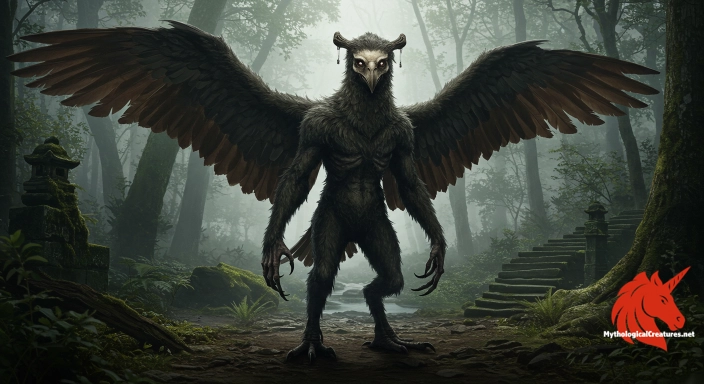
Guhuoniao
Guhuoniao - A fusion of multiple legends, the Guhuoniao serves as a cautionary symbol against nocturnal dangers and the tragic fate of abducted children.
Origins & First Encounters
The Guhuoniao is an enigmatic creature whose legacy weaves together threads of folklore and myth across centuries in Chinese culture. Born from early records during the Western Jin era, its origins are wrapped in mystique and enriched by later accretions in medicinal and natural history texts. It is celebrated, and at times feared, for its dual existence as both a spectral bird and a captivating woman. Ancient narratives recount that the creature inhabits the shadowed corners of Jingzhou, where the veil between ordinary life and the supernatural is thin. Its ability to transform by merely donning or shedding a particular fur accentuates the delicate balance of beauty and terror it embodies. The mythology surrounding the Guhuoniao reflects not only the anxieties of early societies but also a deeper, almost poetic meditation on life, death, and the unknown. Classical accounts portray it as a harbinger of both misfortune and inexplicable wonder. Over time, storytellers have reinterpreted its tale, each adding a layer of cultural symbolism to its already complex persona. Its narrative remains a striking metaphor for the mystic interplay between the corporeal and the spectral.
Source Texts & Tale Variants
The legacy of the Guhuoniao is meticulously chronicled in a variety of ancient texts which serve as the foundational sources of its myth. Early references appear in the Western Jin natural history books, where it is recorded alongside other supernatural phenomena. Subsequent texts, such as the Ming period Bencao Gangmu, broaden its mythos by incorporating elements of herbology and the natural world. Intriguingly, Japanese compendiums like the Edo period Wakan Sansai Zue also feature this mysterious creature, highlighting its cross-cultural resonance. These texts document not only its fearsome attributes but also the contrasting names it has acquired over time, including the nocturnal roaming woman and the demon bird. Varying descriptions across these works illustrate how oral traditions and literary embellishments have enriched its character. Some stories emphasise its lethal propensity, notably the sinister habit of abducting children, while others hint at a tragic past rooted in human suffering. The diversity of these primary sources presents a mosaic of interpretations that span epochs and regions. Each narrative, with its particular emphasis, contributes to a comprehensive portrait that continues to fascinate scholars and folklore enthusiasts alike.
Form & Powers
The physical manifestation of the Guhuoniao is one of the most compelling aspects of its lore, blending the uncanny with the familiar. In its best-known form, the creature exhibits the majestic wings and keen eyes of a predatory bird, while subtle human features suggest a haunting feminine grace. When adorned in its distinctive fur, the transformation is complete, invoking the image of a mythical bird with an otherworldly shine. Removing the fur reveals a visage that is at once both alluring and eerie, a stark reminder of the creature’s dual essence. The texture of its fur is depicted as both luxurious and imbued with a spectral glow, separating it from any ordinary animal. Its cry, unnervingly similar to that of a distressed infant, adds an auditory layer to its menacing presence. Legends describe it as neither entirely beastly nor wholly human, but a seamless integration of both realms. Variations in size and form are noted in different retellings, with some accounts suggesting a stature that is imposing yet gracefully lithe. Every detail—from the sleek curve of its wings to the erratic quality of its cry—serves to amplify a sense of unstoppable, transformative force.
Regional Faces
The myth of the Guhuoniao is steeped in regional tales that reflect a rich local tapestry of beliefs and superstitions. In Jingzhou and neighbouring provinces, the creature is often portrayed as a resident of nocturnal landscapes and mystical forests, where local rituals and taboos heighten its fearful reputation. Certain areas emphasise its role as a spectral abductor of children, a theme that resonates deeply in communities where unexplained ailments were once attributed to supernatural influences. Local folklore frequently intertwines the narrative of the Guhuoniao with tragic human experiences, such as the sorrowful fate of women who died during childbirth. This regional view paints a picture not only of a fearsome spirit but also of a lost maternal figure whose transformation speaks to deep societal and emotional wounds. Elsewhere, adaptations in neighbouring regions, particularly in Japan, have reframed its identity by blending indigenous mythic elements with imported Chinese legends. These adaptations have resulted in subtle shifts in characterisation, sometimes tempering its malevolence with a more ambiguous, even sympathetic air. Despite the variations, each regional narrative upholds the creature’s essential duality and enduring enigma. The interplay of different cultural voices continues to shape the evolving myth of the Guhuoniao, ensuring its legacy remains both local and transregional.
Cultural Parallels
Comparative mythology reveals that the Guhuoniao occupies a unique space among shape-shifting creatures across various cultures. Its dual nature, transforming from an awe-inspiring bird to a deceptive, bewitching woman, finds parallels in other East Asian legends such as the feather-clad yuyinu and the enigmatic nuqi of Chu Ci. These myths, like the stories of the Guhuoniao, often focus on themes of maternal loss, unfulfilled destiny, and supernatural retribution. The motif of a creature abducting children is recurrent in many cultural narratives, echoing elements found in European tales of vampiric or witch-like entities. There is also a noticeable resonance with other legendary beings whose dual appearances serve as metaphors for both protection and peril. This cross-cultural dialogue enhances our understanding of how disparate societies interpret the liminal spaces between human and animal, life and death. Such comparisons illuminate common human fears and fascinations, uniting diverse traditions under shared symbols of transformation and mystery. The integration of these narratives underscores an enduring fascination with creatures that challenge the boundaries of normalcy. Ultimately, the Guhuoniao stands as a testament to the universal allure of legends that defy simple classification, embodying a complexity that transcends cultural confines.
Legacy & Modern Evolution
Over the centuries, the depiction of the Guhuoniao has metamorphosed in response to shifting cultural and societal norms. Early portrayals, grounded in natural history and folklore, emphasised its terror-inducing attributes and supernatural origins. In modern times, however, reinterpretations of the creature have veered towards a more nuanced understanding that captures both its mythic beauty and tragic depth. Contemporary artistic expressions, ranging from literature to film and digital media, have reinvigorated its legend with fresh perspectives. This revival not only highlights its eerie, transformational qualities but also invites reflection on themes such as loss, identity, and the human confrontation with the unknown. Modern storytellers often use the Guhuoniao as a metaphor for the blurred lines between the human psyche and the spectral aspects of nature. As academic interest in myth and folklore continues to grow, the creature is increasingly viewed as a symbol of the perpetual interplay between tradition and modernity. This evolution underscores the dynamic nature of myth, where ancient figures are continually reimagined to speak to new generations. The Guhuoniao’s enduring presence in popular culture and its reinterpreted symbolism ensure that its legacy remains as potent and mysterious as ever.
Interesting Fact
The Guhuoniao is a fascinating fusion of various legends, drawing parallels with other mythological beings like the Yuyinu and Nuqi, as well as resembling the Pontianak from Southeast Asian lore.
Mythology commerce, done carefully
Align your store with our global myth audience
If you sell myth-inspired jewellery, prints, decks, or collectibles, we can feature your brand without overwhelming the reading experience.
Partner with usQuick Creature Info
Features:
Associations:
Our Mythic Legendary Rating:

Also Sometimes Known As:
Habitat:
Supernatural Powers:
Physical Attributes:
Abilities:
Behavior:
Weaknesses:
Lore:
Related Creatures, Tales or Lore
- YYuyinu
- NNuqi
- PPontianak
References
Discover Another Mythical Legend You May Not Have Heard Of?
Uncover the mysteries of ancient folklore and expand your knowledge of legendary beings from cultures around the world.
Dare to Meet the Hantu....
-eb82ae6b-baf9-446d-8136-51209875bef5_small.webp "Depiction of Hantu")
Curated by the Mythological Creatures Team
Series editor: Mythological Creatures Directory
Primary desk: Asian & Pacific Myth Cycles Desk
(rev. November 2025)