
Gyllir: Gyllir is a mythological horse from Norse mythology, noted as one of the steeds ridden by the gods during their journeys to Yggdrasil for celestial judgements.
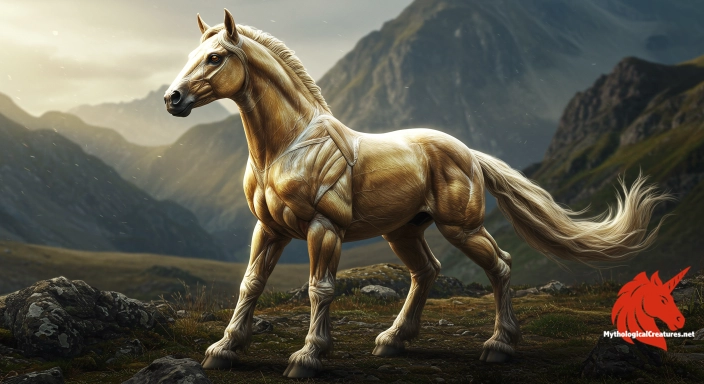
Gyllir
Gyllir - Gyllir is one of the steeds ridden by the gods during their celestial journeys; its dual mention as both a divine steed and a jötunn name underscores the intricate naming traditions of Norse mythology.
Origins & First Encounters
Gyllir occupies a subtle but intriguing role among the majestic steeds of Norse mythology, embodying both the grace and the mystique of the ancient divine retinue. His name, imbued with hints of golden splendour, evokes an image of a luminous mount that carries an undercurrent of mystery. Emerging from the poetic narratives of the Eddas, his first attestation lies within the ceremonial texts where gods journey to make judgements at Yggdrasil. Often seen amid the heavenly procession, his presence reflects a broader cultural admiration for horses that embody both physical vigour and spiritual significance. The figure of Gyllir has been interwoven into Norse thought as a bridge between the natural world and divine order, hinting at a deeper, allegorical meaning. Legends surrounding him whisper of an origin that may be as old as the cosmos itself, suggesting that his role extends beyond the mundane into the realm of the mythically profound. His subtle inclusion in the mythic corpus indicates that he was valued not just for physical prowess, but also for his symbolic representation of divine mobility and fate. Over time, Gyllir has become more than a simple steed, inviting reflection on the interconnectedness of all life, divine or otherwise.
Source Texts & Tale Variants
Ancient texts such as Grímnismál and Gylfaginning provide the cornerstone for our understanding of Gyllir, situating him among the pantheon of revered divine mounts. These sources present him as one of the many steeds that facilitate the gods’ journey to the great tree, Yggdrasil, thereby playing a part in the cosmic order of life and judgement. His mention in these revered works links him intrinsically to the narrative architecture of Norse myth, even though he is not attributed to any single deity. Beyond these central texts, Gyllir also emerges in the thulur, where his name appears in the context of jötunn designations, offering a contrasting layer to his character. This dual recording underlines the fluidity with which mythic tradition embraced and reinterpreted symbols. His role is thereby painted with shades of ambiguity that have invited scholarly interest and creative reinterpretation over the centuries. The variant portrayals, from a noble steed to a hint of untamed nature, speak to the dynamic evolution of myth. Each textual tradition contributes its own subtle inflections, enriching our view of Gyllir as a creature straddling the line between order and elemental chaos.
Form & Powers
Visions of Gyllir evoke the image of a horse whose very form is a study in divine elegance and latent power. His coat, believed to shimmer with hints of a golden hue, suggests an otherworldly luminescence that resonates with the very meaning of his name. The sleek, well-proportioned musculature of his body is reminiscent of the idealised forms celebrated in saga art, combining strength with an undeniable grace. Observers might imagine his eyes holding a spark of ancient wisdom, reflecting a lifetime of duty in the divine service. The flowing mane that adorns his head appears almost liquid in its movement, catching the light like streams of polished metal on a bright day. Each sinewy limb he possesses speaks of swift agility, built to endure both the rigours of divine journeys and the unpredictable terrains of mythic realms. There is an innate balance in his physical design, where every line and contour is imbued with purpose and mystique. Even in fragmented descriptions from ancient lore, the impression is one of a creature that transcends the ordinary, merging the earthly with the sublime.
Regional Faces
Across the varied landscapes of Scandinavia, Gyllir’s legend has been subtly reshaped to mirror local traditions and cultural nuances. In Icelandic narratives, for instance, his image sometimes takes on an additional layer of wildness, hinting at his occasional association with the untamed forces of nature. While the core attributes of his noble form remain consistent, slight regional embellishments have added hints of a more tempestuous or even mystical temperament. In some local accounts, the horse is not only a conduit for divine judgement but also a symbol of nature’s unpredictable spirit. These variations mirror the broader Scandinavian tendency to blend canonical myth with rich, regionally specific folklore. Local storytellers have occasionally accentuated his radiance, perhaps as a metaphor for the ethereal beauty of the northern skies. As the myths were passed down through generations, small local details enriched his portrayal, making him an emblem of both the celestial and the earthy. Such nuanced interpretations highlight the continuity and flexibility of oral tradition in preserving and transforming myth over time. Even subtle shifts in his character across different parts of the Norse world underscore the complex interplay between a fixed mythic identity and the ever-evolving cultural landscape.
Cultural Parallels
Gyllir stands alongside other legendary horses in world mythologies, allowing for fascinating comparisons across cultural landscapes. His understated presence invites parallels with Odin’s Sleipnir, another iconic steed whose legacy has captivated imaginations for centuries. While Sleipnir is celebrated for his otherworldly features, Gyllir is equally compelling in his nuanced portrayal, embodying a quieter yet potent mystery. In Celtic traditions, similar horses are imbued with magical qualities that enable them to traverse both earthly and mystical domains, echoing the function Gyllir serves in navigating the corridors of divine judgement. The motif of a mount linking human endeavours with the cosmic is a recurrent theme, making Gyllir part of a broader archetype found in disparate mythological systems. Ancient Indian epics and even certain Moorish legends also recount valiant horses that combine beauty with a connection to the divine. This cross-cultural resonance underlines a universal symbolism, where the horse is seen as a bridge between the temporal and eternal. Comparative analysis suggests that while Gyllir’s resultant image may be more ambiguous than that of his counterparts, his character is no less significant in the realm of mythic expression. Each tradition enriches the composite understanding of divine steeds, and through these varied lenses, Gyllir emerges as a timeless testament to the enduring power of the equine symbol.
Legacy & Modern Evolution
The evolution of Gyllir’s narrative reflects a fascinating journey from the rigid structures of early myth to the inventive landscapes of modern reinterpretation. In medieval texts he was often portrayed as a utilitarian divine steed, serving the gods during the procession of judgement, a role that underscored his functional importance among celestial beings. Over time, creative reinterpretations have sought to unravel the layers of ambiguity surrounding his identity, often highlighting his dual connections to both divinity and the primal forces suggested by his jötunn ties. Contemporary literature, graphic novels, and digital media have embraced Gyllir as a symbol of transformation and the complex interplay between order and chaos. Modern artists and storytellers have reimagined him with additional aesthetic flourishes, forging a bridge between his mythological roots and current cultural dialogues. In today's cultural landscape, his image is often linked to themes of mystery, resilience, and the enduring appeal of myth as a mirror to the human experience. These reinterpretations invite audiences to explore the layered depths of mythic tradition, demonstrating that even the more obscure figures can offer rich symbolic insights. Critics and enthusiasts alike now see Gyllir not merely as a mythic accessory but as a versatile symbol whose narrative has grown in tandem with the evolving zeitgeist of modern storytelling. His enduring legacy testifies to the power of myth to remain dynamic, relevant, and continually open to reinterpretation.
Interesting Fact
The dual appearance of Gyllir as both a divine steed and a jötunn name exemplifies the fluid and overlapping roles of mythological names in Norse tradition, inviting diverse interpretations.
For serious myth projects
Feature your work alongside the legends
From academic works to story-rich games, we highlight projects that respect world mythologies. Talk to us about a measured, long-term placement.
Start a conversationQuick Creature Info
Origin:
Features:
Our Mythic Legendary Rating:

Habitat:
Supernatural Powers:
Physical Attributes:
Abilities:
Behavior:
Lore:
Related Creatures, Tales or Lore
References
Discover Another Mythical Legend You May Not Have Heard Of?
Uncover the mysteries of ancient folklore and expand your knowledge of legendary beings from cultures around the world.
Dare to Meet the Gagana....
Curated by the Mythological Creatures Team
Series editor: Mythological Creatures Directory
Primary desk: Northern & European Folklore Desk
(rev. November 2025)