
Hábrók: Hábrók is a mythological Norse hawk renowned as the best of its kind.
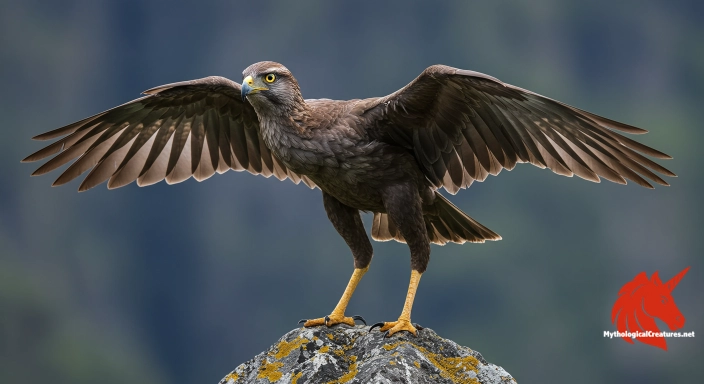
Hábrók
Hábrók - Represents the peak qualities of hawks and serves as a symbol of excellence in Norse myth.
Origins & First Encounters
Hábrók occupies a unique space in Norse mythology as a creature celebrated for its exceptional qualities among birds. Born out of a rich tradition of myth and poetic sagas, his name – literally translated as “High Pants” – is believed to refer to his notably elongated legs. He is renowned as the best of hawks, a superlative that places him among the finest embodiments of nature’s splendor in the Norse canon. His sparse but significant mention in sources such as Grímnismál and the Gylfaginning underscores a cultural admiration for the most exemplary traits found in the animal kingdom. The mythic record situates him within a broader framework where nature and divinity intermingle to inspire awe and respect. His presence, though brief in literary tradition, invites modern interpreters to ponder the symbolism behind excellence and the idealisation of natural forms. The enigmatic origins of Hábrók allow for a dual interpretation, both as a literal creature and a metaphor for the perfection of natural design. The enduring appeal of his legend illustrates the Norse capacity to celebrate even the most fleeting details of the natural world.
Source Texts & Tale Variants
The primary attestations of Hábrók are found in ancient texts where he is listed among the best qualities of nature. His name is prominently mentioned in Grímnismál, and later in the Gylfaginning by Snorri Sturluson, linking him firmly to the preeminence of nature’s best examples. Although these sources offer little narrative detail, the deliberate inclusion of Hábrók as the pinnacle of hawks speaks volumes about his esteemed status. His brief mention has sparked centuries of speculation and discussion among scholars and enthusiasts alike. The original texts serve as a window into a tradition that valued precise descriptions of natural excellence, even if only through a catalogue of superlatives. While no extended myths have been dedicated to him, the careful curation of his epithet in these works suggests an underlying significance. There is evidence to suggest that oral traditions may have preserved additional nuances about Hábrók, though these have not survived in written form. The enduring legacy of these early documents continues to inspire reinterpretations that enrich our understanding of Norse myth.
Form & Powers
In terms of physical depiction, Hábrók presents as an archetypal hawk whose appearance is marked by an exceptional blend of natural grace and distinctive features. His name, translating to “High Pants,” is thought to allude to an unusual length in his legs, setting him apart from common representations of raptorial birds. It is presumed that his body was streamlined for swift flight, with sharp, keen eyes that echoed the acute perception attributed to the apex of predators. His plumage, though sparsely described in ancient texts, likely featured a striking pattern that symbolised his status as the finest among his kind. The idealised imagery of a hawk with augmented appendages suggests that artistic renditions may have emphasised both elegance and power. In Norse art, such superlative descriptions often led to embellishments that highlighted the creature’s agility and sharp prowess. The inferred physicality of Hábrók marries the practical demands of a predator with the symbolic aesthetics revered by skalds of old. This blend of functionality and artistry creates an enduring image of a creature that embodies both natural perfection and mythic excellence.
Regional Faces
Across the diverse regions of Scandinavia, traditions surrounding Hábrók have evolved subtly to mirror the local cultural landscape. In Icelandic lore, for instance, his image has been intertwined with the rugged and expansive natural environment, symbolising both endurance and freedom. Rural Scandinavian narratives have occasionally portrayed him as more than just a superior bird, hinting at a role as a messenger of the divine or a harbinger of notable change. Variations in regional retellings often convert his physical peculiarities, such as his elongated legs, into potent metaphors for status and resilience. Local poetic traditions have even adopted his name as a kenning—an evocative metaphor—to celebrate noble deeds and heroic virtues. While the canonical texts offer only scant details, these oral traditions amplify his persona, allowing him to serve as a cultural touchstone. The regional adaptations reflect a broader tendency to associate natural phenomena with the ideals of communal identity and moral excellence. Such variations have enriched the initially sparse myth, transforming Hábrók into a symbol capable of resonating across different Scandinavian contexts.
Cultural Parallels
When compared with other mythological avian figures, Hábrók occupies an intriguing position that highlights the universal admiration for nature’s elite forms. His exaltation as the finest of hawks finds a clear parallel in the lofty depictions of the eagle in Greek and Roman mythologies, where birds of prey embody power and divine favour. Similarly, in Egyptian lore, the falcon-headed god Horus serves as a symbol of kingship and keen perception, mirroring the virtues attributed to Hábrók. Within Norse mythology itself, while Odin’s ravens capture the essence of wisdom and communication, Hábrók is celebrated primarily for his physical allure and natural superiority. This comparative framework underscores a cross-cultural motif where select birds are elevated as emblems of excellence and spiritual transcendence. The myth of Hábrók, though brief, resonates with a similar ambition to glorify nature’s most refined creations. In each tradition, the depiction of such creatures transcends mere physical description to hint at deeper, often allegorical, insights into the human relationship with the wild. The synthesis of these comparisons not only illuminates the shared human fascination with avian symbols but also reinforces the timeless appeal of depicting nature’s best in superlative form.
Legacy & Modern Evolution
Over the centuries, the legacy of Hábrók has transitioned from a fleeting mention in ancient texts to a symbol that continues to inspire modern creative expression. Despite the limited narrative provided in the original sources, his title as the best of hawks has allowed poets, artists, and scholars to explore his image in diverse and innovative ways. Contemporary Scandinavian artists have embraced his enigmatic qualities, often portraying him as a powerful emblem of freedom and natural perfection. Modern interpretations frequently cast him as a bridge between the old mythic past and current themes of environmental appreciation and resilience. In literature and fantasy role-playing games, Hábrók is reimagined as a creature whose idealised attributes evoke the spirit of Norse tradition. His minimalist myth has provided fertile ground for reinterpretation, inviting new narratives that pay homage to the superlative aspects of nature. The evolving symbolism attached to Hábrók reflects a wider modern reawakening that seeks to reconnect with the storied past of Norse culture. As his image grows in contemporary artistic and cultural depictions, Hábrók remains a testament to the enduring power of myth to inspire wonder and reinterpretation across the ages.
Interesting Fact
An interesting fact about Hábrók is that its name, translating to 'High Pants', humourously highlights a physical trait—its long legs—underscoring the Norse penchant for attributing excellence even to seemingly mundane features.
For myth educators and toolmakers
Built a resource for mythology learners?
If you offer courses, teaching tools, or research platforms focused on myth and folklore, consider a discrete placement on our reference pages.
Introduce your resourceQuick Creature Info
Origin:
Our Mythic Legendary Rating:

Also Sometimes Known As:
Supernatural Powers:
Physical Attributes:
Abilities:
Behavior:
Lore:
References
Discover Another Mythical Legend You May Not Have Heard Of?
Uncover the mysteries of ancient folklore and expand your knowledge of legendary beings from cultures around the world.
Dare to Meet the Proto....
-a9a0f96b-4610-435d-9e43-ea1276a76fcc_small.webp "Depiction of Proto")
Curated by the Mythological Creatures Team
Series editor: Mythological Creatures Directory
Primary desk: Northern & European Folklore Desk
(rev. November 2025)