
Hantu Raya: Hantu Raya is a powerful familiar spirit from Malay folklore known as the 'great ghost'.
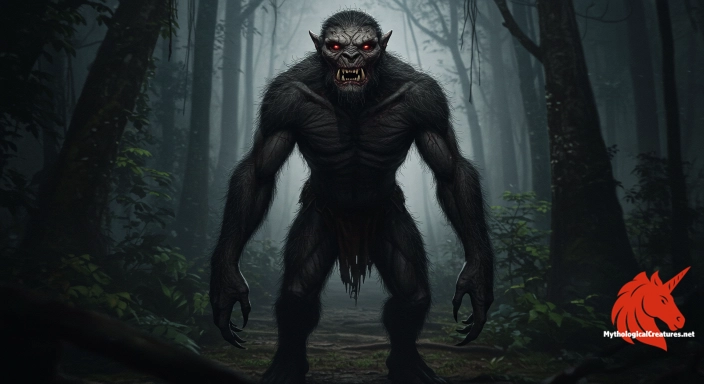
Hantu Raya
Hantu Raya - Hantu Raya is revered and feared as a powerful familiar that enhances the dark magical abilities of its master.
Origins & First Encounters
Emerging from the vibrant tapestry of Malay mythology, the Hantu Raya is revered as a potent familiar spirit that bridges the mundane and the supernatural. It is intrinsically linked with black magic practices, often serving as a double that magnifies the power of its master. From ancient oral traditions to early written accounts, its presence has been noted as a mystical force capable of both bestowing power and instilling terror. The Hantu Raya has been depicted as a conduit for dark energies, embodying the delicate balance between empowerment and peril. Its origins seem to lie deep within the cultural practices of traditional Malay communities, where the unseen realms were as significant as the visible world. Over time, this entity has evolved into a symbol of both awe and dread, reflecting the complex interplay of reverence and fear that characterises many supernatural beings. It occupies a central position in many folk narratives, often serving as a reminder of the dangerous allure of unbridled occult power. This enduring figure thus remains a compelling focus of myth, presenting a narrative that is as cautionary as it is enchanting. Its myriad depictions underscore the dynamic nature of folklore as it adapts to the changing beliefs of successive generations.
Source Texts & Tale Variants
The earliest descriptions of the Hantu Raya are rooted in the rich oral traditions of the Malay Peninsula, passed down through generations of storytellers and shamans. Various folklore collections and manuscripts, although fragmentary, carry the essence of its legend and the details of its feared attributes. In traditional accounts, the spirit is immortalised within the secretive circles of black magic, where incantations and ceremonial rites often reference its formidable presence. Multiple story variants exist, each adding subtle differences that reflect the local cultural contexts and mystical practices of the narrators. Some texts evoke a detailed ritualistic relationship, whereby the familiar spirit acts under a defined pact with its master, while others leave its origins shrouded in enigma. The diverse versions underscore how the Hantu Raya traverses the boundaries of local superstition and broader metaphysical concerns. Written records from the colonial era frequently mention such entities, providing glimpses into a belief system where spirits played an active role in daily life. Despite their disparate sources and styles, these accounts converge on the idea of the Hantu Raya as a dual-edged force, essential to both the empowerment and the potential downfall of its practitioner. This body of literature, though varied, collectively shapes a mythos that remains central to our understanding of Malay occult traditions.
Form & Powers
The physical portrayal of the Hantu Raya is as striking as it is unsettling, marked by a humanoid form that exudes both familiarity and otherworldly menace. Its body is largely cloaked in dense, black hair, a feature that starkly contrasts with the exposed, more refined facial area. The skin is described as rough and grey, evoking imagery of timeworn stone, and adding to the sense of age and ancient power. Intense red eyes, piercing and luminous, are a constant highlight in accounts of its appearance, imbuing the creature with an aura of hostility. Protruding from its mouth are long, sharp teeth that underline its wild, predatory nature despite its humanoid guise. The overall visual narrative is one of contrasts, where elegance intertwines with ferocity, suggesting both an innate beauty and a lurking menace. Varying descriptions note differences in size and build, ranging from a towering, imposing figure to a more agile and shadow-like presence depending on the storyteller’s perspective. Such detailed attributes ensure that the Hantu Raya is remembered not only as a myth but as a visually compelling character carved from the depths of darkness and lore. Each specific element—from its enigmatic look to its lethal features—serves to reinforce its status as one of the most formidable entities in Malay folklore.
Regional Faces
Although the Hantu Raya finds its roots in traditional Malay narratives, its depiction varies significantly across different regions of Southeast Asia. In parts of the Malay Peninsula, it is often portrayed as an indispensable familiar that amplifies the occult prowess of its master, while in some localities it is seen more as an ominous herald of misfortune. Regional storytellers tend to imbue the creature with local colour, adapting its physical traits and powers to reflect particular cultural and environmental themes. Some communities, for instance, emphasise its red eyes and imposing stature as symbols of royal supernatural might, whereas others accentuate its eerie, almost spectral, presence. Variations also extend to its role in spiritual practices, with rural interpretations often intertwining the entity with ancestral rites or nature worship. The local adaptations reflect a broad spectrum of beliefs with regards to the supernatural, thus enriching the figure of the Hantu Raya with layers of regional symbolism. Such adaptability demonstrates how its legend has been moulded by diverse societal needs—ranging from cautionary myth to a revered emblem of occult strength. Despite these differences, a shared foundation of mystique and fear continues to unify the myriad versions of this formidable spirit. This regional dynamism ensures that the Hantu Raya remains a versatile and ever-evolving participant in the folklore of Southeast Asia.
Cultural Parallels
The myth of the Hantu Raya shares intriguing similarities with familiar spirit entities found in other cultural traditions across the globe. Much like the familiars in European occult practices, this spirit acts as both a guide and an amplifier of magical abilities, embodying the tension between control and wild supernatural power. Similar to the concept of the doppelgänger in Western folklore, the Hantu Raya often serves as a mirror to its master’s hidden attributes and inner darkness. Its dual nature aligns with a common mythological theme where entities are both benevolent aides and potential harbingers of doom. Parallels can also be drawn with other Southeast Asian spirits, where the interplay between protective forces and malevolent energies is a recurring motif. Comparative studies indicate that the idea of an external spirit reflecting or intensifying the human soul is a near-universal phenomenon in myth-making. Such cross-cultural echoes underscore a shared human fascination with the supernatural and the inherent dangers of wielding forbidden power. By comparing these various mythological figures, one can appreciate how the Hantu Raya is both unique to Malay tradition and part of a broader narrative tradition that spans diverse cultures. This interconnectedness highlights universal concerns with duality, power, and the paranormal, prompting continual reinterpretation across cultural boundaries.
Legacy & Modern Evolution
The journey of the Hantu Raya from a fearsome familiar spirit to a multifaceted cultural symbol mirrors the broader evolution of myth in the modern era. Originally confined to whispered legends and clandestine ritual practices, its visage has been reimagined and reinterpreted in a host of contemporary media. Over time, the figure has acquired layers of symbolism, embodying not only the seductive allure of power but also serving as a warning against the darker consequences of unrestrained ambition. Modern literature, film, and digital storytelling have revitalised its image, often imbuing it with a more nuanced persona that resonates with both historical depth and current sensibilities. This evolution reflects a broader trend where ancient myth is recontextualised to address contemporary issues, from personal identity to societal transformations. While its traditional attributes of dark hair, rough skin, and piercing red eyes remain iconic, new portrayals sometimes emphasise psychological dimensions, exploring the interplay of internal and external demons. The Hantu Raya continues to be a subject of academic interest, inspiring comparative studies that delve into the enduring human fascination with the supernatural. Its persistent presence in cultural discourse is a testament to the timeless allure of folklore and the power of myth to adapt and endure across the ages.
Interesting Fact
An intriguing aspect of Hantu Raya is its dual nature; while it appears as a menacing and fearsome entity, it simultaneously functions as a bound familiar that empowers its master in the realm of black magic.
For authors, artists, and makers
Created something from the realm of myth?
If your book, deck, game, or artwork draws from legendary creatures and lore, you can showcase it here in a tasteful, year-round placement.
Share your projectQuick Creature Info
Origin:
Features:
Our Mythic Legendary Rating:

Habitat:
Supernatural Powers:
Physical Attributes:
Abilities:
Behavior:
Lore:
Related Creatures, Tales or Lore
- PPontianak
- TToyol
- PPenanggal
References
Discover Another Mythical Legend You May Not Have Heard Of?
Uncover the mysteries of ancient folklore and expand your knowledge of legendary beings from cultures around the world.
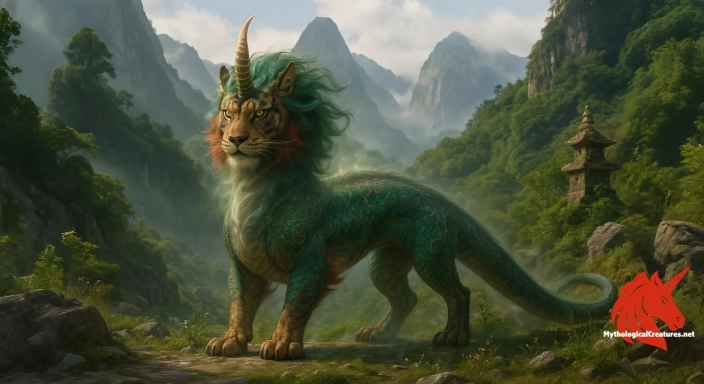
Dare to Meet the Bai Ze....
Curated by the Mythological Creatures Team
Series editor: Mythological Creatures Directory
Primary desk: Asian & Pacific Myth Cycles Desk
(rev. November 2025)