
Hedetet: Hededet, also known as Hedjedjet, is an ancient Egyptian scorpion goddess revered for her protective and nurturing nature.

Hedetet
Hedetet - Hededet embodies both the lethal and nurturing aspects of the scorpion, offering protection to the deceased and symbolizing rebirth through her eventual merger with Isis.
Origins & First Encounters
Hededet, also known as Hedjedjet, emerges from the fascinating tapestry of ancient Egyptian religion as a unique scorpion goddess. Her presence illuminates a cosmos where powerful animal symbols interlace with notions of protection and fertility. She is principally known from texts like the Book of the Dead, where her protective qualities and enigmatic nature are subtly articulated. In the early periods of Egypt, such deities often reflected local attitudes toward nature and the dangers it posed, and Hedetet was no exception. Her identity appears to have developed alongside other potent deities such as Serket, with whom she shared notable similarities. Over time, the lines between these figures blurred, culminating in an eventual merging with the more familiar Isis during later religious transformations. The dual imagery of her bearing a scorpion head while also being depicted in the act of nursing a child speaks to a complex duality of nurturing and danger. This amalgamation of symbols illustrates how ancient Egyptian beliefs could incorporate seemingly disparate characteristics into a single divine persona. In a culture where life and death, care and peril, were deeply intertwined, Hedetet encapsulated these competing forces as both a guardian and a nurturer.
Source Texts & Tale Variants
The primary narrative regarding Hedetet can be traced through sacred texts and funerary literature, notably the spells and incantations found in the Book of the Dead. Her depiction in these sources underlines a recurring theme of divine protection, particularly in the context of the afterlife. Various temple walls and tomb inscriptions, though fragmentary, carry echoes of her cult, hinting at a broader devotional practice in certain localities. Some ancient papyri also allude to her protective aspects, suggesting that her image was called upon in rituals against venomous and malignant forces. Over time, the transmission of her story through these texts points toward an evolving understanding of her role in countering chaos. While early references primarily focused on her dangerous scorpion attributes, later texts began to emphasize her maternal and healing capabilities. Despite the relative scarcity of extensive literary records, the symbolic nuances embedded in religious artefacts paint a compelling portrait of her dual character. The surviving references, though limited, confirm her longstanding function as both a protector of the realms of life and a mediator in the journey toward rebirth.
Form & Powers
Visually, Hedetet is a striking figure, characterised by the unusual and enthralling combination of human and scorpion elements. Her head, styled as that of a scorpion, is rendered with meticulous attention to the segmented body, curved pincers, and a prominently featured stinger. This iconographic choice powerfully embodies the inherent danger associated with scorpions while simultaneously serving as a symbol of resilience and defence. In many artistic depictions, she is portrayed nurturing a child, a scene that juxtaposes her fearsome visage with the gentleness of maternal care. The textures and details in her representation are rich, often illustrated with decorative elements such as gold, turquoise, and other vibrant pigments that underscore her divine status. The motifs surrounding her sometimes include representations of protective crowns or uraei, reinforcing her role in safeguarding mortals from harm. Variations in her depiction—whether in the elongation of her scorpion tail or the stylisation of her hands holding the child—suggest a degree of artistic experimentation across time and regions. Each visual rendition is imbued with layers of meaning, as artists balanced the symbols of danger with those of nurturing love. The overall physical portrayal of Hedetet serves as a vivid testament to ancient Egyptian artistic ingenuity and theological complexity.
Regional Faces
Regional interpretations of Hedetet showcase the dynamic interplay between local folklore and overarching religious paradigms. In certain parts of Egypt, her role as a protective figure against venomous perils was emphasised, mirroring the immediate natural environment where scorpions were common. In these localised traditions, artistic representations leaned more heavily towards the fierce, almost untamed, aspects of her character. Contrastingly, in regions where iconographic influences of Isis were dominant, depictions of Hedetet began to incorporate softer, more maternal elements, particularly in the scenes portraying her with an infant. This blending of characteristics reveals a local desire to consolidate protective deities under a more unified theological umbrella. Regional craftsmen and priests often adapted her features to resonate with local cultural narratives, thereby enriching her myth with diverse symbolic attributes. In some areas, she was celebrated as both a celestial guardian and a beneficent force nurturing new life, a duality that resonated with varying social needs. Such variations underline how her imagery evolved in response to local environmental factors and shifting cultural priorities. The diverse regional manifestations of Hedetet stand as a metaphor for the broader adaptability and resilience of ancient Egyptian religious thought.
Cultural Parallels
In the broader context of world mythology, Hedetet occupies a distinctive niche as a deity that embodies both the perils and protections of the natural world. Her scorpion head invites a direct comparison with other animal-headed deities, particularly within the ancient Egyptian pantheon, where figures like Serket share remarkably similar attributes. Yet, the extra dimension of her maternal imagery sets her apart from her contemporaries, infusing a depth of nurturing that is seldom seen in deities associated with venom and danger. Similar themes emerge in other cultures where dangerous creatures are simultaneously revered and feared, though Hedetet’s embodiment of care through nursing adds a unique layer to this duality. The syncretic merging of her identity with that of Isis in later periods reflects a common ancient Near Eastern practice of realigning deific roles to accommodate evolving religious and social landscapes. Comparisons can also be drawn with other protective mother figures in mythology, where the protective instinct is paired with the risks inherent in natural forms. These cross-cultural parallels demonstrate a resonant theme in ancient religions: the reconciliation of seemingly contradictory forces within the divine. Hedetet's character, straddling the line between aggression and compassion, thus finds echoes in mythologies far beyond Egypt, highlighting a universal quest to understand the multifaceted nature of protection and motherhood.
Legacy & Modern Evolution
Hededet’s historical trajectory illustrates the fluid and evolving nature of myth in the ancient world. Initially revered as a distinct goddess with formidable protective powers, her identity was gradually subsumed into the larger and more encompassing figure of Isis during later periods of Egyptian history. This syncretic evolution not only broadened her influence but also allowed her core attributes to persist in a transformed guise. Over the centuries, her iconography has continued to capture the imagination, serving as a bridge between the violent aspects of nature and the gentle facets of care. In modern artistic and literary interpretations, Hedetet is often revisited as a symbol of the integrative power of ancient myth, inspiring both visual art and narrative portrayals that celebrate ancient Egyptian mysticism. Contemporary scholars and spiritual practitioners have embraced her dual nature, appreciating the resilience inherent in her capacity to nurture while warding off harm. This enduring legacy is further attested by her recurring appearance in modern cultural mediums such as jewellery design, popular media, and creative reinterpretations in neo-pagan practices. By continuing to draw on the rich symbolic reserve of her myth, modern audiences find in Hedetet a timeless emblem of the transformative interplay between danger and protection, echoing the ancient wisdom of Egypt.
Interesting Fact
Her unique portrayal as both a fierce scorpion and a nurturing mother is a rare iconographic combination in ancient mythology, symbolising the balance between danger and protection.
For serious myth projects
Feature your work alongside the legends
From academic works to story-rich games, we highlight projects that respect world mythologies. Talk to us about a measured, long-term placement.
Start a conversationQuick Creature Info
Origin:
Features:
Associations:
Our Mythic Legendary Rating:

Also Sometimes Known As:
Habitat:
Supernatural Powers:
Physical Attributes:
Abilities:
Behavior:
Lore:
Related Creatures, Tales or Lore
- SSerket
- IIsis
- SScorpio (Zodiac)
References
Discover Another Mythical Legend You May Not Have Heard Of?
Uncover the mysteries of ancient folklore and expand your knowledge of legendary beings from cultures around the world.
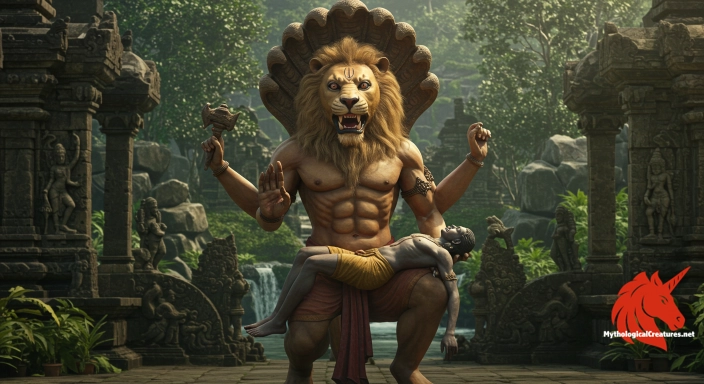
Dare to Meet the Narasimha....
Curated by the Mythological Creatures Team
Series editor: Mythological Creatures Directory
Primary desk: Hellenic & Ancient Mediterranean Desk
(rev. November 2025)