
Heimchen: Heimchen is a multifaceted figure from German folklore, best known as the house cricket.
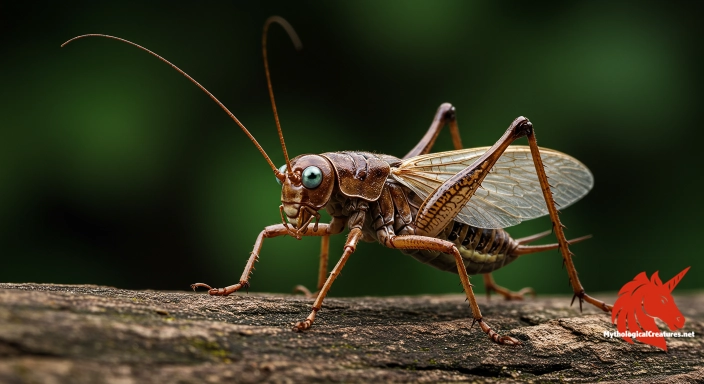
Heimchen
Heimchen - Represents both a domestic guardian and an omen, reflecting the complex interplay of benevolent and cautionary symbols in German folklore.
the legend in five swipes.
the legend in five swipes.
Heimchen: How the Story Began
The Heimchen occupies a fascinating niche in German folklore, woven into the fabric of domestic life and mystical tradition. Its name, emerging as a diminutive form of 'Heim' meaning home, immediately evokes images of gentle guardianship and the enchantment of everyday spaces. Historical whispers hint that this creature was first remembered in local oral traditions, where the modest house cricket embodied more than its natural self. Stories passed down in villages painted it as both an unassuming protector and a mysterious character with ties to the otherworldly. The dual identity of the Heimchen — as nature’s little musician and as a guise taken by dwarven beings — illustrates the complexity of its myth. Over the centuries, its reputation has shifted subtly, at times demanding respect and at other moments inciting playful caution. The evolution of its character reflects regional values, with early attestations found in rustic dialects and folklore. As families gathered by the hearth, the narratives of the Heimchen provided both comfort and a gentle reminder of ancient customs. In this way, the creature continues to occupy a cherished spot in the cultural imagination of German-speaking communities.
The Source Texts Behind the Heimchen
Local manuscripts and age-old folktales serve as the primary wells of reference for the Heimchen myth. Early records often captured its guise as the ordinary house cricket, embedding supernatural qualities into its everyday presence. In dialects across Germany, names like Herdschmiedl and Heunemänken reveal diverse regional interpretations that have enriched its myth. Traditional accounts from rural communities recount varied episodes, ranging from playful escapades to eerie portents, thereby adding depth to the creature’s narrative. Numerous story variants emerge from regions where it is recounted as a figure of both mirth and caution in nursery lore. Some texts recount heartwarming episodes where the Heimchen aids lost children, while others frame it as a spectral reminder of old moral codes. The interpretations preserved in oral traditions have been passed down through generations, each adding subtle layers of detail. Additionally, folkloric anthologies from different eras have recorded its dual character, ensuring that no single version dominates. This mosaic of sources underscores the creature’s enduring appeal as a living element of folklore.
Did the Heimchen have any weaknesses?
The Heimchen is predominantly illustrated in folklore as a modest house cricket, its form both delicate and imbued with an otherworldly charm. Observers have often described its slender, agile body, marked by fine, almost imperceptible patterns that whisper of hidden symbology. Its stretch of antennae and rhythmic chirping contribute to a mystique that transcends ordinary insect life. In some traditions, the creature’s natural anatomy is interlaced with hints of a miniature human-like silhouette, suggesting a secretive affiliation with dwarven incarnations. The subtle shimmer on its exoskeleton appears to mirror the simplicity of domestic life while simultaneously alluding to ancient magical rites. Variations in size, as recounted in local lore, have at times depicted it as no larger than a thumb or as possessing a presence that feels just a bit more imposing. Its earthy hues, akin to the muted tones of thatched roofs and timeworn timber, further connect the Heimchen with the rural landscape. The creature’s chirrup, far from being a mere sound, is celebrated as a resonant thread linking the natural and the mystical. Such detailed depictions ensure that every retelling of its form is as evocative as it is enchanting.
Heimchen: Regional Versions and Local Names
Across the German-speaking landscape, the Heimchen wears a different mask in each region, reflecting the nuances of local culture and tradition. In the North Palatinate and Western Palatinate, it is transformed into the Krikelmaus, a figure employed in cautionary tales to instil proper behaviour in children. Meanwhile, in the gentle valleys of Pomerania, the creature takes on a benevolent role by nurturing lost children with simple offerings of bread rolls and milk. In stark contrast, Silesian lore imbues the stridulation of the house cricket with a somber significance, marking the silent arrival of a deceased soul. Each regional depiction highlights a unique facet of the Heimchen’s character, oscillating between light-hearted mischief and grave omens. The local colour of these legends is enriched by dialect-specific names and customs that elevate the creature’s profile in community rituals. Regional storytellers have skilfully adapted the figure to mirror societal norms and local beliefs, thereby anchoring it in the daily lives of the people. These adaptations have allowed the myth to serve as both a tool for moral instruction and a charming emblem of regional identity. Ultimately, the varied portrayals across regions underscore the flexibility and enduring appeal of the Heimchen myth.
How does the Heimchen compare to figures in other traditions?
Echoes of the Heimchen myth can be discerned in the wider spectrum of European folklore, where domestic spirits and humble creatures often assume symbolic roles. Its dual nature as both a benign guardian and a secretive trickster is reminiscent of figures like the Scottish brownie and the Scandinavian tomte. Much like the Slavic domovoi, the Heimchen operates at the boundary between the natural and the supernatural, protecting the household while also serving as an enforcer of social norms. Comparisons extend to other diminutive creatures in folklore, where the modest exterior belies an intense connection to ancient magic and moral lessons. Cultures across Europe have long celebrated the enigmatic charm of small beings, often portraying them as intermediaries between human society and the mystical world. The interplay of fear and fondness in these legends reflects a universal recognition of the protective and unpredictable nature of such spirits. This shared motif of reinterpreting everyday life through the lens of myth enriches our understanding of cultural continuity. In synthesising these varied traditions, the Heimchen emerges as a resonant symbol that bridges diverse mythologies. Thus, its legacy is not confined to a single narrative but rather part of a broader, interconnected tapestry of domestic folklore across the continent.
Heimchen in Books, Film and Games
Over the centuries, the Heimchen has evolved from a shadowy presence in local lore to an intriguing muse in modern cultural expressions. In its early incarnations, it was intricately tied to the domestic sphere, appearing as both a protector of the home and an assorted harbinger of moral lessons. As societal attitudes shifted, the creature’s image softened and expanded into new realms of artistic and literary reinterpretation. Contemporary depictions often present the Heimchen as a whimsical, almost allegorical figure, bridging the gap between nature and myth. Modern storytellers and illustrators have embraced its dual character, portraying it as both an endearing guardian and an emblem of forgotten traditions. In children’s literature, the creature is frequently reimagined as a gentle, playful spirit that inspires wonder and curiosity about the natural world. Cultural festivals and educational programmes in parts of Europe now occasionally celebrate the Heimchen, inviting a fresh dialogue about the convergence of folklore and modern life. Its enduring symbolism reflects a broader trend, where traditional myths are revitalised to address current themes such as environmental respect and the sanctity of domesticity. Today, the Heimchen continues to captivate audiences with its rich narrative, serving as a living link between the past and the present.
Interesting Fact
An intriguing aspect of Heimchen is its dual function as both a cautionary bogey and a supportive guardian, illustrating the complex symbolism inherent in German folk traditions.
Mythological Treasures
Norse Sagas: A field guide to the beasts of the Viking world
Drawn from the saga accounts themselves, with the powers, weaknesses and doom of each being set out.
Japanese Yokai: A field guide to the spirits and demons of Japanese folklore
Fifteen spirits, with the signs to watch for and what the old tales say to do if you meet one.
Greek Myths: A field guide to the monsters of ancient Greece
Every monster here earned its place in legend, and each gets a full page of artwork and the story behind it.
the legend in five swipes.
Advertising opportunity
Showcase your mythology project
We offer limited sponsor placements for books, courses, games, and creators aligned with our audience.
View partnership optionsQuick Creature Info
Origin:
Features:
Our Mythic Legendary Rating:

Also Sometimes Known As:
Habitat:
Supernatural Powers:
Physical Attributes:
Abilities:
Behavior:
Lore:
References
Discover Another Mythical Legend You May Not Have Heard Of?
Uncover the mysteries of ancient folklore and expand your knowledge of legendary beings from cultures around the world.
Dare to Meet the Corycia....

The Mythological Creatures Book Series
Yokai, Greek, Norse, Egyptian & Chinese. Five illustrated field guides to the creatures the old stories either warned or told you about.
Curated by the Mythological Creatures Team
Series editor: Mythological Creatures Directory
Primary desk: Northern & European Folklore Desk
(rev. November 2025)