
Herja: Herja is a valkyrie from Norse mythology, attested in the Prose Edda's Nafnaþulur lists.
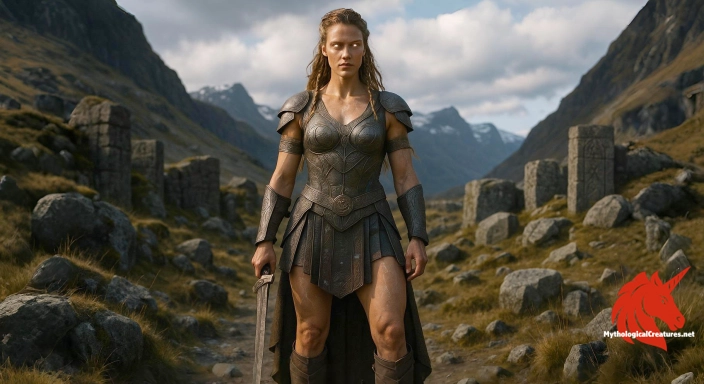
Herja
Herja - Herja embodies the martial spirit of Norse mythology, linking the fate of warriors with the divine order.
Origins & First Encounters
Herja emerges from the mists of Norse myth as a valkyrie whose name resonates with the themes of war and devastation. Born out of the fierce world of the ancient Nordic warriors, she is first attested in the Nafnaþulur section of the Prose Edda, reflecting the cultural importance of battle in early Scandinavian societies. Herja’s etymology, tied to the Old Norse word herja, meaning to devastate, intimates her formidable character and martial prowess. With roots in the proto-Germanic *Herjaza, her identity bridges the gap between the ethereal and the brutal in the realm of the divine. This character, though briefly noted in primary sources, carries the weight of war’s chaotic and transformative energy. The very mention of her conjures images of a relentless, awe-inspiring figure who both honours the fallen and oversees the cycle of violent rebirth. Within the intricate tapestry of Norse mythology, her presence asserts the inevitability of fate and the raw power inherent in the act of combat. In a cultural context where the heroic and the tragic intermingled, Herja symbolises the duality of life and death on the field of battle.
Source Texts & Tale Variants
The principal reference to Herja appears in the longer Nafnaþulur list from the Prose Edda, which served as a vital compendium of mythic names in medieval Scandinavia. Although the historical record offers scant narrative detail, her inclusion in these lists has ensured her status among the pantheon of martial deities. Various medieval manuscripts have preserved her name alongside other battle-hardened figures, suggesting that her role may have been more expansive in lost oral traditions. Subtle variations in the surviving texts hint at divergent local interpretations that could have imbued her character with richer stories over time. The sparse records leave much to conjecture, yet they also offer a tantalising glimpse into the intricate web of Norse war lore. Some accounts in later retellings imply that her essence was intertwined with the fateful decisions on the battlefield. The resonance of her name in related Continental sources, particularly alongside the goddess Hariasa, further supports a shared mythological heritage among Germanic peoples. While narrative episodes detailing her exploits are absent, the lists themselves speak to an enduring respect for her role in the cosmic order of war and destiny.
Form & Powers
Although early sources do not offer an elaborate physical description of Herja, traditional depictions of valkyries provide clues that inform our imaginations. She is often envisioned as a stately warrior maiden whose appearance is both ethereal and formidable. Artists have depicted figures like her clad in intricately adorned armour, suggesting that her attire was as much a symbol of her divine authority as it was of her martial function. In some reconstructions, she wears a helmet embellished with detailed motifs that reflect the devastation her name implies. Her expression is imagined to be arresting, with piercing eyes that embody the intensity of battle and the inevitability of fate. Debate persists among scholars as to whether her visage combined beauty with an aura of relentless determination—a hallmark of war deities. Some later artistic interpretations even visualise her with flowing hair and a dynamic posture, as if perpetually in motion on the tumultuous battlegrounds. The physical iconography associated with Herja encapsulates the paradox of grace and brutality, a theme central to many valkyrie portrayals. As such, although specific details are scant in ancient texts, modern portrayals continue to celebrate her as a striking embodiment of martial splendour and inexorable force.
Regional Faces
Regional interpretations of Herja reveal a fascinating diversity in how her martial persona is integrated within local mythologies. In Scandinavian regions, tales of the valkyries often blend with local spirits of battle, with Herja’s name sometimes evoking not only the dedication to the slain but also the capricious forces of nature. In Iceland and Norway, her image may be interwoven with natural elements, suggesting that her influence extended beyond the battlefield to the very terrain and weather of the land. Some Danish and Swedish traditions have reimagined her as part of a broader pantheon of war deities, where attributes of fertility and sorrow intermingle with scenes of bloodshed. This fluid regional adaptation highlights how local communities moulded the archetypal war goddess figure to reflect their own experiences of conflict and survival. In Continental Germanic contexts, echoes of her identity appear in the form of Hariasa, a name borne from a similar linguistic root, which speaks to a shared cultural backdrop yet distinct regional conjurations. Variations in iconography and narrative snippets across these regions emphasize that the interpretation of divine devastation was subject to local colour and tradition. In essence, Herja’s myth transcends a single, uniform portrayal, adapting dynamically to the needs and spiritual landscapes of each culture that encountered her legacy.
Cultural Parallels
When set alongside other mythological figures, Herja’s attributes find striking parallels with war deities and valkyrie counterparts in diverse cultures. Much like the Celtic Morrigan, whose presence on the battlefield foretells victory or doom, Herja encapsulates the dual nature of destruction and protection. Similarly, the Hindu goddess Kali, with her fierce and transformative energy, shares an elemental connection to the forces of chaos and regeneration. Both figures, though emerging from distinct cultural milieus, embody the potent mix of beauty, terror, and the inexorable power of fate. Comparisons can also be drawn between Herja and other Norse valkyries like Brynhild, where each character symbolises the inexorable link between battle and the divine. In her understated yet profound presence, one sees echoes of the archetypal war mistress whose role is to both honour fallen heroes and wreak havoc upon the unworthy. The thematic resonance across these figures underscores a broader human fascination with the personification of conflict and its aftermath. In every culture, the depiction of such deities serves to articulate the inescapable reality of war and the complex interplay between destruction and creation. Through these cultural parallels, Herja stands as a testament to the universal mythic motif that intertwines the beauty of the divine with the brutality of battle.
Legacy & Modern Evolution
Over the centuries, Herja’s portrayal has evolved from a brief mention in ancient lists to a symbol of the indomitable spirit of war and the multifaceted nature of fate. Initially, she occupied a marginal yet potent space within the Norse mythic corpus, where her name alone evoked the spectre of devastation on the battlefield. As Norse mythology experienced a revival in the 19th and 20th centuries, artists and writers began to imbue her with a richer, more complex identity that reflected contemporary views on femininity and power. Her legacy has since been embraced by modern literature, visual arts, and even digital media, where she is reimagined as an emblem of both destructive might and the resilience inherent in struggle. In modern reinterpretations, Herja is often portrayed with a dynamic blend of grace and ferocity, appealing to audiences who find empowerment in her character. This evolving representation has allowed her to transcend the confines of ancient texts, transforming into a cultural icon that resonates with themes of transformation, conflict, and redemption. Academic and popular discourse alike now frequently reference her as part of a broader narrative that re-evaluates the roles of divine female figures in mythology. As new generations discover and reinterpret Norse legends, the figure of Herja continues to symbolise the timeless interplay between beauty, chaos, and the inexorable march of destiny.
Interesting Fact
An intriguing aspect of Herja is her etymological connection to both Old Norse and Continental Germanic traditions, hinting at a broader prehistoric war goddess archetype.
For indie creators
Give your myth project a permanent home
Indie authors, artists, small studios, and makers can secure an annual, non-intrusive sponsor slot that meets readers where they explore.
Obtain more informationQuick Creature Info
Origin:
Features:
Associations:
Our Mythic Legendary Rating:

Habitat:
Supernatural Powers:
Physical Attributes:
Abilities:
Behavior:
Lore:
References
Discover Another Mythical Legend You May Not Have Heard Of?
Uncover the mysteries of ancient folklore and expand your knowledge of legendary beings from cultures around the world.
Dare to Meet the Zeuxo....
-3dad9823-d03f-4b6a-9f46-efc50eb98e7f_small.webp "Depiction of Zeuxo")
Curated by the Mythological Creatures Team
Series editor: Mythological Creatures Directory
Primary desk: Northern & European Folklore Desk
(rev. November 2025)