
Hræsvelgr: Hræsvelgr is a formidable jötunn from Norse mythology, depicted as a giant eagle whose wing beats generate the wind.
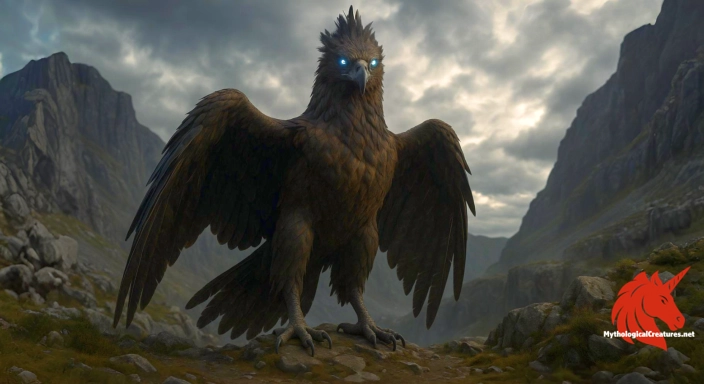
Hræsvelgr
Hræsvelgr - Hræsvelgr is a mythological jötunn whose beating wings create the winds, symbolising the raw power and unpredictability of nature in Norse mythology.
Origins & First Encounters
Hræsvelgr emerges from the depths of Norse myth as a striking embodiment of nature’s raw and untamed power. His ancient origin as a formidable jötunn, juxtaposed with the majestic shape of an eagle, creates an image that is both awe-inspiring and elemental. The very mention of his name evokes the mysterious forces of wind and change, suggesting that nature itself was once personified in this colossal being. His legend is interlaced with the fabric of early Norse cosmology, reflecting a time when the boundaries between divine and earthly phenomena were fluid and profound. The myth hints at a world where every gust of wind bore the signature of something far greater than mortal design.
The cultural context of his tale is rooted in a tradition that revered the cyclical nature of life, often associating natural forces with renewal and inevitable decay. Tales of his wingbeats stirring the elements served as metaphors for the perpetual cycle of creation and destruction. Although the earliest attestations provide but a glimpse of his full character, they leave an indelible mark on the narrative of primordial cosmic events. Today, Hræsvelgr continues to fascinate as a powerful figure representing the untamed, often dual, character of nature.
Source Texts & Tale Variants
Ancient literary sources, particularly the Prose Edda, offer some of the earliest and most evocative glimpses into Hræsvelgr’s myth. In these texts, his role as the originator of the wind is succinctly noted, hinting at a profound connection between the natural world and the cosmos. Skaldic verses further allude to his formidable presence, embedding his image within the poetic traditions of the Norse. Despite the brevity of these accounts, their impact resonates in the way they blend natural phenomena with the supernatural. These early attestations underscore how the ancients interpreted the chaos of the wind as a controlled, albeit mysterious, manifestation of divine will.
Multiple story variants emerging from oral traditions add layers of nuance to his character, each retelling colouring his myth in subtle yet significant ways. Some versions lend him an almost sentient influence over seasonal transitions, where his wingbeats coincide with the change of weather and fortunes. Other accounts emphasise his status as an elemental force beyond the reach of mortal concerns. The varied narratives illustrate a flexible tradition, one where each retelling adapts to the evolving cultural and environmental landscapes. Such a multifaceted portrayal testifies to the enduring allure of Hræsvelgr’s legend across generations.
Form & Powers
The physical depiction of Hræsvelgr is as majestic as it is enigmatic, blending the colossal presence of a giant with the keen attributes of a regal eagle. His expansive wings, rendered in myth and art, are so vast that their beating is said to command the very winds of the world. Every feather is described with an almost mystical detail, echoing storm clouds and the dance of northern lights. His eyes are imagined to shine with an ancient intensity, reflecting both the wisdom of old and the ferocity of untamed nature. The curve of his beak and the tension in his muscular form suggest a creature forged for both celestial command and earthly portent.
Artistic interpretations often embellish his form with dramatic contrasts—a fusion of light and shadow that mirrors the interplay of creation and destruction. Some depictions paint him in hues of deep midnight blue and silver, invoking the mystery of twilight skies. There is a recurring emphasis on his imposing silhouette against vast, open spaces, symbolising the immense reach of natural forces. Whether portrayed as a spectral giant or a living force of the elements, his physicality remains a potent symbol of both beauty and terror. These vivid details lend Hræsvelgr a timeless quality that continues to inspire both reverence and wonder.
Regional Faces
Across the varied regions of ancient Scandinavia, the myth of Hræsvelgr was adapted to reflect local landscapes and cultural nuances. In Icelandic lore, his image is intertwined with dramatic winter storms and the stark beauty of volcanic terrains, where every gust of wind carries a hint of mystery and warning. Norwegian traditions often merge his persona with the raw energy of rugged fjords and towering mountains, transforming natural phenomena into living narratives. Local poets and storytellers used his legend to symbolise both the caprice and the necessity of the wind, aligning him with the rhythms of seasonal change. His portrayal in these communities underscores how entwined nature and myth once were in daily life.
In regions such as Sweden and Denmark, variations in his depiction highlight different facets of his character, sometimes portraying him as a guardian at the brink of chaos. Local folkloric traditions would occasionally merge his traits with other wind deities, reflecting a syncretism that bridged regional beliefs. These adaptations not only enriched his myth but also offered communities a way to understand unpredictable weather phenomena through narrative art. The regional retellings of his story reveal a dynamic interplay between the environment and cultural expression. Through these diverse lenses, Hræsvelgr’s myth remains a vivid reminder of the power and mystery inherent in nature.
Cultural Parallels
Mythological traditions from across the globe exhibit fascinating parallels with the tale of Hræsvelgr, highlighting a shared human impulse to personify natural forces. The thunderbirds of Native American lore, for instance, echo his mighty attributes by commanding the skies and symbolising the raw power of storms. In Eastern mythologies, colossal birds that soar through turbulent skies bear similarities in their role as harbingers of both destruction and rebirth. These global archetypes underscore how diverse cultures use the imagery of grand, winged creatures to mirror the unpredictability of nature. Such motifs reveal a common symbolism that transcends geographical boundaries, uniting disparate traditions under the banner of elemental majesty.
Comparisons are also drawn between Hræsvelgr and figures like the storied Garuda, whose dual role as protector and avenger aligns with the Norse giant’s complex character. Greek mythology, too, offers echoes of this motif in the form of the eagle, a bird revered for its regal bearing and connection to the divine. Despite regional differences, these mythic beings share a profound symbolic resonance, each embodying the awe-inspiring might and mystery of the sky. Their narratives serve as cultural bridges, linking the ancient with the eternal, and the mortal with the celestial. In this light, Hræsvelgr’s myth is seen not in isolation but as part of a universal language of nature’s grand design.
Legacy & Modern Evolution
The evolution of Hræsvelgr’s myth mirrors the way ancient symbols are reborn in modern creative expressions. Over the centuries, his image has journeyed from brief mentions in archaic texts to elaborate portrayals in contemporary art and literature. His portrayal has been reshaped by each generation, reflecting changing perceptions of nature’s power and the human relationship with the environment. Modern interpretations often cast him amid tumultuous skies, his mighty wings stirring not only physical winds but also the tides of fate and fortune. In this way, his ancient identity has come to represent a timeless metaphor for both chaos and renewal in a rapidly changing world.
Today, fantasy novels, role-playing games, and digital media celebrate Hræsvelgr as an icon of elemental might and mystery. Contemporary artists draw on his storied legacy to evoke the beauty and terror of nature, ensuring that he remains a vibrant part of modern myth-making. His enduring legacy encourages a re-examination of ancient narratives, bridging the cultural gap between past and present. In a world increasingly attuned to environmental change, Hræsvelgr’s symbol as the originator of the wind continues to resonate deeply. His myth, reinterpreted yet steadfast, inspires new generations to explore the rich heritage of Norse mythology while contemplating the eternal dance of nature’s forces.
Interesting Fact
An interesting aspect of Hræsvelgr is that his very existence as an eagle generating the wind has inspired both art and literature, symbolising the formidable power of nature in a tangible form.
Reach myth fans
Connect your myth-driven brand with this audience
Our readers are writers, educators, gamers, and collectors who care about mythology. Enquire about a limited sponsor placement on creature pages.
Enquire about sponsorshipQuick Creature Info
Origin:
Features:
Associations:
Our Mythic Legendary Rating:

Also Sometimes Known As:
Habitat:
Supernatural Powers:
Physical Attributes:
Abilities:
Behavior:
Lore:
References
Discover Another Mythical Legend You May Not Have Heard Of?
Uncover the mysteries of ancient folklore and expand your knowledge of legendary beings from cultures around the world.
Dare to Meet the Glauce....
Curated by the Mythological Creatures Team
Series editor: Mythological Creatures Directory
Primary desk: Northern & European Folklore Desk
(rev. November 2025)