
Hrímnir: Hrímnir is a jötunn from Norse mythology known for his formidable giant stature and frost-associated lineage.
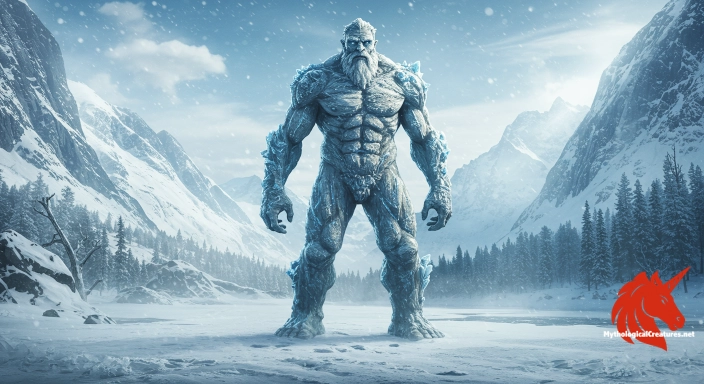
Hrímnir
Hrímnir - Represents ancient, primordial forces and the intricate dynamics between gods and giants.
Origins & First Encounters
Hrímnir is a mythological jötunn whose enigmatic presence evokes the primal power of the northern wild. His very name, echoing the Old Norse term for frost, intimates a deep connection with the icy realms of winter and the unforgiving landscape of the north. Emerging from the rich tapestry of Norse myth, he occupies a unique niche among the chaotic and primordial beings that populate ancient Scandinavian lore. The sparse references in early texts have cemented his status as a subtle yet essential component of the jötunn family, even if his narrative is not extensively developed. Notably, he is recorded as the father of Hljóð, suggesting that his lineage was viewed with a measure of reverence and mystery. His appearance in myth hints at an origin rooted in the age-old interplay between the forces of nature and the divine order. The ambiguity surrounding his character has lent Hrímnir an enduring allure, inviting scholars and enthusiasts to explore the symbolic resonance of frost and chaos. The enduring legacy of his myth encourages further interpretation, reflecting the timeless human fascination with nature's raw and unbridled power.
Source Texts & Tale Variants
The mentions of Hrímnir appear in a small number of ancient texts where his role as a jötunn is enshrouded in a veil of mystery. His presence is chiefly noted within the corpus of Old Norse literature, including selections from the Prose and Poetic Edda, where genealogical notes briefly acknowledge his existence. The scant details found in these texts have led to a variety of story variants that embellish his connection to the elemental forces of frost and winter. Some narrative traditions hint at a more active role in the cosmic struggles that feature prominently in Norse myth, while others focus solely on his role as an ancestor of other mysterious beings. The limited primary sources have meant that later interpretations and oral traditions have filled many of the gaps in his tale. Over the centuries, skaldic poetry and fragmented saga references have inspired creative reworkings of his character. These variant accounts underscore the dynamic process of myth-making in pre-Christian Scandinavia. The multiplicity of his story variants serves as a testament to the enduring flexibility and adaptability of Norse mythological tradition.
Form & Powers
Though detailed physical descriptions of Hrímnir are sparse in the ancient texts, his name alone evokes a figure shaped by the harsh elements of frost. Many interpretations suggest that he is envisioned as a towering, imposing being whose very form mirrors the cold, unyielding aspects of winter. His stature is frequently imagined as monumental, with features that evoke the raw, crystalline beauty of ice and snow. Some artistic depictions envisage his hair as reminiscent of cascading strands of frost, lending him an ethereal, almost otherworldly allure. His skin is often portrayed as pallid or even translucent, akin to frost encrusted upon ancient stone. While early literary sources offer little in the way of detailed anatomical description, later folkloric and artistic imaginations have richly adorned him with attributes that symbolise the essence of winter. His eyes, as per some poetic visions, shine with a cold luminescence that recalls the glimmer of frozen landscapes under a winter moon. These physical traits, both imagined and metaphorical, firmly associate him with the elemental forces that govern the spirit of the north.
Regional Faces
Across Scandinavia, the character of Hrímnir has been adapted and reinterpreted to reflect the regional sensibilities and climatic realities of the north. In Icelandic oral traditions, subtle variations of his myth often cast him as an integral part of the seasonal cycles, particularly those linked to the stark beauty and brutality of winter. In various local sagas, his connection to frost and the cold is emphasized, merging his identity with that of other frost giants who populate a shared mythic landscape. Some communities have portrayed him as a mystical guardian of glacial realms, where his presence is felt in the whisper of a winter wind or the sudden descent of snow. Coastal traditions have woven him into narratives where the stark contrast between the icy sea and the rugged land creates a dramatic backdrop for his legend. These regional adaptations effectively highlight the dual nature of winter as both a destructive force and a source of renewal. The nuanced local interpretations attest to the enduring impact of the harsh northern environment on the myth’s evolution. Overall, the regional plurality in his depiction reinforces the idea that ancient myths are living traditions, constantly morphing to mirror communal experiences and natural phenomena.
Cultural Parallels
In the broader context of comparative mythology, Hrímnir stands alongside other colossal figures who embody the forces of nature and primordial chaos. His association with frost and ice invites comparisons with similar giants in both Norse and other Indo-European mythologies, where elements of cold and winter often symbolise both danger and regeneration. Much like the Greek Titans, whose overwhelming power prefigured the establishment of a new order, Hrímnir and his kin represent the untamed and unpredictable aspects of the natural world. This duality—of creation intertwined with destruction—is a common thread in myths that feature elemental beings. In various Celtic and Baltic traditions, similar figures emerge as personifications of winter’s might, further connecting Hrímnir to a wider cultural milieu. These parallels offer a richer understanding of how diverse cultures harness natural phenomena within their mythic narratives. The recurring motifs of frost, chaos, and transformation echo across different mythologies, underscoring a shared human effort to make sense of nature's formidable power. Such comparative analysis not only highlights the universality of these themes but also emphasises the unique flavour that Norse myth brings to the broader landscape of legendary giants.
Legacy & Modern Evolution
While ancient records provide only fleeting references to Hrímnir, his myth has evolved significantly over time, echoing through successive generations of storytellers and artists. Early depictions were minimalistic, yet they laid the groundwork for a figure that would later come to symbolise the raw and inexorable power of winter. In more recent centuries, creative reinterpretations have expanded his persona, intertwining him with broader themes of environmental change and the eternal struggle between order and chaos. Modern adaptations, particularly in fantasy literature and visual arts, often cast him in roles that highlight his elemental connection with nature, reflecting contemporary concerns about the natural world. His symbolic presence has inspired a range of representations, from subtle literary allusions to vivid, dramatic portrayals in comics and films. As scholars have revisited Norse mythology, Hrímnir’s once-obscure narrative has been re-examined as an integral part of the mythic panorama that addresses the complexities of cosmic and natural order. This shift in perception showcases a broader trend of reimagining ancient deities and beings to resonate with modern audiences. Today, Hrímnir serves as a bridge between the ancestral past and contemporary myth-making, affirming the timeless appeal and evolving legacy of Norse lore.
Interesting Fact
An intriguing aspect of Hrímnir's myth is his minimal mention in sources, which sparks modern scholarly interest in the hidden narratives of the Norse giants.
Support the directory
Promote your myth project and fund more research
Sponsor placements help keep this directory growing and free to use while giving your work a focused, relevant audience.
Learn how sponsorship worksQuick Creature Info
Origin:
Features:
Associations:
Our Mythic Legendary Rating:

Habitat:
Supernatural Powers:
Physical Attributes:
Abilities:
Behavior:
Lore:
Related Creatures, Tales or Lore
- YYmir
- BBergelmir
- TThiazi
References
Discover Another Mythical Legend You May Not Have Heard Of?
Uncover the mysteries of ancient folklore and expand your knowledge of legendary beings from cultures around the world.
Dare to Meet the Agrat bat Mahlat....

Curated by the Mythological Creatures Team
Series editor: Mythological Creatures Directory
Primary desk: Northern & European Folklore Desk
(rev. November 2025)