
Jack o' Kent: Jack o' Kent is a legendary English and Welsh folkloric figure renowned for his cleverness and magical prowess.
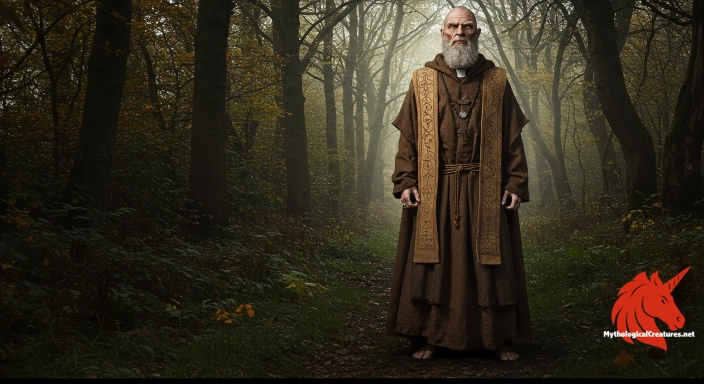
Jack o' Kent
Jack o' Kent - His legends serve to explain the origin of local geological formations and reflect cultural resistance against demonic forces.
Origins & First Encounters
Jack o' Kent, an enigmatic figure from the Welsh Marches, is celebrated in both English and Welsh folklore for his cunning and charm. His origins are shrouded in mystery, with early attestations blending clerical and wizard-like attributes that reflect the cultural interplay between the spiritual and supernatural. The character emerged as a symbol of defiance against malevolent forces, frequently besting the Devil in wagers and contests of wit. His legend is deeply interwoven with the rugged landscapes of Herefordshire and Monmouthshire, where natural formations are often ascribed to the consequences of his supernatural escapades. Stories of his exploits served both as engaging entertainment and as a means to impart moral lessons within local communities. Over time, Jack o' Kent evolved from a shadowy figure recounted in oral tradition into a cultural icon who embodies resilience and resourcefulness. His dual portrayal as both a cleric and a wizard invited diverse interpretations, appealing to a wide range of social and spiritual sensibilities. The enduring appeal of his myth continues to captivate audiences, reflecting the timeless struggle between wit and wickedness, and cementing his place in the folklore of the region.
Source Texts & Tale Variants
A diverse array of local manuscripts, chapbooks, and oral histories contribute to the multifaceted narrative of Jack o' Kent. His adventures have been preserved in numerous traditional ballads and anecdotal recitations, with each source adding new dimensions to his profile. Some accounts present him as a sagacious cleric well-versed in arcane lore, while others highlight his roguish flair and readiness to engage in playful battles with the Devil. Variants of his tale appear in both written folk compilations and sporadic narrative fragments passed down through generations. These assorted sources reflect the adaptability of his myth, as communities moulded his story to inspire moral lessons and to entertain. Local storytellers often imbued his exploits with humour and cunning, reinforcing the motif of a clever underdog triumphing over dark forces. The fluidity of his narrative is evidenced by the differences in detail among regional accounts, where even minor elements may vary significantly. Such multiplicity in sources underscores the organic evolution of his legend, ensuring that each retelling resonates with contemporary audiences. The ongoing reinterpretation of these texts continues to highlight the character’s appeal as a symbol of human ingenuity over adversity.
Form & Powers
Physical descriptions of Jack o' Kent are as mutable as the tales that recount his deeds, interweaving elements of the earthly with the otherworldly. He is often envisioned with a wily glint in his eye and a half-smile that hints at both mischief and wisdom. Traditional portrayals frequently dress him in robes that defy easy categorisation, oscillating between the formal vestments of a cleric and the flowing attire of a wizard. His face is said to bear the marks of time and travel, with creases and a beard that evoke both experience and a hint of the magical. Some narratives feature him wearing a pointed hat or a hood, emblematic of his unconventional status as a confidant of the supernatural. The choice of his attire is often accented by subtle symbols or runes, which may serve as protective talismans or marks of his esoteric prowess. Illustrations and local descriptions alike suggest an agile figure, quick to manoeuvre both in physical space and in contests of wit. Variations in his depiction—whether lean and sprightly or more robust and imposing—reflect the adaptability of his character across different accounts. These diverse portrayals underscore his role as a liminal figure who bridges the conventional and the mystical. As such, his visual representation remains an evolving canvas that adapts to the imaginative needs of his audience.
Regional Faces
The legendary narrative of Jack o' Kent is deeply embedded in the distinct cultural landscapes of Herefordshire and Monmouthshire. In Herefordshire, his exploits are frequently recounted with a humorous twist, showcasing him as a practical trickster whose wits consistently outshine the influences of darker forces. Conversely, tales from Monmouthshire tend to infuse his character with a more mystical quality, highlighting connections to ancient druidic lore and the enigmatic traditions of the land. The local geography plays an important role in his legend, with various peculiar rock formations and natural features attributed to his supernatural interventions. These natural landmarks are not only physical markers but also serve as narrative anchors that remind communities of their rich mythological heritage. The regional variations in his story underscore the adaptability of his character to reflect local values and historical contexts. Different communities have tailored his myth to express sentiments of defiance, resilience, and the triumph of cleverness over malevolence. Such regional adaptations have ensured that his character remains intertwined with the cultural identity of the borderlands. Despite the nuanced differences, a common thread of playful yet profound defiance against the infernal is maintained throughout. This dynamic interplay between local flavour and overarching myth makes Jack o' Kent a unique symbol in both English and Welsh traditions.
Cultural Parallels
Jack o' Kent shares striking similarities with a host of trickster figures found in various cultural traditions, all of whom engage in clever contests against otherworldly adversaries. His repeated successes over the Devil evoke the themes present in the European Faust tradition, where intellect and cunning trump diabolical powers. Comparable figures in folklore around the globe embody the archetype of the clever underdog, whose victories offer both satire and moral insight. His dual identity as either a cleric or wizard positions him alongside other ambiguous characters who straddle the realms of the sacred and the profane. The duality inherent in his character is reflected in tales from British, Germanic, and even Mediterranean traditions, where everyday heroes manage to subvert the odds through intelligence alone. Much like other prominent trickster figures, Jack o' Kent’s adventures serve as allegories for the human battle against seemingly overwhelming forces. The interplay of wit and supernatural challenge in his stories has positioned him as a touchstone for discussions about the nature of power, morality, and destiny. These cultural parallels provide a broader context that enriches the understanding of his myth. They underscore a universally resonant narrative in which the underdog’s cleverness is a force capable of turning the tides of fate. This shared motif across traditions ensures that his legend is part of a wider dialogue about human resilience and ingenuity.
Legacy & Modern Evolution
Over the centuries, the myth of Jack o' Kent has undergone a fascinating transformation, evolving from a shadowed folkloric figure into a celebrated emblem of regional heritage. Early depictions that accentuated his knack for besting the Devil have given way to modern reinterpretations that highlight themes of defiance, wit, and the triumph of the human spirit. The character is now a fixture in local literature, theatre, and art, where his exploits continue to inspire creative reinterpretation and community pride. Contemporary festivals in Herefordshire and Monmouthshire frequently feature re-enactments and artistic tributes, integrating his legend into the broader narrative of regional identity. Modern adaptations reimagine him as a trickster hero whose clever maneuvers symbolise an ongoing struggle against societal and supernatural challenges. His legacy has also played a key role in the conservation of local myths, with natural landmarks purportedly linked to his adventures becoming celebrated cultural icons. Creative endeavours such as plays, stories, and visual arts often draw on his dual nature as both cleric and wizard, illustrating his timeless appeal. As communities continue to honour his myth, Jack o' Kent serves not only as a portal to ancient traditions but also as a source of inspiration for addressing contemporary challenges. His persistent presence in folklore and popular culture underscores the enduring power of myth to bridge the past with the present. In doing so, he reminds us that legends, much like the landscapes they inhabit, are ever-evolving symbols of human creativity and resilience.
Interesting Fact
An interesting observation is that Jack o' Kent's legendary contests with the Devil continue to influence local cultural identity and even shape the interpretation of natural landmarks in the region.
For indie creators
Give your myth project a permanent home
Indie authors, artists, small studios, and makers can secure an annual, non-intrusive sponsor slot that meets readers where they explore.
Obtain more informationQuick Creature Info
Features:
Our Mythic Legendary Rating:

Also Sometimes Known As:
Habitat:
Supernatural Powers:
Physical Attributes:
Abilities:
Behavior:
Lore:
Related Creatures, Tales or Lore
- JJack the Giant Killer
- SStingy Jack
- RRobin Goodfellow
References
Discover Another Mythical Legend You May Not Have Heard Of?
Uncover the mysteries of ancient folklore and expand your knowledge of legendary beings from cultures around the world.
Dare to Meet the Fuzhu....
Curated by the Mythological Creatures Team
Series editor: Mythological Creatures Directory
Primary desk: Northern & European Folklore Desk
(rev. November 2025)