
Jack o' Legs: Jack o' Legs is a giant from Hertfordshire, England, celebrated in local folklore.
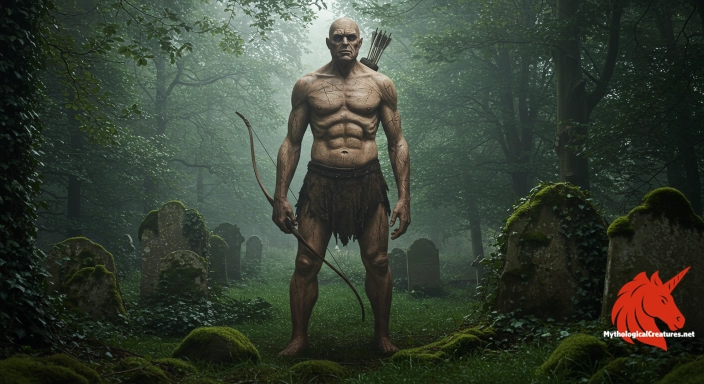
Jack o' Legs
Jack o' Legs - Represents the archetype of the benevolent outlaw who uses his might to aid the less fortunate, embodying themes of social justice and rebellion against tyranny.
Origins & First Encounters
Jack o' Legs emerges from the mists of Hertfordshire folklore as a legendary giant whose exploits have enchanted local communities for centuries. His origins are rooted in the oral traditions of a region rich in myth and history, where tales of heroic defiance and supernatural might have flourished. He is celebrated not only for his imposing stature but also for his reputed skill as an archer, evoking an intriguing parallel with figures like Robin Hood. His myth encapsulates the spirit of resistance against wealth and authority, as he is said to have robbed the rich to relieve the burdens of the poor. Early references to his story were woven into local ballads and community lore, suggesting that his legend was handed down through generations long before being recorded in any formal document. The narrative of his life is intermingled with the natural landscape of Hertfordshire, where every hill and wood might hide echoes of his past adventures. Local church records and inscriptions, such as the reputed grave at Holy Trinity Church in Weston, add a tangible element to the myth. His tale mirrors the dualities of might and compassion, embodying both fearsome strength and a deep sense of justice. Over time, his legend has become a symbol of local identity and resilience, reflecting the enduring appeal of characters who challenge societal norms. The cultural significance of Jack o' Legs continues to resonate, inviting new generations to rediscover the rich tapestry of English folklore.
Source Texts & Tale Variants
The story of Jack o' Legs has been preserved in a mosaic of local sources that include oral traditions, parish records, and rustic ballads. Early versions of his tale appear sporadically in medieval manuscripts and church documents, though these accounts vary in detail and emphasis. Several local records hint at his role as an archer with an undercurrent of social justice, drawing a subtle connection with broader outlaw traditions. Folkloric ballads recounted by rural storytellers have embellished his feats, suggesting that his legend was as much a tool for community bonding as it was entertainment. Over the centuries, the narrative has been reshaped by different storytellers, each adding layers to his character through variations in motive and deed. Some accounts stress his supernatural size, while others highlight his cunning and generosity. A few later retellings, compiled during the 18th and 19th centuries, have sought to bridge the gap between myth and historical reality. Despite the scarcity of a single definitive source, these diverse variants collectively contribute to a rich cultural mosaic that celebrates his heroic legacy. The multilayered sources reflect the dynamic interplay between tradition, local history, and evolving cultural values.
Form & Powers
Physical descriptions of Jack o' Legs are as grand and varied as his legendary exploits, painting him as a towering figure whose very presence inspires awe. He is often portrayed as an imposing giant with remarkably long legs, a feature that not only defines his name but also symbolises his unique mobility and grace. His body is said to possess enormous strength, with broad shoulders and muscular arms that bespeak years of heroic struggle and battle. Many accounts highlight his rugged facial features, including a determined gaze and weathered skin marked by the trials of a storied life. Artistic renditions over the years have captured him in rustic attire, blending the rough simplicity of a folk hero with the grandeur typical of mythic giants. His eyes are sometimes depicted as sparkling with both mischief and wisdom, suggesting a character complex enough to combine brute power with a sharp intellect. Descriptions in local lore often emphasise not just his size, but the agility with which he wielded his bow—a rare blend of might and precision seldom seen in giants. The interplay between physical might and an agile, almost graceful form has made him a favourite subject among folk artists and historians alike. This blend of exaggerated physical traits with human-like qualities cements his status as a figure who straddles the realms of myth and man. Such detailed portrayals have helped maintain his presence in local memory and cultural representations through the ages.
Regional Faces
The legend of Jack o' Legs has been adapted and reinterpreted across various corners of England, with each regional variant adding its own nuances to the original story. In Hertfordshire, his tale remains closely tied to the local landscape and community identity, while in neighbouring counties, his exploits are sometimes merged with local folklore of woodland spirits and heroic outlaws. Some regions portray him with a playful, almost mischievous side that contrasts with his otherwise formidable physical presence. Variations in his story often reflect regional histories—such as the importance of archery and longbow traditions in areas where local militias once played critical roles in defence. Local adaptations frequently imbue him with additional supernatural elements, suggesting that his powers were linked to the very earth of the region. In a few retellings, his interventions in local conflicts are woven into broader narratives of community survival and resistance against oppression. The depiction of his grave in the churchyard of Holy Trinity Church in Weston becomes a focal point for regional pilgrimages and local celebrations. These regional differences illustrate how a foundational myth can be tailored to reflect the values, struggles, and historical experiences of different communities. Such adaptations have ensured that his story remains vibrantly alive, echoing the unique cultural traditions of each locality while preserving the core tenets of his legend.
Cultural Parallels
Jack o' Legs occupies a space in folklore that invites comparison with a range of cross-cultural mythic figures known for their defiance and generosity. Much like the storied Robin Hood, he is depicted as an archer who used his prodigious skill to subvert a corrupt social order, although his giant stature adds an extra layer of mythic grandeur. Similar to mythical giants in Celtic and Norse traditions, his extraordinary physical characteristics highlight a fusion of human endeavour and superhuman capabilities. In British folklore, figures such as Gogmagog also personify the idea of ancient beings whose legacies are woven into the national consciousness, making Jack o' Legs a local embodiment of this broader archetype. His narrative harmonises the motifs of the benevolent rebel and the mighty giant, bridging the gap between heroic folklore and the celebration of communal justice. In several European traditions, heroes with remarkable archery skills are revered as both protectors and symbols of equality, a theme that appears strongly in his legend. Comparative analysis reveals that his character serves as a metaphor for the triumph of the underdog, a common thread in many mythologies. This alignment with universal themes of resistance and fair play positions him alongside other culturally significant heroes whose stories have transcended borders. The parallels extend to the use of natural landscapes as integral components of their legends, underscoring a shared human connection to the land. Overall, Jack o' Legs stands as a fascinating example of how regional myths can mirror and contribute to a broader, cross-cultural narrative about justice and heroism.
Legacy & Modern Evolution
Over the centuries, the depictions of Jack o' Legs have evolved to mirror shifts in societal values and cultural narratives. Initially revered as a mythic giant and heroic archer, his image has gradually been reinterpreted through the lens of emerging social ideals and modern storytelling techniques. Early folklore celebrated his physical might and audacious defiance, while later renditions have begun to highlight the deeper symbolic significance of his actions. In contemporary contexts, he is often seen as a champion of the oppressed, with his exploits resonating in modern narratives of equality and justice. His reputed grave at Holy Trinity Church in Weston has become a site of cultural memory, drawing visitors who wish to connect with a tangible piece of local myth. Modern literature and community festivals have embraced his legend, transforming him into an enduring symbol of regional pride and resilience. The reinterpretation of his character in modern media reveals a continual process of reinvention, where ancient traditions meet contemporary issues. Scholars and local historians frequently discuss his narrative as an example of how myth adapts to the changing needs of a community. The evolution of Jack o' Legs’ legend underscores the timeless appeal of stories that celebrate the triumph of the human (or superhuman) spirit against adversity. His legacy continues to inspire reinterpretation and celebration, ensuring that the myth remains a vibrant part of both historical discourse and modern cultural identity.
Interesting Fact
An intriguing aspect of his legend is that his name, 'Jack o' Legs', hints at an extraordinary physical trait—possibly his exceptionally long legs—which may have contributed to his formidable reputation.
Advertising opportunity
Showcase your mythology project
We offer limited sponsor placements for books, courses, games, and creators aligned with our audience.
View partnership optionsQuick Creature Info
Origin:
Features:
Our Mythic Legendary Rating:

Also Sometimes Known As:
Habitat:
Supernatural Powers:
Physical Attributes:
Abilities:
Behavior:
Lore:
Related Creatures, Tales or Lore
- JJack the Giant Killer
- GGogmagog
- PPaul Bunyan
References
Discover Another Mythical Legend You May Not Have Heard Of?
Uncover the mysteries of ancient folklore and expand your knowledge of legendary beings from cultures around the world.
Dare to Meet the Ved....
-a5004157-5283-4616-b271-2a0970b94fb2_small.webp "Depiction of Ved")
Curated by the Mythological Creatures Team
Series editor: Mythological Creatures Directory
Primary desk: Northern & European Folklore Desk
(rev. November 2025)