
Jorōgumo: Jorōgumo is a Japanese yōkai known for its dual nature as both a beautiful woman and a monstrous spider.

Jorōgumo
Jorōgumo - Jorōgumo serves as a symbol of deceptive beauty and the potential danger lurking beneath alluring surfaces in folklore.
Origins & First Encounters
The Jorōgumo is a captivating and enigmatic figure in Japanese folklore, renowned for its eerie ability to transform from a terrifying spider into a beguiling human woman. Born from the rich tapestry of yōkai legends, its myth traces back to the Edo period when supernatural creatures inspired both fear and fascination among the people. Early depictions, particularly in classical artworks, reveal a creature that embodies the duality of beauty and danger. The very name of the Jorōgumo hints at its paradoxical nature, combining the allure of femininity with the lethal characteristics of a spider.
This mythic being is often portrayed as weaving intricate webs not only of silk but also of fate, ensnaring those who unwittingly cross its path. Its transformation into a seductive woman belies an inner savagery, invoking themes of deception and inevitable doom. The elegant yet menacing images associated with the Jorōgumo highlight a deep cultural fascination with entities that blur the line between human and monster. Over the centuries, its legend has been interwoven with societal warnings and allegories, ensuring that the creature remains an enduring symbol within Japanese culture. This blend of beauty and menace, mystery and mortality, makes the Jorōgumo a perennial subject of both horror and admiration.
Source Texts & Tale Variants
The primary artistic and literary record of the Jorōgumo can be traced to the Edo period, with seminal works such as Toriyama Sekien’s Gazu Hyakki Yagyō providing one of the earliest and most influential depictions. This classic compendium of yōkai has served as a crucial source for subsequent interpretations, infusing the creature with a lasting visual and narrative legacy. Over time, various illustrated scrolls, folklore collections, and written accounts have added layers of complexity to its story, each offering differing nuances in character and intent. Complementary oral traditions have also played a significant role, with local storytellers blending regional colour with established mythic motifs.
Later literary compilations and modern retellings have further enriched the narrative tapestry of the Jorōgumo. Contemporary authors and graphic artists continue to reinterpret its terrifying yet alluring nature, often integrating subtle variations to suit modern tastes. Some texts emphasise its role as a seductress who ensnares unwary souls, while others depict it as a tragic figure caught between worlds. This convergence of art, literature, and oral history ensures that the myth of the Jorōgumo remains a vibrant and continually evolving facet of Japanese folklore. Its enduring presence in both classical sources and modern media reinforces its place as an emblem of the mysterious and the arcane.
Form & Powers
The Jorōgumo is typically conjured in the mind’s eye as possessing the graceful appearance of a beautiful woman, artfully contrasted with distinctly arachnid features that betray its true nature. Many depictions begin with an elegant human form, complete with alluring eyes and a calm, almost entrancing smile, before gradually revealing subtle hints of spidery attributes. In moments of transformation, delicate strands of silk and fragmented limbs suggest the looming presence of a monstrous spider beneath the fleshly disguise. Such portrayals often balance ethereal beauty with grotesque detail, illustrating a creature permanently perched between charm and horror.
Visual representations sometimes include elongated, almost imperceptible legs that emerge from beneath flowing garments, infusing the character with a disturbing duality. Illustrations by Edo-period artists capture the spark of supernatural fire in the eyes or even the emanation of small, fiery spiders that serve as its minions. Variations in size and form have been noted over time, with some accounts suggesting a modest human frame that conceals an immense predatory strength. The blend of soft human features with the unmistakable geometry of a spider’s form creates a surreal, unnerving image that haunts the collective imagination. Every detail—from the texture of its skin to the intricate patterning implied in its webbed motifs—serves to emphasise both its allure and the lurking danger within.
Regional Faces
Across Japan, the myth of the Jorōgumo has absorbed distinctive local flavours that reflect the unique cultural and environmental influences of each region. In western areas, particularly around Kyushu, local lore often casts the creature as a denizen of dense forests and riverbanks, where its presence is interwoven with legends of natural spirits and ancient rituals. In these regions, the narrative may portray it as a guardian of secluded, untouched wilderness, blending seamlessly with indigenous beliefs about nature’s mysteries. Meanwhile, urban legends in more populous areas sometimes reimagine the creature within decaying temples or shadowed backstreets, invoking the ghostly remnants of a bygone era.
Some local traditions further embellish the Jorōgumo with additional supernatural traits, such as an ethereal glow or ephemeral spectral qualities that heighten its otherworldliness. In rural villages, elders recount tales where the creature’s seductive guise masks a relentless predator intent on ensnaring lone travellers. These regional adaptations not only demonstrate the versatility of the myth but also highlight how varying community values and fears shape its portrayal. Local festivals or seasonal rites occasionally incorporate symbols of the Jorōgumo to warn of hidden dangers amidst deceptively serene landscapes. Such diverse regional interpretations ensure that, while the core elements remain recognisable, each version offers a fresh, context-specific insight into its legend.
Cultural Parallels
The motif of a shapeshifting seductress is one that resonates in myths across a wide span of cultures, and the Jorōgumo occupies a distinctive niche within this broader tradition. Much like the transformative prowess of the kitsune or the enigmatic huli jing of Chinese lore, the Jorōgumo utilises beauty as a veil for treachery, luring its victims with an irresistible charm. Intriguingly, echoes of this dual nature can also be found in the ancient Greek tale of Arachne, where the transformation into a spider symbolises punishment and metamorphosis. This comparison underscores a cross-cultural preoccupation with the perilous interplay between allure and the animalistic. The recurring theme of a dangerous femme fatale, then, bridges Eastern and Western mythic narratives, inviting a comparative analysis of how different societies conceptualise deceptive beauty.
Moreover, European legends of seductive spirits and vengeful sirens bear a striking resemblance to the thematic essence of the Jorōgumo. These figures, too, are celebrated for both their captivating allure and their ominous capacity to spell doom for those they bewitch. The interplay between femininity and ferocity is a universal trope, with each culture adapting the narrative to echo its own social taboos and moral lessons. Emphasising the tension between appearance and reality, such myths serve as a timeless reminder of the complexities inherent in both human nature and the natural world. Through these cultural comparisons, the Jorōgumo emerges not only as a singular entity but also as a part of a broader tapestry of mythical seductresses whose legacies endure across time and space.
Legacy & Modern Evolution
The evolution of the Jorōgumo from classical folklore to its present-day reinterpretations illustrates a fascinating interplay between tradition and modernity. Historically, the creature was immortalised through detailed woodblock prints, dramatic oral narratives, and cautionary tales that vividly captured its terrifying yet seductive essence. As Japan modernised, the Jorōgumo underwent a gradual transformation, finding new expression in literature, film, and other popular media. Its image has become a malleable symbol, capable of embodying both ancient dread and contemporary concerns about identity and deception.
In the digital era, the myth has experienced a resurgence across manga, anime, and even video games, where its blend of beauty and menace continues to inspire and terrify audiences. Modern interpretations often highlight her as a complex character, sometimes blurring the lines between predator and tragic anti-heroine who is as much a victim of her circumstances as an agent of doom. Even in scientific circles, the nomenclature of the Jorōgumo has found a place, as entomologists have appropriated the term to refer to the visually striking Trichonephila clavata. This evolution in symbolism—from a fearsome yokai in folkloric texts to an emblem of creative reinterpretation in contemporary culture—demonstrates the myth’s adaptability and enduring resonance. Ever adaptable and rich in allegorical potential, the modern legacy of the Jorōgumo serves as a bridge between the mysticism of the past and the narrative complexities of the present.
Interesting Fact
An intriguing aspect of Jorōgumo is the dual interpretation of its name in Japanese, where the same word can imply both an 'entangling newlywed woman' and a 'woman-spider', reflecting its complex cultural symbolism.
Partner with Mythological Creatures
Bring your myth-based world into ours
From game settings to narrative worlds, we work with partners who treat myths with care. Share your project for a potential sponsor slot.
Partner with usQuick Creature Info
Features:
Associations:
Our Mythic Legendary Rating:

Also Sometimes Known As:
Habitat:
Supernatural Powers:
Physical Attributes:
Abilities:
Behavior:
Lore:
Related Creatures, Tales or Lore
References
Discover Another Mythical Legend You May Not Have Heard Of?
Uncover the mysteries of ancient folklore and expand your knowledge of legendary beings from cultures around the world.
Dare to Meet the Vadleány....
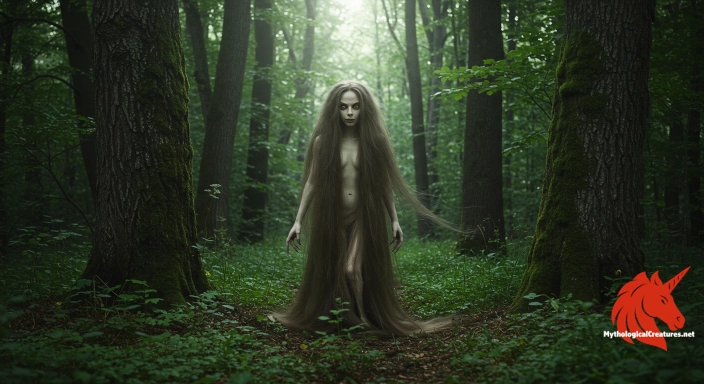
Curated by the Mythological Creatures Team
Series editor: Mythological Creatures Directory
Primary desk: Asian & Pacific Myth Cycles Desk
(rev. November 2025)