
Lailoken: Lailoken, also known as Merlyn Sylvester, was a semi-legendary wild man and prophet from the Caledonian Forest of late 6th century Scotland.
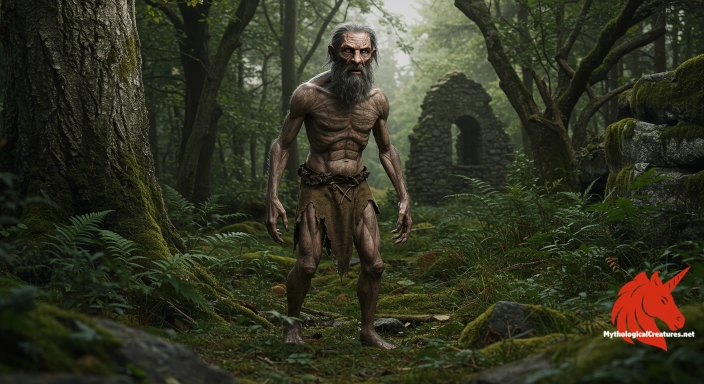
Lailoken
Lailoken - Known for his accurate prophecies, including foretelling the death of King Rhydderch Hael, and his association with the figure of Merlin in Arthurian lore.
the legend in five swipes.
the legend in five swipes.
Where does the story of Lailoken begin?
Lailoken emerges from the mists of early British lore as a figure of profound complexity and intrigue. Hailing from the wild expanses of the Caledonian Forest in the late 6th century, he is remembered as much for his prophetic declarations as for his apparent descent into madness. His early mention in the Life of Saint Kentigern sets the stage for a life that straddles the boundary between divine foresight and the unpredictability of a tormented soul. Growing up on the fringes of a rapidly evolving civilisation, his existence encapsulated the collision of untamed nature with the structured domains of early medieval society. His uncanny ability to foretell events, such as the death of King Rhydderch Hael, earned him both reverence and fear among his contemporaries. Over time, the essence of his character evolved into that of a wild prophet, whose life story challenges conventional narratives of wisdom and insanity. His enduring legend reflects the ancient tension between nature and civilisation, as well as the timeless human quest for understanding beyond rational confines. The tale of Lailoken continues to resonate as a symbol of the enigmatic interplay between madness and the divine gift of prophecy.
How did the story of Lailoken change over time?
The earliest written records introduce Lailoken in texts that capture the intersection of legend and history. One of the primary sources, the Life of Saint Kentigern, alludes to him as a somewhat derided seer known as Laleocen, thereby hinting at his dual status as both a madman and a divine prophet. A later narrative, emerging in the late 15th century, intriguingly names him Merlynum and interweaves his fate with that of Saint Kentigern. Further traditions, particularly in Welsh verse, refer to variations of his name such as Llallogan, a diminutive that suggests familiarity and titular honour. These disparate sources collectively present a multifaceted image of a man whose identity was reshaped by the oral traditions of different communities. Each manuscript and folk account contributes subtle variations to his story, reflecting the dynamic nature of myth-making in early medieval Britain. The evolution in his appellations across these texts underscores a broader tradition of fluid legendary identities. Overall, the mosaic of primary sources not only cements Lailoken’s place in the historical imagination but also invites ongoing reassessment of his role as both a mad seer and a cultural symbol.
Lailoken: Physical Form and Supernatural Powers
The scant direct accounts of Lailoken’s appearance leave much to the imaginative reconstruction of later storytellers and artists. Yet, the enduring picture that emerges is that of a wild, rugged individual shaped by a life in the untamed forest. He is often envisaged with unkempt hair and a dishevelled beard, features that mirror the harsh reality of life among ancient woodlands. Observers have described him as possessing eyes that burn with both visionary insight and the shadow of madness. His clothing, if it can be called that, is portrayed as rudimentary and utilitarian, often fashioned from animal skins and simple fabrics, symbolising his detachment from the refined circles of early society. Variations in depictions suggest a lean and sinewy figure, as if his body were honed by the constant struggles against the elements. Artists over the centuries have imbued him with a presence that is both commanding and eerily otherworldly, balancing the ruggedness of his physical form with the spectral quality of his prophetic reputation. Such portrayals ensure that Lailoken’s physicality remains as enigmatic and mutable as the man himself.
Lailoken: One Legend, Many Local Versions
Across different regions, Lailoken’s legend has absorbed distinctly local flavours that reflect the cultures from which the tales sprang. In southern Scotland, his association with the Caledonian Forest imbues him with the spirit of a land where nature remains both vast and mysterious. Local narratives in the Kingdom of Strathclyde highlight his role as a wild figure whose prophetic talents were intertwined with the fate of regional rulers. In Wales, the proximity in character to Myrddin Wyllt evolves his image further, merging strands of prophecy with emerging Arthurian traditions. Some regional traditions cast him as a tormented soul whose descent into madness is both a personal tragedy and a reflection of societal discord. Diverse local adaptations have tailored his story to match the unique challenges and beliefs of each community, from the battle-scarred highlands to the misty valleys bordering ancient forests. The multiplicity of these accounts reinforces the idea that Lailoken’s essence was adaptable enough to be embraced by various cultural narratives. Ultimately, his legend serves as a unifying thread that, despite regional disparities, underscores universal themes of isolation, wisdom, and the delicate balance between order and chaos.
What figures resemble Lailoken?
Examining Lailoken alongside figures from other mythological traditions reveals a compelling tapestry of the wild prophet archetype. His early character bears a striking resemblance to the Welsh Myrddin Wyllt, whose transformation into the more refined Merlin underscores a shared motif of prophetic madness. Like other seers scattered throughout world mythology, Lailoken embodies the paradox of profound insight paired with an apparent estrangement from conventional society. Comparisons can be drawn with shamanistic figures and wise hermits who serve as conduits between the tangible world and a realm of divine mystery. His portrayal as both a madman and a visionary positions him within a broader narrative tradition that values the unpredictable nature of prophetic insight. Similar archetypes, whether in European, Eastern, or indigenous cultures, echo the motif of a solitary figure whose communion with nature reveals truths hidden from the everyday mind. The cross-cultural analysis of such figures consolidates an understanding of Lailoken’s place in a universal mythic framework that explores the fine line between genius and insanity. His enduring resonance across disparate traditions serves to highlight the rich, interwoven fabric of human belief about the limits of human perception and the mysteries of destiny.
The Lasting Influence of Lailoken
Over the centuries, the transformation of Lailoken’s legend mirrors humanity’s evolving relationship with myth and history. Once regarded as a mere mad prophet wandering the ancient woodlands, his narrative now occupies a revered place within Celtic and Arthurian lore. His journey from a wild, outcast seer to a figure akin to the renowned Merlin underscores the dynamic evolution of myth in response to cultural change. Modern interpretations have recast him in a variety of lights—from a tragic hero burdened by unearthly visions to a rugged symbol of nature’s ineffable power. Contemporary artists and writers continue to find inspiration in his enigmatic tale, using his image to explore themes of environmental decay, personal alienation, and the mysticism of the natural world. His story consistently challenges modern audiences to question the boundaries between sanity and vision, human civilisation and the raw forces of nature. As academic and popular media increasingly draw on his myth, Lailoken’s legacy serves as a reminder of the timeless allure of characters born from the interplay of history and imagination. His continued presence in literature and art ensures that the ancient voice of the forest remains a poignant allegory for the enduring mystery of prophetic insight.
Interesting Fact
An intriguing aspect of Lailoken's legend is his identification with Myrddin Wyllt, making him a prototype for the later figure of Merlin in Arthurian lore.
Mythological Treasures
Greek Myths: A field guide to the monsters of ancient Greece
Every monster here earned its place in legend, and each gets a full page of artwork and the story behind it.
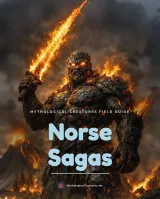
Norse Sagas: A field guide to the beasts of the Viking world
Drawn from the saga accounts themselves, with the powers, weaknesses and doom of each being set out.
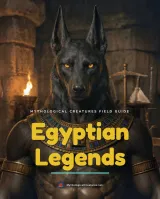
Egyptian Legends: A field guide to the gods and monsters of ancient Egypt
Guardians of the living and devourers of the dead, with the role each played in judgement.
the legend in five swipes.
Reach myth fans
Connect your myth-driven brand with this audience
Our readers are writers, educators, gamers, and collectors who care about mythology. Enquire about a limited sponsor placement on creature pages.
Enquire about sponsorshipQuick Creature Info
Features:
Associations:
Our Mythic Legendary Rating:

Also Sometimes Known As:
Habitat:
Supernatural Powers:
Physical Attributes:
Abilities:
Behavior:
Weaknesses:
Lore:
Related Creatures, Tales or Lore
- MMerlin
- MMyrddin Wyllt
- TTaliesin
References
Discover Another Mythical Legend You May Not Have Heard Of?
Uncover the mysteries of ancient folklore and expand your knowledge of legendary beings from cultures around the world.
Dare to Meet the Ajatar....
The Mythological Creatures Book Series
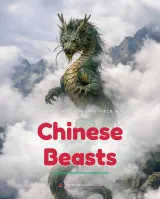
Yokai, Greek, Norse, Egyptian & Chinese. Five illustrated field guides to the creatures the old stories either warned or told you about.
Curated by the Mythological Creatures Team
Series editor: Mythological Creatures Directory
Primary desk: Northern & European Folklore Desk
(rev. November 2025)