
Limokon: The Limokon is a mythological omen bird from Philippine folklore, celebrated for its striking green and white plumage accented by red feet and beak.
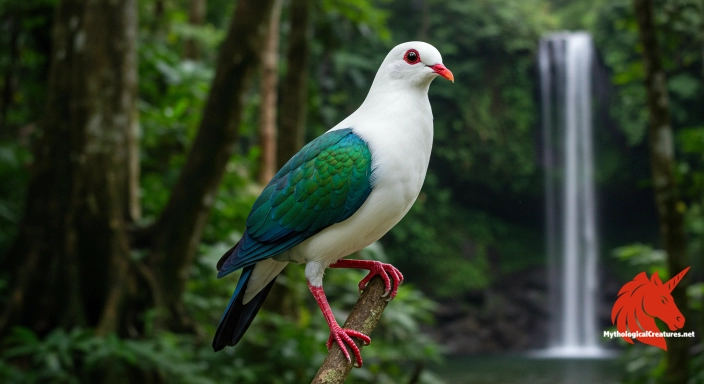
Limokon
Limokon - Regarded as a harbinger of significant events, the Limokon carries deep mystical and cultural symbolism among various Filipino ethnic groups.
the legend in five swipes.
the legend in five swipes.
The Origin Story of the Limokon
Limokon emerges as a captivating and enigmatic figure in Philippine mythology, celebrated particularly among the indigenous peoples of Mindanao. Its origins are deeply embedded in the ancient oral traditions of the Mandaya, Bagobo, and Manobo communities, where it was seen as a potent omen. This bird first appeared in local narratives that blended natural observation with spiritual significance, marking it as an essential harbinger of change. Its presence in myth speaks to a long-standing belief in nature’s ability to forewarn of impending events. The symbolism of the Limokon extends beyond mere appearance, encapsulating a bridge between the material and the mystical realms. Intricate rituals and cultural practices arose around the interpretation of its sightings, which were believed to carry messages from the divine. The enchanting qualities of the bird have made it a focal point for stories that intertwine beauty with portentous mystery. Its enduring legacy is highlighted by its continuous reinterpretation in both traditional lore and modern myth, where its role as a messenger of fate remains central.
Limokon: Manuscripts, Texts and Variants
One of the earliest recorded mentions of the Limokon can be found in Delgado’s Historia, where its unique physical traits and symbolic nature are vividly described. In this account, the bird is portrayed as resembling a large quail with striking red feet and a beak, attributes that immediately set it apart. The text further details its captivating green plumage accentuated by a contrasting white background, which adds to its mystical allure. Oral traditions among various Filipino groups have since enriched this narrative, offering variations that cast the Limokon as a vital omen. Multiple versions of the story have surfaced over time, each influenced by regional linguistic and cultural nuances. These differing accounts underscore a deep-seated belief in the bird’s magical properties and its role in alerting communities to transformative events. The combination of literary documentation and vibrant folk recounting has crafted a complex portrait of the Limokon. Ultimately, these diverse sources coalesce to form a rich, multi-dimensional myth that continues to inspire and intrigue.
What was the Limokon believed to be capable of?
The Limokon is described as an avian marvel, boasting a harmonious blend of colours and distinctive markings that render it truly unforgettable. Its body is typically adorned with a lustrous green sheen that stands out vividly against a pure, white background. The bird’s red-tinted beak and feet provide a fascinating contrast to its cooler-toned plumage, making its appearance both striking and memorable. A prominent white streak above its eyes adds an element of enigmatic charm, emphasizing its role as a magical omen. In terms of size, it aligns closely with other wild pigeons native to the archipelago, yet its aesthetic detail elevates it to legendary status. Minor variations in feather patterns and hues are observed in different local sightings, with some communities noting a more emphasized vibrancy. Each trace of its physical appearance is woven with symbolic significance, reflecting the broader cultural beliefs surrounding its existence. The cumulative effect of these intricate details presents the Limokon not merely as a bird, but as a vibrant emblem of nature’s mysterious beauty.
What do different regions call the Limokon?
The depiction of the Limokon shifts subtly across the diverse regions of the Philippines, mirroring the varied cultural landscapes of the archipelago. In Mindanao, for instance, the bird is revered among the Mandaya, Bagobo, and Manobo peoples as an extraordinary portent that signifies imminent transition. In contrast, Luzon offers a parallel in the form of the Tigmamanukan, a blue-hued bird that, while similar in its omen-carrying role, possesses a distinct aesthetic identity. This regional divergence reflects not only differences in natural habitats but also the unique interpretative frameworks developed by each community. Local languages and dialects further colour the myth, sometimes attributing different names or subtle physical variations to what may be essentially the same omen bird. The myriad of local adaptations highlights a broader cultural emphasis on the intertwining of nature and fate. Each rendition carries with it an inherent belief in the power of the natural world to communicate divine or mystical messages. These regional variations collectively enrich the mythos of the Limokon, ensuring that its legacy is as dynamic as it is enduring.
Do other traditions know the Limokon by another name?
The Limokon finds its cultural parallels among a host of mythological avians around the world, underscoring a universal human fascination with birds as omens and messengers. Its role as a harbinger of significant events resonates with ancient practices where the flight and behaviour of birds were closely observed for prophetic insights. Within the Philippine context, its counterpart, the Tigmamanukan, exhibits many similar traits, albeit with regional aesthetic embellishments. Comparable traditions in Southeast Asia also celebrate certain birds for their mystical associations, drawing interesting parallels to the Limokon’s cultural function. Across different cultures, birds have long symbolised transitions, destiny, and communication between the earthly and the divine. This thematic similarity can also be seen in European augury practices as well as in the sacred depictions of avians in ancient Egyptian lore. The shared motif of birds as conduits for divine messages illustrates how natural phenomena inspire universal mythic narratives. In essence, the Limokon occupies a unique yet interconnected space within a global tapestry of symbolic avian figures, each embodying a bridge between the visible world and the realm of destiny.
How has the image of the Limokon evolved?
Over the centuries, the legend of the Limokon has evolved dramatically, intertwining with both the historical transformations and the cultural reawakenings within the Philippines. Early colonial documents, such as Delgado’s Historia, laid the foundation by recording its distinctive physical traits and symbolic import, framing it as both a natural curiosity and a mystical omen. As generations succeeded one another, local communities began to reinterpret the bird through the lens of their evolving cultural experiences and environmental observations. In modern times, the Limokon has transcended its traditional role, emerging in art, literature, and even folklore festivals as a celebrated icon of nature’s mystery. It has come to exemplify the ever-adaptive nature of myth, merging scientific curiosity with an enduring reverence for ancestral wisdom. Contemporary portrayals often highlight its symbolism of transition and hope, positioning it as a reminder of the delicate balance between forewarning and destiny. The evolution of its depictions reflects broader shifts in cultural identity and environmental awareness. Through its journey from an ancient omen to a modern emblem, the Limokon continues to inspire a dialogue between tradition and modernity, reinforcing its timeless resonance in Philippine cultural life.
Interesting Fact
An intriguing aspect of the Limokon is that the same name is used for various species of wild pigeons in the Philippines, reflecting a blend of natural diversity and mystical interpretation within local folklore.
Mythological Treasures
Egyptian Legends: A field guide to the gods and monsters of ancient Egypt
Guardians of the living and devourers of the dead, with the role each played in judgement.
Chinese Beasts: A field guide to the dragons and demon kings of Chinese myth
From river dragons to demon kings, with the legends that shaped five thousand years of storytelling.
Japanese Yokai: A field guide to the spirits and demons of Japanese folklore
Fifteen spirits, with the signs to watch for and what the old tales say to do if you meet one.
the legend in five swipes.
For myth educators and toolmakers
Built a resource for mythology learners?
If you offer courses, teaching tools, or research platforms focused on myth and folklore, consider a discrete placement on our reference pages.
Introduce your resourceQuick Creature Info
Origin:
Features:
Associations:
Our Mythic Legendary Rating:

Also Sometimes Known As:
Habitat:
Supernatural Powers:
Physical Attributes:
Abilities:
Behavior:
Lore:
Related Creatures, Tales or Lore
- TTigmamanukan
- CCommon emerald dove
- WWhite-eared brown dove
References
Discover Another Mythical Legend You May Not Have Heard Of?
Uncover the mysteries of ancient folklore and expand your knowledge of legendary beings from cultures around the world.
Dare to Meet the Agrius....

The Mythological Creatures Book Series
Yokai, Greek, Norse, Egyptian & Chinese. Five illustrated field guides to the creatures the old stories either warned or told you about.

Curated by the Mythological Creatures Team
Series editor: Mythological Creatures Directory
Primary desk: Asian & Pacific Myth Cycles Desk
(rev. November 2025)