
Lok Ningthou: Lok Ningthou is a revered guardian deity in Meitei mythology, presiding over streams and gorges in Ancient Kangleipak.

Lok Ningthou
Lok Ningthou - Plays a critical role in protecting natural water bodies and guiding the southern direction.
the legend in five swipes.
the legend in five swipes.
Lok Ningthou: Origins and First Sightings
Lok Ningthou emerges as a significant deity within the tapestry of Meitei mythology, presiding over the life-giving streams and majestic gorges of ancient Kangleipak. His divine essence intertwines the natural world with spiritual guardianship, a bond that has been revered since time immemorial. Born of the illustrious water god Wangpulen, he inherited the sacred duty of protecting the Southern direction, which holds a special place in the cosmic order. The ancient traditions of Kangleipak celebrate him not merely as a personification of water but as an emblem of nature’s eternal flow. He is portrayed as a mediator between human existence and the elemental forces of water, reflecting a unique integration of culture and environment. His presence in ritualistic practices underscores how natural landscapes inspired the region’s myths and everyday religious observances. The legacy of Lok Ningthou is steeped in a rich cultural narrative that continues to influence the spiritual landscape of the area. His story reinforces the belief that nature itself is imbued with divine energy, making him a perennial figure of reverence and awe. Through the ages, his myth has symbolised the harmony between human life and the powerful forces of nature.
Lok Ningthou: Manuscripts, Texts and Variants
Ancient manuscripts and traditional songs have ensured the preservation of Lok Ningthou’s myth, with several Meitei Puya texts alluding to his divine attributes and celestial duties. Local oral traditions have woven various narratives that celebrate him as the guardian of water and protector of the Southern direction. Some accounts depict his emergence in a setting where the natural elements conspired to bring forth a deity endowed with the power of flowing streams. Alternative versions of his story focus on his miraculous birth and early interventions during times of natural upheaval, highlighting his role in maintaining the balance of water. These accounts have been carefully passed down through generations, each adding layers of detail that reflect evolving cultural values. Folklore from different communities recounts his intervention during periods of drought, painting him as a saviour who restored the vital flow of life-giving waters. Variations in the narrative illustrate the amalgamation of ritualistic practices with everyday experiences of the natural world. Over time, these diverse story strands have merged, offering a multifaceted view of his identity as both a literal and symbolic protector of water.
What was Lok Ningthou believed to be capable of?
In visual tradition, Lok Ningthou is depicted as a majestic figure exuding both grace and authority. His physique is often rendered as robust yet elegantly proportioned, symbolising the harmonisation of nature’s raw strength and refined beauty. Adorned in flowing garments that mimic the shimmering reflections of water under sunlight, his attire is intricately embellished with motifs inspired by rippling streams and rugged gorges. His eyes are frequently visualised as deep and reflective, mirroring the stillness of pristine water bodies that invite introspection. Artistic portrayals commonly feature a crown or headdress adorned with aquatic symbols, reinforcing his dominion over water. In some depictions, he carries tokens of nature such as conch shells or water lilies that further accentuate his connection to the water realm. The variations in his representation offer a spectrum of portrayals, from a resolute warrior of nature to a benevolent guardian with a nurturing smile. His carved images in ancient temple murals capture a continual flow of movement, suggesting that even in form, he remains an ever-shifting embodiment of water. These detailed artistic choices not only highlight his divine attributes but also reflect the cultural reverence for nature's fluid and ever-changing essence.
What regional forms of Lok Ningthou exist?
Across different regions of the ancient kingdom of Kangleipak, the portrayal of Lok Ningthou exhibits fascinating variations that reflect local landscapes and cultural sensibilities. In the southern parts of Manipur, communities emphasise his affiliation with mystical water channels and integrate his worship into seasonal festivals celebrating the annual water cycles. Regional artists often depict him in attire and with attributes that draw directly from local environmental features, resulting in unique iconographic variations. In some secluded settlements, storytellers adapt his narrative to reflect local legends where he is celebrated as the champion against drought and the guarantor of fertile lands. Certain village traditions depict him with more human-like features, underscoring a gentler, familial aspect of his character that aligns with local agricultural practices. Alternate regional renditions accentuate his warrior-like prowess, highlighting his role in protecting communities during natural calamities. These diverse portrayals serve as a mirror to the ecological and cultural diversity found within Kangleipak. Each local adaptation reinforces the inherent connection between the people and the water-rich landscape, ensuring that his myth resonates with both spiritual and practical significance.
What parallels exist to Lok Ningthou in other traditions?
The figure of Lok Ningthou resonates with parallel traditions in neighbouring mythologies, creating a confluence of water symbolism that transcends regional boundaries. An examination of his character reveals striking similarities with other revered water deities found in South and Southeast Asia, who embody both nurturing and formidable forces. His guardianship of water and landscapes mirrors the roles attributed to ancient river and stream deities in various cultures, where water is both a life-giving and a transformative force. Comparisons can be drawn with classical figures in Greco-Roman mythology, where deities represented the volatile yet bountiful aspects of nature. The motifs of fertility and renewal that surround him evoke associations with river spirits and earth goddesses in African and indigenous American traditions. While his cultural context remains unique to the Meitei heritage, the universal themes of water, protection, and rebirth form a common thread among these diverse mythological figures. His dynamic portrayal, shifting between benevolence and might, reminds us of the dual nature of water as both serene and tempestuous. This interplay of similarities and distinct regional traits enriches our understanding of mythological narratives, situating Lok Ningthou within a broader international dialogue of elemental deities.
Lok Ningthou: Then and Now
Over the centuries, the narrative and symbolism surrounding Lok Ningthou have evolved to meet the changing religious and cultural landscapes of Manipur. Early depictions captured him in the raw, elemental form of nature’s might, a figure intimately connected with the vibrant waterways of ancient Kangleipak. As artistic and spiritual interpretations matured, his image was refined, integrating more humanistic qualities that appealed to a broader audience. In modern times, his myth has been revitalised through contemporary art, literature, and community festivals, positioning him as a symbol of environmental stewardship. Today, devotees and cultural custodians invoke his name in initiatives related to water conservation and the sustainable management of natural resources. His timeless legacy serves as a reminder that the natural world remains a living, sacred entity deserving of respect and protection. Modern reinterpretations balance tradition with innovation, ensuring that his ancient attributes are adapted to address current ecological concerns. This enduring relevance, bridging past mythic expressions with contemporary environmental challenges, exemplifies the power and adaptability of Lok Ningthou’s myth. In celebrating his legacy, communities reaffirm their commitment to preserving the delicate balance between nature and human society.
Interesting Fact
An interesting observation about Lok Ningthou is that his divine mandate bridges the natural world of water formations with cosmic directional guardianship, reflecting the intricate interplay of nature and spirituality in Meitei tradition.
Mythological Treasures
Chinese Beasts: A field guide to the dragons and demon kings of Chinese myth
From river dragons to demon kings, with the legends that shaped five thousand years of storytelling.
Japanese Yokai: A field guide to the spirits and demons of Japanese folklore
Fifteen spirits, with the signs to watch for and what the old tales say to do if you meet one.
Greek Myths: A field guide to the monsters of ancient Greece
Every monster here earned its place in legend, and each gets a full page of artwork and the story behind it.
the legend in five swipes.
Reach myth fans
Connect your myth-driven brand with this audience
Our readers are writers, educators, gamers, and collectors who care about mythology. Enquire about a limited sponsor placement on creature pages.
Enquire about sponsorshipQuick Creature Info
Features:
Associations:
Our Mythic Legendary Rating:

Habitat:
Supernatural Powers:
Abilities:
Behavior:
Lore:
References
Discover Another Mythical Legend You May Not Have Heard Of?
Uncover the mysteries of ancient folklore and expand your knowledge of legendary beings from cultures around the world.
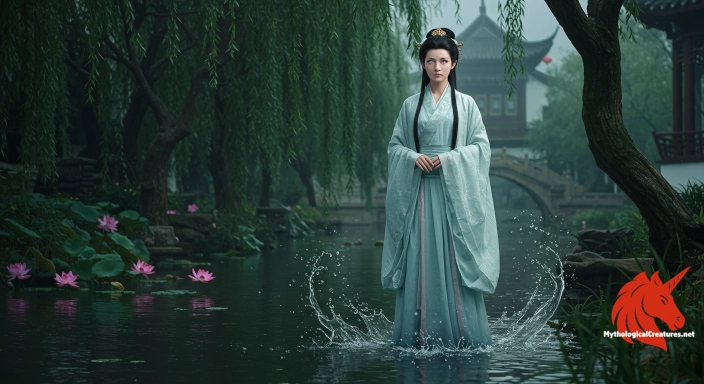
Dare to Meet the Luoshen....
The Mythological Creatures Book Series
Yokai, Greek, Norse, Egyptian & Chinese. Five illustrated field guides to the creatures the old stories either warned or told you about.
Curated by the Mythological Creatures Team
Series editor: Mythological Creatures Directory
Primary desk: Asian & Pacific Myth Cycles Desk
(rev. November 2025)