
Lyngbakr: Lyngbakr is a massive, whale-like sea monster from the Örvar-Odds saga.
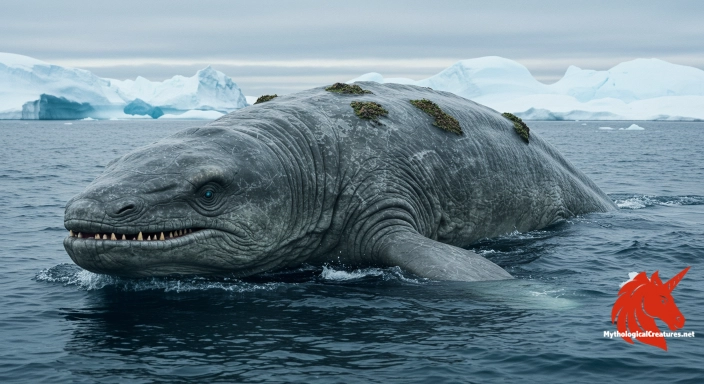
Lyngbakr
Lyngbakr - Serves as a cautionary figure in Norse legend, symbolising the hidden dangers of the sea and the deceptive nature of some natural phenomena.
Origins & First Encounters
Lyngbakr emerges from the shadowy realm of Norse myth as a formidable and enigmatic entity whose very name evokes images of rugged natural beauty and hidden peril. Born of the seafaring imagination of medieval Scandinavia, this monster represents the treacherous allure of the ocean and the deceptive façade found in nature. Its earliest attestation in the Örvar-Odds saga situates it firmly within a tradition that blends adventure with the supernatural. The creature’s epithet, derived from the Icelandic words for heather and back, hints at its uncanny ability to mimic the appearance of a benign island. This duality of form – both comforting and deadly – speaks to the deep ambivalence with which seafarers regarded the open sea. The account of Lyngbakr reflects a cultural context in which the forces of nature were encountered with equal measures of reverence and fear. Its tale has been passed down as a stark warning to those who might be lulled into complacency by nature’s disguises. The sea monster also symbolises the unpredictable boundary between safe harbour and watery doom in a world where survival depended on recognising omens. Through the centuries, Lyngbakr has become a resonant emblem of the natural world’s capacity for both deception and awe.
Source Texts & Tale Variants
The principal narrative of Lyngbakr is rooted in the pages of the Örvar-Odds saga, where it is depicted as a cunning and lethal force lurking in the Greenland Sea. In this medieval text, the creature’s capacity to disguise itself as a heather-clad island is recounted with dramatic clarity. Supplementary oral traditions have circulated among Norse communities, adding layers of nuance and alternative perspectives to its story. Some accounts recount similar beasts that lure seafarers with false promises of safe haven, suggesting that Lyngbakr may be part of a broader tradition of sea-monster lore. Variants of the myth often stress different aspects of its character, from its deceptive appearance to its overwhelming power. Manuscript evidence over the centuries reveals that later storytellers sometimes merged its legend with those of other maritime spectres. This fluidity has allowed its mythos to absorb local colour and adapt to changing cultural contexts. In some retellings, Lyngbakr’s actions are cast as deliberate acts of vengeance by a spirit of the sea, while in others it is a natural hazard personified. The interplay between written saga accounts and evolving oral traditions has ensured that its story remains both mutable and enduring. Such narrative variations contribute to a rich tapestry of sources that continue to inspire modern retellings of this mysterious beast.
Form & Powers
Lyngbakr is typically envisioned as a colossal, whale-like creature whose physical presence is as deceptive as it is imposing. Its massive body is said to be cloaked in a layer of heather-like growth, lending it the uncanny appearance of a benign, rocky outcrop amidst turbulent waters. The creature’s dorsal surface is reputedly broad and textured, creating a convincing illusion of a terrestrial island. Observers in the sagas describe its skin as weathered and rugged, mirroring the natural debris and flora found on actual islands. Intricate details such as swollen flippers and a powerful, undulating tail contribute to a portrait of a beast both magnificent and menacing. Some chroniclers hint at deep-set, reflective eyes that gleam with an inscrutable wisdom drawn from the abyss. The overall architecture of its form blurs the distinction between sea animal and the very landscape, embodying the cunning trickster motif. Its immense size suggests that, much like the titanic whales of the northern oceans, its very presence could distort the natural order of marine navigation. The paradox of being a part of the sea and yet masquerading as land encapsulates the creature’s unsettling dual nature. Every descriptive element of Lyngbakr, from its camouflaged back to the powerful musculature beneath, reinforces its status as one of the most enigmatic entities in the maritime mythos.
Regional Faces
Although Lyngbakr’s origins lie in the Norse sagas, its myth has resonated across multiple seafaring cultures influenced by Nordic traditions. In regions of Iceland and Scandinavia, the creature is interwoven with local maritime superstitions that warn of false sanctuaries in a sea known for its merciless temperament. Some local variants highlight slight differences in its guise, with certain traditions describing it as appearing more like a craggy isle than a heather-clad expanse. Communities along the Greenland Sea have preserved tales of similar water-bound tricksters that conflate natural rock formations with living, deceptive entities. The shared themes of illusion and betrayal are common in coastal folklore, where safe harbours can transform into deadly traps. In parts of Norway and the Faroe Islands, storytellers have adapted the legend to reflect regional seafaring hazards, emphasising the unpredictability of the North Atlantic. These local adaptations often underscore a collective respect for the sea as a realm of both wonder and danger. Variations in the creature’s portrayal—ranging from an almost sentient guardian of the deep to a malevolent force bent on luring sailors to their doom—reflect the myriad ways different cultures have internalised the perils of their maritime environments. The fluid regional interpretations of Lyngbakr reveal how a single myth can provide a diverse mirror to human interaction with an untamable natural world. In each retelling, the legend is reshaped to resonate with distinct cultural landscapes and environmental realities.
Cultural Parallels
Lyngbakr occupies a unique position within the panorama of mythological sea creatures, a place that invites rich comparative analysis with similar beings from other traditions. Its strategy of disguising itself by mimicking a safe haven parallels the shape-shifting qualities seen in various global legends, where deceit and nature intertwine. In Celtic and Scottish lore, for instance, water horses and kelpies share the trait of luring unsuspecting travellers to a watery demise with beguiling appearances. Likewise, some Mediterranean myths feature sea serpents and island deities whose physical forms trick the eye and endanger those who approach. The thematic commonality lies in the interplay between appearance and reality, a recurring motif in many maritime legends that equates nature’s beauty with darker, hidden dangers. This comparative perspective extends to East Asian myths where creatures in folklore often blur the boundary between safe refuge and treacherous trap. Each cultural variant uses the motif of illusion not only to entertain but also to impart practical lessons about the unpredictability of the natural world. The shared threads of transformation, deception, and retribution offer a window into how diverse societies conceptualise the hazards inherent in the realm of water. In drawing these parallels, one observes that Lyngbakr, like many of its mythic counterparts, is a manifestation of collective fears and the enduring mystery of the deep. Such comparisons illuminate the universal human need to personify and caution against the caprices of the natural environment.
Legacy & Modern Evolution
The enduring legend of Lyngbakr has experienced a fascinating evolution, mirroring the changing attitudes of seafaring cultures over the centuries. Initially depicted with raw, fearsome power, the creature was once a stark reminder of the perils that lay hidden in the vast, uncharted ocean. Over time, its narrative softened into that of a multi-layered symbol, embodying the sophisticated interplay between nature’s beauty and its latent threats. Modern interpretations in literature and art have reimagined Lyngbakr as both a monstrous warning and a poignant emblem of nature’s disguises. Contemporary creative works often place the creature in a context that juxtaposes ancient superstition with modern environmental concerns. The shifting portrayal from a singularly vicious predator to a complex symbol of ecological ambiguity reflects broader societal changes in the understanding of nature. Manifestations of its image in digital media, graphic novels, and exhibitions lend fresh insights into its mythic origins. Each reinterpretation preserves the core message of caution while inviting a reevaluation of human reliance on natural orders. The vast array of modern adaptations demonstrates how ancient legends continue to inspire, warn, and delight new generations. In this way, Lyngbakr remains a dynamic cultural icon, bridging the gap between the storied past and an ever-evolving modern imagination.
Interesting Fact
Lyngbakr's unique strategy of disguising itself as a heather-covered island highlights the creative and cautionary elements of Norse myth, distinguishing it from more conventional sea monsters.
Curated sponsor space
One subtle banner. Thousands of myth lovers.
We offer a small number of curated sponsor spots for relevant books, courses, games, and art. No clutter, just well-matched partners.
Partner with usQuick Creature Info
Origin:
Features:
Associations:
Our Mythic Legendary Rating:

Habitat:
Supernatural Powers:
Physical Attributes:
Abilities:
Behavior:
Lore:
Related Creatures, Tales or Lore
References
Discover Another Mythical Legend You May Not Have Heard Of?
Uncover the mysteries of ancient folklore and expand your knowledge of legendary beings from cultures around the world.
Dare to Meet the Eurynome....
-7c756ef4-3eb4-4074-a21f-85e944199576_small.webp "Depiction of Eurynome")
Curated by the Mythological Creatures Team
Series editor: Mythological Creatures Directory
Primary desk: Northern & European Folklore Desk
(rev. November 2025)