
Manaul: Manaul is a legendary bird in Philippine folklore, known from multiple traditional stories.
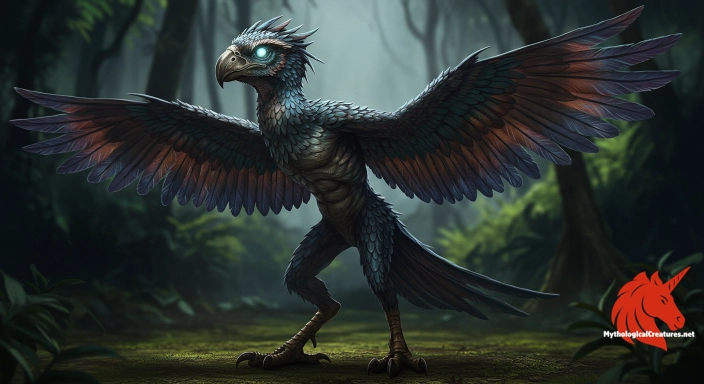
Manaul
Manaul - Represents the rich and diverse mythological traditions of the Philippines, often associated with omens or significant events in local lore.
Origins & First Encounters
The Manaul is an enigmatic bird from the rich tapestry of Philippine folklore, celebrated for its mystical presence and storied origins. It is said to have emerged from the shadowed depths of indigenous oral traditions, where its image was interwoven with the natural world and the divine. Early impressions of the creature date back to pre-colonial times, when mystics and elders recounted its appearances in the dense forests and rugged highlands. Its first attestation is often linked to ancient ritual practices that revered the natural elements and the celestial realms. The Manaul came to embody both power and wisdom, acting as a living symbol of nature’s unpredictable beauty. Local legends narrate that this bird could traverse the boundary between the human and spirit worlds. Its very presence is thought to invoke a transformative energy, inspiring both awe and reflection among those who witness it. Over time, its mythic essence evolved into a cultural emblem that continues to ignite the imagination of contemporary storytellers and heritage enthusiasts. This fusion of mystical origins and cultural significance makes the Manaul a compelling figure in the folklore of the Philippines.
Source Texts & Tale Variants
Narratives about the Manaul have been passed down through a spectrum of storytelling traditions, ranging from verbal recitations in remote villages to written chronicles in modern compilations of folklore. Multiple accounts attest to at least four distinct versions of its tale, each emphasising different aspects of its nature and role. One story casts the Manaul as an ethereal messenger, whose silent flights guide the lost and the troubled toward enlightenment. Another popular variant depicts it as a guardian of hidden natural sanctuaries, a protector of sacred groves and ancient trails. A third narrative weaves the bird’s presence into the fabric of seasonal change, marking transitions and heralding forthcoming natural events. In some remote areas, the Manaul is even credited with possessing healing powers and the ability to ward off misfortune. These diverse renditions have been recorded in local folklore anthologies and studied by cultural historians who seek to preserve the nuances of indigenous belief. The multiplicity of sources reflects the dynamic nature of its myth, while each version contributes layers of complexity to its enduring legacy. As communities continue to share these tales, the Manaul remains a vibrant symbol of the Philippines’ rich cultural heritage.
Form & Powers
Descriptions of the Manaul evoke a striking image of a bird endowed with an almost otherworldly beauty. Its plumage is often portrayed as resplendent and iridescent, shifting in hue like the fleeting colours of dawn and dusk. Observers in folklore recount that its wings are both broad and graceful, capable of carrying it effortlessly over vast expanses of forest and mountain alike. The bird’s figure is depicted as imposing yet elegant, with a robust body that speaks to its strength and endurance. Intricate patterns adorn its feathers, patterns which some say resemble ancient symbols that connect the earthly realm with the mysteries of the cosmos. Its eyes, luminous and penetrating, are believed to hold the wisdom of the ages, inviting onlookers to ponder secrets beyond mortal ken. The talons of the Manaul, sharp and resolute, add to its formidable presence, symbolising the delicate balance between creation and destruction. Variations in its size and form, as recorded in different local tales, suggest that the Manaul can appear both as a mighty guardian and as a subtle, elusive spirit. Every element of its physical form is painted with an aura of majesty, making it one of the most vividly imagined creatures in Philippine mythology.
Regional Faces
While the Manaul is recognised throughout the Philippine archipelago, its depiction takes on regional hues that reflect localized beliefs and natural landscapes. In the highlands of northern Luzon, for instance, the bird is often celebrated as a benevolent spirit whose sporadic appearances are seen as blessings that herald seasonal abundance. In contrast, stories from the Visayas sometimes present the creature as an extraordinary sign of impending change, intertwining its presence with local rituals of renewal and transformation. On certain islands nearer to the equator, the Manaul is woven into eco-spiritual practices, where it is revered not just as a mystical entity but as a custodian of natural harmony. Southern narratives sometimes imbue the legend with a sense of healing power, suggesting that glimpsing the Manaul can alleviate physical or spiritual ailments. These regional adaptations reveal how different communities have shaped its image according to their environmental challenges and cultural values. Each version of the myth is a testament to the resilience of local traditions and the enduring interplay between nature and myth. This diverse regional portrayal enriches the Manaul’s character, making it a multifaceted symbol within the broad spectrum of Philippine folklore.
Cultural Parallels
The Manaul finds thematic parallels with legendary birds found in diverse mythological traditions across the globe. Much like the phoenix of Western lore, it is often associated with cycles of rebirth and renewal, representing the eternal dance of life and transformation. Its role as a messenger between the visible and the unseen realms bears a resemblance to mythic creatures in other cultures, underscoring a universal human fascination with the supernatural. In Arabian tales, the colossal Roc similarly captivates imaginations with its extraordinary presence, while in Southeast Asia, beings like the Garuda also exemplify the fusion of spiritual majesty and natural power. The Manaul’s depiction of delicate strength and mystical wisdom provides a counterpoint to the more aggressive symbolism found in some other legendary birds. This comparative analysis sheds light on a cross-cultural motif where birds serve as liminal figures in myth, bridging reality with the divine. Although its narrative resonates with global legends, the Manaul retains unique features molded by the Philippine cultural landscape. Its integration into local folklore, complete with intricate regional variations and rich symbolism, underscores both its universality and its distinctive national identity. Such comparisons highlight the interconnectedness of mythological traditions while celebrating the singular qualities of each legendary creature.
Legacy & Modern Evolution
Throughout history, the legend of the Manaul has evolved and adapted, mirroring the dynamic interplay between ancient belief systems and modern cultural expressions. Its portrayal in early oral traditions later found expression in written folklore and visual art, ensuring that the tale of this mystical bird survived generations of change. Contemporary interpretations have reimagined the Manaul as a symbol of environmental stewardship and spiritual resilience, resonating with modern concerns about nature and conservation. The digital era has further propelled its myth into new media, where artists and storytellers blend traditional motifs with futuristic visions. This modern legacy encompasses not only literary and visual arts but also community festivals and cultural projects designed to revive ancient narratives. The Manaul now serves as a bridge connecting the elderly wisdom of folklore with the innovative pace of modern artistic expression. Its iconography is frequently employed to inspire a renewed appreciation of biodiversity and natural heritage among younger generations. As fresh interpretations continue to emerge, the Manaul remains a potent metaphor for the cyclical rhythm of nature and the enduring spirit of cultural identity. In every era, this storied bird adapts, inspiring awe and prompting reflection on the eternal ties between humanity and the natural world.
Interesting Fact
An intriguing aspect of the Manaul bird is that it appears in multiple, often contrasting stories, reflecting the diverse and layered nature of Philippine folklore.
For authors, artists, and makers
Created something from the realm of myth?
If your book, deck, game, or artwork draws from legendary creatures and lore, you can showcase it here in a tasteful, year-round placement.
Share your projectQuick Creature Info
Origin:
Features:
Our Mythic Legendary Rating:

Habitat:
Supernatural Powers:
Physical Attributes:
Abilities:
Behavior:
Lore:
Related Creatures, Tales or Lore
- IIbong Adarna
- SSarimanok
- PPhoenix
References
Discover Another Mythical Legend You May Not Have Heard Of?
Uncover the mysteries of ancient folklore and expand your knowledge of legendary beings from cultures around the world.
Dare to Meet the Thardid Jimbo....

Curated by the Mythological Creatures Team
Series editor: Mythological Creatures Directory
Primary desk: Asian & Pacific Myth Cycles Desk
(rev. November 2025)